


- Home
- Companies
- Fruitland Manufacturing
- Products
- Fruitland - Liquid Ring Compressor ...
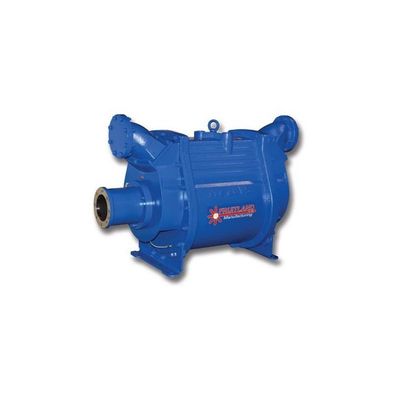
Fruitland - Liquid Ring Compressor Vacuum Pump
Fruitland’s Liquid Ring Compressor Vacuum Pumps are engineered for tough, durable use, minimizing maintenance and downtime. Our pumps are designed to maximize productivity for profitability. We know payload is what you get paid for! The low compact pump design maximizes suction vehicle payload with minimal power draw.
Liquid Ring vacuum pumps are pumps that utilize water or other compatible liquid as a sealant. The simple operation, with no contacting parts, make liquid ring vacuum pumps a safe and reliable choice for handling dirty and potentially dangerous gas streams.
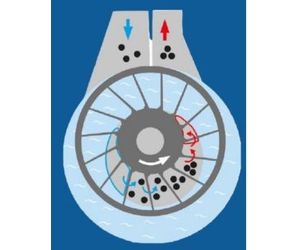
The liquid ring pump works according to the positive displacement principle. At a sufficiently high speed, a rotating liquid ring is formed in the casing. In conjunction with the impeller, cells form that are separated from each other and steadily grow (sucking) or shrink (compressing) with each revolution.
The air flowing through the VacuStar absorbs humidity from the liquid ring and is 100% saturated when it exits. Only the water drops are separated in the reservoir. The steam component is dissipated to the environment.
- Lubrication: All moving parts are without contact. The lubrication of the machine is limited to the impeller bearing. The bearings are fitted with permanent grease.
- Refrigeration: The unit is cooled by the process water and/or the liquid ring. A radiator in the process water circulation dissipates the heat to the environment.
- Shaft sealing: Maintenance-free slide ring seals separate the working space from the bearings and/or the atmosphere.
The characteristics described make the Liquid ring vacuum pumps suitable for applications such as:
- Reclaiming hydrocarbons
- Steel mills
- Water and sewage treatment plants
- Hydro-excavation
- Railroads
- Oil refineries
- Frac tank cleaning
- Chemical plants
- Cement plants
- Foundries
- Shipyards
- docks
- Power generating stations
- mining
- Phosphate plants
- Glass manufacturing
- Waste-to-energy plants
- Pulp and paper mills
- Material processing plants
- Lime plants
- Coal plants, and More