


- Home
- Companies
- Longlight Technology Co., Ltd.
- Products
- Longlight - Model BoFU-80 - Focused ...
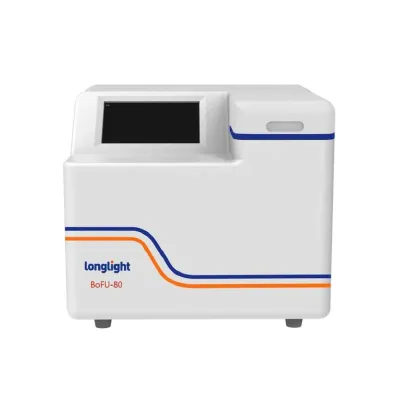
Longlight - Model BoFU-80 -Focused Ultrasonicators for Laboratory Applications
The BoFU-80 Focused Ultrasonicators are advanced laboratory instruments designed to utilize high-frequency ultrasonic waves for the disintegration of samples, making them ideal for applications involving cell disruption, emulsification, homogenization, and particle size reduction. These devices are engineered to provide precise control over ultrasonication parameters, ensuring efficiency and consistency in sample processing. BoFU-80 is suited for research environments where sensitive sample handling is crucial. The technology behind these ultrasonicators enhances repeatability and accuracy in various experimental settings, making it an essential tool for laboratories involved in microbiology, biotechnology, and materials science research.
MALDI-TOF can accurately identify bacteria, fungi, etc. based on the specific mass-to-charge ratio (m/z) of microorganisms. However, difficult-to-break microorganisms such as mycobacteria and filamentous fungi limit their detection rate. A large number of bacterial cells are required and the steps such as ethanol inactivation and formic acid-acetonitrile wall-breaking are required to extract proteins for detection.
BoFU-80 uses a high-frequency confocal ultrasound system to efficiently concentrate acoustic energy into the sample to be processed, greatly improving the strain breaking efficiency and effectively improving the protein extraction rate of the strain. It can effectively improve the efficiency of Merieux, Bruker and Autobio etc. Detection rate of MALDI-TOF system. For pre-treatment of mycobacteria and filamentous fungi that are difficult to break, the ultrasonic process can be completed in just 60 seconds, and the entire process takes less than 5 minutes. The ultrasonic process is carried out in a closed tube, without the need to repeatedly open the lid, reducing operating steps and avoiding pollute.
·Convenient and fast: Add the bacterial colony to the sample tube containing the extractant to perform ultrasound, and the entire operation takes less than 5 minutes.
·Safe and pollution-free: Independently sealed sample tubes, no need to open the cap repeatedly, reducing operating steps and reducing the probability of contamination of operators and the experimental environment.
·Small sample volume required: Only 1-2 colonies (mycobacteria, Nocardia, etc.) or a small number of spores can be used to obtain sufficient protein for detection.
·Improving the detection rate: Ultrasound has a solubilizing effect, which allows the extractant to penetrate the cell wall faster and achieve a good crushing effect. More proteins can be obtained under the same bacterial content, which improves the detection rate.
- Cell Lysis
- Proteomics
- Chromatin