


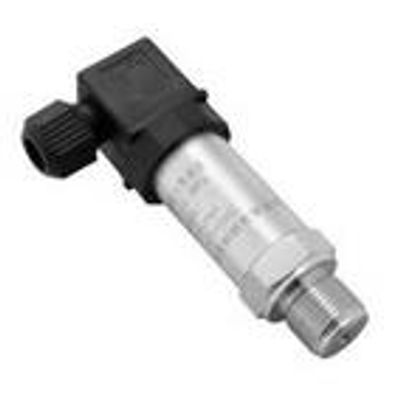
Sino-Inst - Model SI-303 -Low-Pressure Transducer
Sino-Inst SI-303 series high-precision low-pressure pressure transmitters adopt internationally renowned brand sensors. The measured pressure is converted into accurate electrical signals through high-performance amplifying circuits. The unique design of this product makes it resistant to environmental influences Unique play. Little affected by temperature change. Vibration resistance and good long-term stability. It is extremely suitable for engineering equipment, factory automation control and other fields.
- Low range and high dynamic frequency response;
- Full stainless steel housing, excellent corrosion performance;
- Advanced temperature digital compensation function, wide working temperature range;
- Using piezoresistive diffusion silicon chip. The natural frequency is higher than the piezoelectric dynamic pressure sensor (the natural frequency can reach 400kHz);
- Good signal-to-noise ratio, high resolution, high signal-to-noise ratio, and strong anti-interference ability;
- Small size, light weight, complete type, high cost performance;
- Suitable for high-end measurement industries. Such as chemical explosion experiments, hydraulic engineering and aerodynamic experiments;
- Measurement medium Non-corrosive, dust-free, dry gas
- Measuring range 0 ~ 2.5kPa to 0 ~ 30kPa
- Overload pressure 1.5 times the range
- output signal 4 ~ 20mADC (two-wire system)
- 0 ~ 5VDC, 1 ~ 5VDC (three-wire system)
- Supply voltage range 16 VDC ~ 32VDC (constant voltage)
- Standard supply voltage 24VDC (constant voltage)
- Response time 1.0ms 1.0ms
- Operating temperature -20 ℃ ~ + 85 ℃
- Compensation temperature 0 ~ 70 ℃
- Relative humidity 0 ~ 100% (non-condensing)
- Load Resistance (4 ~ 20mA): R = (U-16) /0.02-RD
- Where: U is the power supply voltage and RD is the cable internal resistance
- Sum of linearity, hysteresis, and repeatability errors ± 0.2% FS (typical value)
- ± 0.4% FS (maximum)
- Power Impact Less than 0.02% / V of the output range
- Zero temperature drift ± 1.5% FS (± 0.2% level), ± 2% FS (± 0.4% level)
- Full-scale temperature drift ± 1.5% FS (± 0.2% grade), ± 2% FS (± 0.4% grade)
- Long-term stability ± 0.25% FS / year
- Resolution Infinite, limited only by output noise
- Housing material stainless steel
- Process interface M20 × 1.5, M12 × 1
- Or special production according to user needs
- Leading method Direct outlet, aviation plug, Hirschmann plug
- Electrical parameters (voltage output type): Circuit: 3 wires
- Power supply: 24VDC
- Output: 0 ~ 5VDC or 1 ~ 5VDC
- Electrical parameters (current output type): Circuit: 2 wires
- Power supply: 24VDC
- Output: 4-20mA
- Developed for low pressure applications in general industry and OEM applications
- Flow measurement
- Room monitoring
- Energy management
- HVAC and VAV
- Process control
- Aerospace
- Car, medical equipment
- Pipeline system
What is a low-pressure transducer?
Low pressure transducer is pressure transmitter based on piezoresistive pressure sensor. Low pressure transmitters are suitable for air and non-corrosive gases low pressure measurement.
Low pressure transmitters are suitable formeasuring low-level gauge, differential & absolute pressures. Low pressure transmitters with 4 to 20 mA current output, can measure low pressure below 1 bar (15 psi, 400 inWG or 1000 mbar).
Low-pressure transmitters are used to measure air ventilation pressures in buildings. And small pressure differences between two different locations. Such as clean rooms and laboratories where it is important to prevent air contamination.Low pressure ranges are required to measure small pressure values. Often between two locations where the air is being moved from one place to another.
Low range pressure measurement is required for monitoring and controlling ventilation, and air extraction in office and factory buildings. In building management applications, air movement in large spaces creates very small changes in air pressure. So it is necessary to use highly sensitive measurement devices, which are set to read in inches of water column, mbar, hPa or Pascals.
How low-pressure transducers work?
Low pressure pressure transmitters use semiconductor piezoresistive effect and micro-machining technology.
On single crystal silicon wafers, semiconductor processes such as photolithography and diffusion are used to make Wheatstone bridges.
When subjected to external forces, micro-strains are generated. The electric bridge is out of balance. The signal is processed by a high-performance amplifying circuit. Makes the product have the advantages of high accuracy, good repeatability, high reliability, etc.
The circuit and core are all sealed in a stainless steel housing. And a variety of installation interfaces are designed.
For very low pressures, there are other types of transducers available, which are based on other principles. These include Pirani gauge, thermocouple and ionization gauge.
The first two techniques are based on the rate at which heat is loss from a heated filament placed in the low-pressure environment. This heat loss is depended on the number of gas molecules per unit volume.
- Pirani gauge – This gauge calculates filament temperature by measuring filament resistance. Resistance measurement is measured with the help of a Wheatstone bridge circuit. The relation between the resistance and the applied pressure is highly non-linear.
- Thermocouple – In this type of pressure transducer, a thermocouple is attached to the heated filament to measure its temperature. For the reference temperature in the thermocouple, room temperature is used. The voltage output of the thermocouple varies non-linearly with the gas pressure.
- Ionization gauge – It is highly useful for measuring very small pressures in the range of 10–3 atm to 10–13 atm. Here, the gas, whose pressure is to be measured, is ionized with the help of a heated filament. The current is measured between two electrodes in the ionized region, which depends on the gas pressure, because the number of ions per unit volume depends on the gas pressure.