
- Home
- Companies
- Henan Fireramo Industrial Co.,Ltd.
- Products
- Fireramo - Model MD - Magnesia Brick
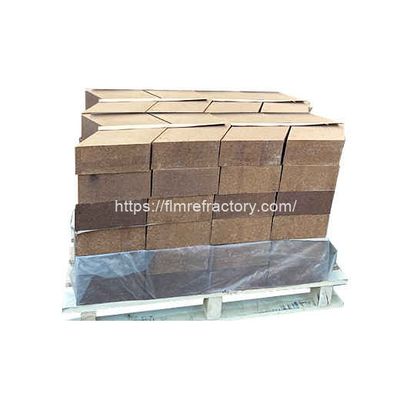
Fireramo - Model MD -Magnesia Brick
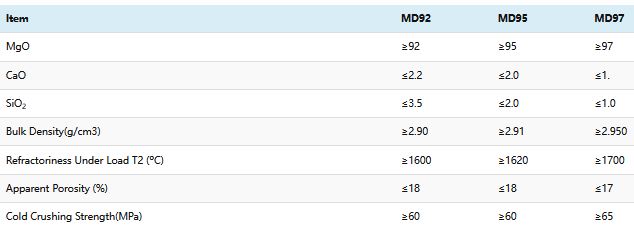
Magnesia brick is an alkaline refractory material with high magnesium oxide content and magnesite as the main crystalline phase. The refractoriness of magnesium bricks is above 1700?, and the load softening point is 1500~1550?.
Magnesia brick is an alkaline refractory material with high magnesium oxide content and magnesite as the main crystalline phase. The refractoriness of magnesium bricks is above 1700?, and the load softening point is 1500~1550?. Magnesium bricks are mainly used in high temperature hearths and hot air furnaces in iron and steel, cement, glass, chemical and other industries.
Magnesia bricks can generally be divided into two categories: sintered magnesia bricks (also known as sintered magnesia bricks) and chemically bonded magnesia bricks (also known as unfired magnesia bricks). Due to the purity of sintered magnesium bricks and high firing temperature, and square magnesite grains in direct contact, also known as direct bonded magnesium bricks; with electrofused magnesium sand as raw material made of bricks known as Fused Rebonded Magnesia Chrome Brick.
Low porosity and impurity content
Sintered magnesia bricks are characterized by high purity and high density, with extremely low porosity and impurity content.
High temperature resistance
Sintered Magnesia bricks have excellent high temperature resistance and can withstand high temperatures up to 2000 ? Celsius and above.
High load softening temperature
Sintered Magnesia bricks are still able to maintain high strength and stiffness at high temperatures and are not prone to softening and deformation.
Strong alkali and slag resistance
Sintered magnesia bricks have excellent alkali and slag resistance, suitable for alkali media working environment.
Thermal conductivity
Sintered magnesia bricks have high thermal conductivity, which makes them very useful in applications that require fast conduction, such as the lining of high-temperature furnace chambers.
Sintered magnesium bricks are less resistant to vibration than Fused Rebonded Magnesia Chrome Brick.
Metallurgical industry
Sintered magnesia bricks are commonly used in high-temperature equipment in the metallurgical industry, such as smelting furnaces, converters, electric furnaces, and heat treatment furnaces. It can withstand extremely high temperatures and chemical corrosion, and protects the equipment from the erosion of high-temperature molten metals and exhaust gases.
Iron and steel industry
Sintered magnesia bricks are widely used in various parts of the iron and steel industry, such as blast furnaces, steelmaking furnaces, ironmaking furnaces, gas purification furnaces and so on. It is used as a lining material for high-temperature hearths and is able to withstand high temperatures and the erosion of corrosive gases and metal slag produced during the metallurgical process.
Glass Industry
Sintered magnesium bricks are widely used in the lining of glass kilns. Glass furnaces are subjected to extremely high temperatures and chemical corrosion. Sintered magnesium bricks provide good refractoriness and thermal stability to ensure the stability and efficiency of the glass production process.
Chemical industry
Sintered magnesium bricks are widely used in high-temperature equipment in the chemical industry, such as petroleum catalytic cracking units, high-temperature reactors, oil refining units and so on. It can withstand high temperatures and chemical attack, protecting the equipment from corrosive chemicals and high temperature conditions.
Other Industries
Sintered magnesium bricks are also used in other industries such as power, aluminum, ceramics, etc. in high temperature equipment and furnace lining to meet the refractory needs in high temperature environments.