

Sino-Inst - Magnetic Water Flow Meter
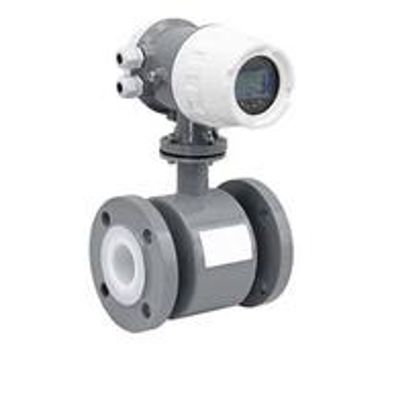
Magnetic Water Flow Meter provide highly accurate flow measurement for a wide variety of conductive fluid applications. Magnetic Water Flow Meter is a volumetric flow meter that measures liquids or liquid slurries that have a minimum conductivity of 5 µS/cm. Based on Faraday’s law of electromagnetic induction. Magnetic Water Flow Meter is ideal for wastewater applications or any dirty liquid which is conductive or water based. It is widely used in water treatment, environmental protection sewage measurement and control, papermaking and other industrial and agricultural production processes for flow measurement and control.
- Not affected by changes in fluid density, viscosity, temperature, pressure and conductivity. The linear measurement principle can achieve high-precision measurement;
- There are no flow blocking parts in the measuring pipe. The pressure loss is small, and the requirements for straight pipe sections are low;
- Nominal diameter DN6-DN3000 covers a wide range. There are many choices of lining and electrodes. It can meet the requirements of measuring a variety of conductive fluids;
- The converter adopts programmable frequency low frequency rectangular wave excitation. It improves the stability of flow measurement and has low power loss;
- The converter adopts 16-bit embedded microprocessor. Full digital processing, fast calculation speed. Strong anti-interference ability, reliable measurement. High accuracy, flow measurement range up to 1500:1;
- High-definition backlit LCD display. Easy to use, simple to operate, easy to learn and understand;
- With RS485 or RS232 digital communication signal output;
- With conductivity measurement function, it can judge whether the sensor is empty or not. With self-check and self-diagnosis function;
- Adopt SMD devices and surface mount (SMT) technology. High circuit reliability;
- Can be used in corresponding explosion-proof occasions.
- Measuring medium: Conductive liquids
- Diameter(mm) DN15~DN3000
- Pressure(MPa) DN15-DN300, PN
- above DN900, PN<0.6MPa;
- Measuring tube material Carbon steel,304 stainless steel
- The sensor measures the head material ABS/Polypropylene
- Electrode material SUS316,hastelloy B,hastelloy C
- Accuracy flow velocity≤0.5m/s,±1.5%,Full range velocity>1m/s,±1.0%
- Medium temperature(ºC) ABS:+80ºC, Polypropylene:+80ºC
- Environmental conditions -25ºC~+60ºC
- relative humidity 5%~95%,
- Atmospheric pressure 86~106kPa
- Straight pipe section requirements upstream 15D,downstream 10D
- Ingress protection IP65,Optional IP68
- Connection flange connection,threaded connection
- Power supply mode: 24V power supply or 220V power supply, 3.6V lithium battery power supply
- Explosion-proof grade: intrinsically safe ExdⅡia CT2-T5 flameproof ExdⅡCT2-T5
- Transmission distance: Two-wire 4-20mA standard current output: ≤1500m;
- 485 output and HART output: ≤1200m
Magnetic Water Flow Meter Applications
KLD electromagnetic water flowmeter can be used to measure the volume flow of conductive fluid in a closed pipeline. It is widely applied in the flow measurement and control in the fields of chemical and petroleum industry, metallurgy industry, water and wastewater, agriculture and irrigation, paper making, food and beverage industry and pharmaceutical industry.
The premise of using Magnetic Water Flow Meter is that the measured liquid must be conductive. The conductivity of the liquid cannot be lower than the threshold, the lower limit. If the conductivity is lower than the threshold, it will cause measurement error until it can not be used.
It can be measured even if the value exceeds the threshold, and the indication error does not change much. The threshold value of general electromagnetic flowmeter is between 10-4~(5×10⁻⁶)S/cm, depending on the model. It also depends on the length of the flow signal line between the sensor and the converter and its distributed capacitance. The product manual usually stipulates the signal line length corresponding to the conductivity.
Magnetic Water Flow Meter to Measure Waste Water
The sewage treatment process is mainly through biological oxidation, flocculation, precipitation and other processes to achieve the purpose of sewage purification. At each stage, a certain gauge is needed to measure.
In the sewage industry, according to the characteristics of the corrosiveness, abrasiveness, temperature and condensation of the tested substance and the price tolerance. Different lining and electrode materials should be selected.
In the sewage treatment process, it is necessary to configure corresponding detection instruments according to the process requirements to form a reliable control system.
Generally, sewage treatment plants are equipped with flow meters in the following process inspection procedures:
- Water inlet pipe.
- Detection of mud volume from primary settling tank to mud storage tank.
- Detection of surplus and sludge flow in the sludge pump room.
- Detection of the return sludge flow in the sludge pump room.
- Detection of the effluent flow of the secondary settling tank distribution well.
- Detection of the sludge intake of the digestion tank.
- Digestion tank Mud output detection. 8. Flocculation tank reagent input detection, etc.
More about: Sewage Flow Meter Selection
Magnetic Water Flow Meter to Measure Industrial Water
The conductivity of industrial water and its aqueous solution is greater than 10-4S/cm. The conductivity of acid, alkali and salt solution is between 10-4~10-1S/cm, so there is no problem in use. Low distilled water is 10-5S/cm and there is no problem.
The electromagnetic flowmeter cannot measure liquids with very low conductivity. Such as petroleum products and organic solvents. Cannot measure gas, steam and liquids containing more and larger bubbles.
It is found from the data that some pure liquids or aqueous solutions have low conductivity and are considered unusable. However, in actual work, we will encounter examples that can be used because of impurities. Such impurities are beneficial to increase conductivity.
For aqueous solutions, the conductivity in the data is measured in the laboratory with pure water ratio. The actual aqueous solution may be proportioned with industrial water. The conductivity will be higher than found, which is also conducive to flow measurement.