




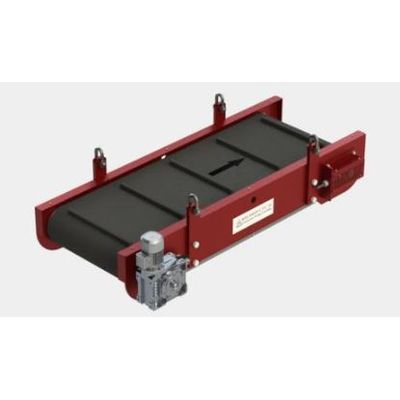
Malaman CTC - Overbelt Magnetic Separators for Ferrous Material Extraction
Overbelt magnetic separators are essential for removing ferrous particles from material flows containing significant ferrous inert materials, such as glass, wood, plastic, post-combustion slag, municipal solid waste, and organic fraction of municipal solid waste. These separators operate without an electrical panel, relying on a direct connection to an electric motor for ease of installation and operation. Comprised of a magnetized central magnet, a rubber belt with transversal cleats, support drums, and a gearmotor, the system extracts ferrous materials, which are subsequently released away from the magnetic field. The system's effectiveness can be influenced by factors like material size and magnetic field intensity, facilitated by either ferrite or neodymium magnets, depending on the desired separation depth and material size. Ideal for installation over conveyor belts or vibrating feeders, these separators ensure efficient ferrous material extraction and refined material processing.
An overbelt magnetic separators is employed when a large amount of Ferrous inert is present in the waste flow.
This type of separator extracts and expels ferrous intrusions, ensuring optimal product cleaning and freedom of use for the machine operator.
These separators do not need an electrical panel. They are supplied ready for installation and operation thanks to a direct connection to an electric motor.
An overbelt magnetic separator is used in the first stage of refining the process material such as glass, wood, plastic, post-combustion slag, USW, OFMSW, etc.
HOW ARE THEY MADE
An overbelt separator is made up of:
- 1 Permanently magnetized central magnet which attracts the ferrous material;
- 1 Rubber Belt with transversal cleats which moves the attracted ferrous material clear of the magnetic field causing it to fall away into bins;
- 2 (or more) Drums that support and make the belt slide;
- 1 Gearmotor directly spliced to one of the drums to transfer the motion to the belt.
HOW DO THE OVERBELT SEPARATORS WORK
The magnet enclosed within the separator generates a magnetic field directed towards the conveyor belt beneath. The Ferrous material is attracted by the magnet and thus removed from the material flow.
The extractor belt of the separator is equipped with transversal cleats that push the attracted ferrous tramp metal towards the discharge point. Here, the intensity of the magnetic field gradually reduces facilitating metal release.
The attraction force varies depending on many factors such as:
- The type of the Fe material to be removed;
- The shape and size of the Fe metals (cylindrical/spherical/flat);
- The weight/volume ratio of the Fe metals to be extracted;
- The ratio between the size of inert process material and size of the Fe metal.
An overbelt separator is typically mounted or suspended over a conveyor belt or a vibrating feeder. It can be installed either transversally the material flow (cross-wise) or parallel to it (in-line).
TYPES OF OVERBELT MAGNETIC SEPARATORS
There are two types of permanent magnets which generate magnetic fields of different intensities.
Depending on the aspect above mentioned, the overbelt separators can be built with:
- Ferrite Magnets: they offer a greater depth of field and function efficiently even at a great distance from the conveyor belt. They are typically used when the size of treated Ferrous material to be separated is over 30mm. Best quality/price ratio.
- Neodymium Magnets: they are considerably more powerful than Fe magnets and therefore guarantee the maximum induction for the extraction of Ferrous materials. They function optimally when working at short distances from the conveyor belt underneath. Their use is recommended when the treated ferrous material to be extracted is of smaller size (eg. wired glass).