


- Home
- Companies
- MBL Aquaculture - a division of Marinco ...
- Products
- MBL - Ceriodaphnia Dubia Daphnids
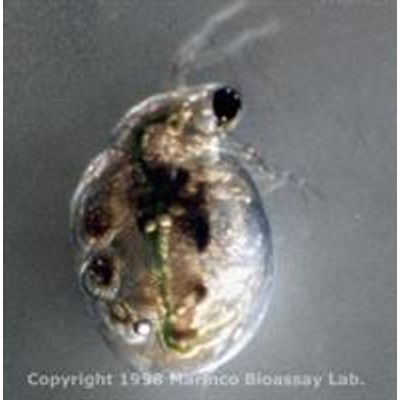
MBL - Ceriodaphnia Dubia Daphnids
Ceriodaphnia dubia are very small, never larger than one millimeter in length. When in good health, they appear to be a brownish-orange color. There is a large, dark spot on the anterior end of every Ceriodaphnia, this is the compound eye. Males and females can be distinguished from each other by their shape and size. Males are smaller and less rotund than are the females; the males are almost triangular in shape. Movement is achieved by a powerful set of second antennae. Because of this, movement is generally vertical and jerky.
Ordering Information:
- We currently culture Ceriodaphnia dubia and Daphnia magna.
- Less than 24-hour age organisms are available for immediate shipment.
- Starter cultures with mixed ages are also available.
- Please see our Products page for information about daphnid food.
- Current Price List (PDF)
- Faxable Order Form (PDF)
Scientific Name: Ceriodaphnia dubia
Common Name: Water flea
Ecology: The water flea, Ceriodaphnia dubia, occurs in littoral areas lakes, ponds, and marshes throughout most of the world.
Uses in Aquatic Toxicology: Ceriodaphnia dubia are an EPA recommended freshwater invertebrate used in both acute and chronic toxicity testing. In acute toxicity testing, Ceriodaphnia are used at <24 hours old and survival rates are recorded. In chronic toxicity testing, Ceriodaphnia are used at <24 hours old and all neonates must have been released within 8 hours of each other. In chronic tests, survival and reproduction are recorded.
Other Uses: Live food source in freshwater larviculture and in the ornamental fish industry.