


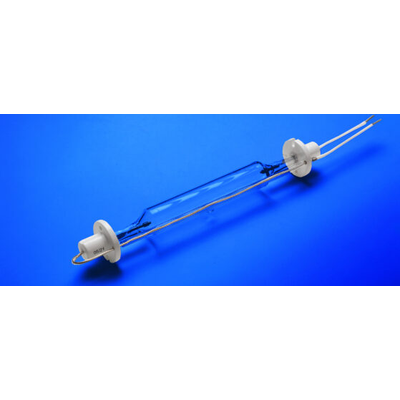
Light-Sources - Medium Pressure UV Lamps
Ultraviolet (UV) disinfection technology is a pivotal method for disinfecting water, air, and surfaces, effectively inactivating pathogens without the use of harmful chemicals. At the core of this technology are UV lamps, designed to emit radiation that destroys the DNA of harmful microorganisms. Among these,Medium Pressure UV lamps(MPUV) stand out for their efficiency and broad-spectrum capabilities. LightSources Inc. offers superior quality vacuum-sealed medium pressure ultraviolet (MPUV or MPHO) lamps for water, air, and surface disinfection applications.
Medium Pressure UV Lamps (MPUV)
LightSources and LightTech are at the forefront of UV lamp technology, specializing in both medium and high-pressure UV lamp solutions. With over four decades of experience in the field, our in-depth knowledge ensures that clients receive only the most effective and suitable lamp designs for their specific disinfection needs. This long-standing expertise highlights our commitment to innovation and customer satisfaction in UV technology applications.
Importance and Relevance of MPUV Lamps
The relevance of MPUV lamps in today’s industry cannot be overstated. As industries strive for more effective and environmentally friendly disinfection methods, MPUV lamps provide a powerful solution that meets these demands. Their ability to operate at higher power levels and temperatures, compared to their low-pressure counterparts, makes them indispensable in scenarios requiring high-intensity, broad-spectrum UV radiation.
This versatility makes medium pressure UV lamps a preferred choice in diverse applications ranging from wastewater treatment to disinfecting medical instruments, ensuring safety and compliance with global health standards.
Definition and Operational Principles
MPUVC disinfection lamps represent a class of ultraviolet disinfection technology that operates at significantly higher power levels and temperatures compared to their low-pressure counterparts. Typically, MPUV lamps function within a temperature range of 600 to 900°C, providing a powerful disinfection solution. They emit a broad-spectrum, polychromatic energy ranging from 200 nanometers (nm) through the visible to infrared spectral ranges. This extensive range is crucial for tackling various pathogens as it allows for deeper penetration and more effective disinfection.
Power Levels and Temperature Comparison
MPUV lamps are designed to deliver high power densities, ranging from 100 watts per inch up to 800 watts per inch (approximately 39 to 315 watts per centimeter), and can have arc lengths from 1 inch to over 90 inches (25 to 2286 mm). This high-power operation is starkly different from low-pressure UV lamps, which typically operate at lower temperatures and emit monochromatic UV light. The higher temperature and power density of MPUV lamps make them suitable for more demanding applications that require rapid processing and high throughput.
MPUVC Disinfection Lamp Effectiveness
The spectrum of medium pressure UV lamps is significantly broad, encompassing UVC, UVB, UVA, and even visible light. This wide range allows MPUV lamps to initiate advanced oxidation processes (AOPs) that are crucial for the degradation of complex organic compounds in wastewater. To enhance the emission spectrum, these lamps can be doped with metal halide compounds, such as gallium, lead, and iron.
Each additive introduces specific spectral lines that enhance the germicidal effectiveness of MPUVC disinfection lamps. For example, gallium can emit at 400-450 nm, making it effective against certain pollutants and microbes that are less responsive to standard mercury UV emissions.
The chemical additives in MPUV lamps necessitate specific ballasts that can handle higher starting voltages and accommodate variations due to lamp aging and frequency of use. This requirement ensures that the lamps maintain their intensity and effectiveness over time, providing a consistent and reliable output for disinfection processes.
Overall, the operation and customization potential of MPUVC disinfection lamps caters to a broad range of industrial applications, making them a versatile and crucial tool in modern germicidal technology. LightSources offers the ability to tailor these lamps to specific requirements, backed by our extensive experience and technical support, ensuring that each lamp meets the unique needs of our clients.
Key Applications in Industry
Medium Pressure UV (MPUV) lamps are extensively used in critical sectors that require effective and reliable water, air, and surface disinfection solutions. Two of the primary applications are in wastewater treatment and marine ballast water treatment systems. In wastewater treatment, MPUVC disinfection lamps play a crucial role in ensuring that the treated water is free from pathogens and safe for discharge or reuse. Similarly, in marine ballast water systems, these lamps prevent the spread of invasive species and pathogens that could disrupt local ecosystems.
Medium pressure UV technology is also commonly used in many UV curing applications. LightSources is an experienced medium pressure lamp manufacturer offering MPUV lamps for both UV curing and disinfection applications. Learn more about our UV lamps for curing, including MPUV, High Pressure, and Amalgam lamps.
Medium Pressure UV Lamps Benefits Over Low-Pressure UV Lamps
Compared to low-pressure UV lamps (LPUV), MPUVC lamps offer several distinct advantages. One of the most significant benefits is their ability to emit significantly more UVC energy. This higher energy output allows for higher flow rates of water disinfection, making MPUVC lamps ideal for applications requiring rapid processing of large volumes of water.
Additionally, despite their high power output, MPUV lamps maintain a compact geometric footprint. This compact design is beneficial for integrating into existing systems without requiring extensive modifications, thus providing a cost-effective upgrade path for enhancing disinfection capabilities.
Role in Advanced Oxidation Processes
Medium Pressure UV lamps are particularly valued for their role in facilitating advanced oxidation processes (AOPs). These processes are crucial for the efficient reduction and removal of micro-pollutants, such as pharmaceuticals, cosmetics, and insecticides from wastewater. The polychromatic output of MPUV lamps, which includes emission across multiple wavelengths, enhances the photolysis of complex compounds. This broad-spectrum capability not only increases the range of pollutants that can be treated but also improves the overall efficiency of the oxidation process, leading to cleaner and safer water.
Overall, the diverse applications and inherent advantages of medium pressure UV lamps underscore their importance in modern disinfection and treatment systems. Their ability to operate at higher efficiencies, accommodate large-scale operations, and effectively handle a wide range of pollutants makes them a superior choice in many industrial and germicidal applications.
LightSources is an experienced medium pressure lamp manufacturer and continues to lead in the development and customization of MPUV lamp technology, offering solutions that meet the evolving needs of industries worldwide.
Types of Medium Pressure UV Lamp Constructions Overview of Common Constructions
At LightSources, we specialize in two primary types of MPUV lamp constructions; pure medium pressure mercury lamps (MP Hg) and mercury-halide (MP MH) lamps. Pure mercury lamps are highly effective in delivering intense UVC radiation, making them ideal for straightforward disinfection tasks where deep UV penetration is crucial.
On the other hand, mercury-halide lamps are tailored for applications requiring a broader spectral output, from UVC to visible light. This versatility is achieved by doping standard mercury lamps with various metal halides to extend their emission spectrum.
Lamp Body Dimensions and Materials
Medium Pressure UV lamps by LightSources are crafted with meticulous attention to detail using only the highest quality materials. Our MPUV lamp construction features:
- Ultra-low water content fused quartz, which offers superior UV transmission and resistance to thermal shock.
- The electrodes are made from pure tungsten, known for its high melting point and durability, with an over-wind of thoriated tungsten to enhance electrical conductivity and longevity.
- Our MPUV lamps are sealed with molybdenum foil within a hard quartz capillary, ensuring a robust hermetic seal. These components are crucial for maintaining the integrity and performance of the lamps under high operating temperatures and pressures.
- Additionally, each lamp can be fitted with either a metal or ceramic base depending on the application requirements, providing secure and effective electrical connections.
- Dimensions vary, with arc lengths ranging from 1 to over 90 inches (25 to 2286 mm), accommodating a wide range of systems and uses.
LightSources offers wire connections and terminations standard to MPUV lamps as well as a variety of options to meet specific requirements.
Impact of Different Constructions on Lamp Performance and Maintenance
The choice between pure medium pressure mercury lamps and mercury-halide constructions significantly influences the lamp’s performance and maintenance needs. Pure medium pressure mercury lamps, while simpler and often more robust, require regular monitoring and replacement due to the degradation of UV output over time.
MP-Hg lamps vs. MP MH-lamps
Mercury-halide lamps, enhanced with chemical additives such as gallium, lead, or iron, offer extended lifespans and improved spectral stability, which can be crucial for processes requiring consistent UV exposure across various wavelengths.
However, these doped lamps also necessitate specialized ballasts capable of handling the higher starting voltages and accommodating the variability introduced by the aging of the lamps and the activation of the metal halides. The complexity of these systems means that precise maintenance and operational knowledge are essential to ensure optimal performance and durability. Each construction type is designed to meet specific industrial needs, balancing performance, maintenance, and operational requirements.
At LightSources, we provide detailed guidance and support to help our customers select and maintain the ideal MPUV lamp construction for their specific applications, ensuring efficiency and reliability in all disinfection and treatment processes.
MPUV Comparison to Other Lamp Technologies
Medium pressure UV lamps distinguish themselves in the realm of ultraviolet disinfection technologies through their unique combination of features and performance capabilities. When compared to low-pressure and other medium-pressure technologies, MPUV lamps showcase significant advantages that make them the preferred choice for many industrial applications.
Power Density and Efficiency
One of the most striking differences between medium pressure UV lamps and other UV technologies is their exceptionally high power density. MPUV lamps are designed to excite mercury to emit a broad spectrum of UV light, spanning from deep UVC to UVA. This broad spectrum is highly effective in inactivating a wide range of microorganisms, including bacteria, viruses, and protozoa.
The high power density of MPUV lamps translates into more potent and efficient disinfection capabilities. With greater power packed into each inch of lamp, MPUV systems can achieve the same or better disinfection results with fewer lamps than systems utilizing low-pressure technologies. This efficiency not only reduces the footprint of the disinfection system but also simplifies its design and lowers installation costs.
Maintenance Costs and System Complexity
The design and operational efficiency of MPUV lamps significantly impact maintenance costs and system complexity. The higher power density and efficiency reduce the number of lamps needed in a system, leading to a simpler, less complex setup. This simplification can result in lower maintenance costs, as there are fewer lamps to replace and less overall wear on the system.
Furthermore, the durability and longevity of MPUV lamps contribute to their cost-effectiveness over time. While the initial investment may be higher than for low-pressure lamps, the reduced maintenance and replacement costs can make MPUV lamps more economical in the long run.
Operational Stability
Another key advantage of medium pressure UV lamps is their operational stability. Unlike other UV lamp technologies, the performance of MPUV lamps is virtually independent of ambient temperature variations. This unique characteristic ensures consistent, stable operation across a wide range of environmental conditions. Whether the system is located in a cooler climate or exposed to fluctuating temperatures, MPUV lamps maintain consistent output and disinfection effectiveness. This stability is crucial for applications requiring reliable, constant UV exposure, such as wastewater treatment and food processing.
Medium Pressure UV lamps offer a compelling combination of high power density, reduced maintenance costs, and exceptional operational stability. These advantages make them an attractive option over low-pressure and other medium-pressure UV technologies, particularly for applications requiring high efficiency, reliability, and ease of maintenance. LightSources continues to lead in the innovation and development of MPUV technology, delivering solutions that meet the evolving needs of industries seeking superior disinfection performance.
Custom Medium Pressure UV Lamp Design Importance of Custom Designs
In the diverse world of industrial applications, the “one size fits all” approach rarely meets the specific needs of every operation. Custom lamp design becomes paramount, allowing businesses to tailor UV disinfection solutions to their unique requirements. LightSources recognizes the critical role of custom-designed medium pressure UV lamps in optimizing performance, efficiency, and fit within various systems.
Whether for intricate water treatment setups, specialized medical disinfection equipment, or unique industrial processes, custom designs ensure that every aspect of the lamp aligns with the application’s demands.
Overview of Design Parameters
Custom medium pressure UV lamp designs can vary widely, encompassing a range of physical dimensions, electrical requirements, and base types to suit different systems and applications. LightSources offers lamps with power densities from 100 watts per inch to over 700 watts per inch and arc lengths from 2 to 85 inches. These specifications can be adjusted to match the intensity and coverage needed for specific disinfection tasks.
- Physical Dimensions:Customizable arc lengths and lamp diameters accommodate tight spaces or specific coverage areas, ensuring optimal UV exposure across the desired volume.
- Electrical Requirements:Tailoring the electrical characteristics of the lamp, such as voltage, current, and wattage, allows for seamless integration into existing electrical systems, enhancing compatibility and efficiency.
- Base Types:Options for double-ended or single-ended connections, along with a choice between metal and ceramic bases, provide flexibility in lamp mounting and installation, catering to system design preferences and requirements.