- Home
- Companies
- Calgon Carbon Corporation
- Products
- Calgon Carbon HGR - Model 4x10 - ...
Calgon Carbon HGR - Model 4x10 -Mercury Removal Granular Activated Carbon
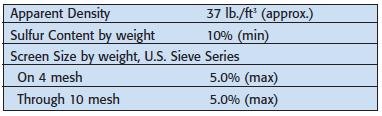
Calgon Carbon HGR granular activated carbon is a sulfur impregnated carbon. The base carbon is made from select grades of bituminous coal and suitable binders to create the unique pore structure and superior hardness necessary for the intended service. Activation is controlled to impart a pore structure that will both accept substantial quantities of impregnant and maintain access for the gas being treated to the complex pore structure. After activation, the sulfur is distributed in a thin layer over the extensive internal surface area of the carbon. This provides it with the unique properties required for the removal of elemental and organic mercury from natural gas, air, and by-product hydrogen streams.
Mercury removal with HGR" activated carbon is an established process for removal of mercury from natural gas and by-product hydrogen streams. The mercury is removed from natural gas feedstocks to LNG and LPG plants to protect aluminum heat exchangers from corrosion. The exhaust air from mercury cell chlorine plants or metallurgical processing equipment can be treated to provide an environmentally safe atmosphere for employees and delicate instruments. Type HGR` is also used in mercury cell chloralkali plants to remove mercury from by-product hydrogen streams.
The mercury removal process employs a single or dual vessel adsorption system designed to reduce concentrations to <0.0I ug/Nm! in the treated gas. During the adsorption process, mercury is attracted to the activated carbon surface where a chemical reaction converts the mercury to mercuric sulfide. The sulfide product is then retained in the pores of the carbon granule. Mercury capacity of Type HGR" activated carbon can be as high as 20% by weight
In a properly designed HGR" carbon system, the maximum attainable mercury concentration in treated gas is not affected by changing the pressure or inlet mercury concentration of the gas. However, lowering the gas temperature or moisture content of the inlet gas will improve the process and further reduce the mercury concentration in the treated gas. For instance, a gas stream at I50°F saturated with moisture will result in a treated gas containing 0.1 ug/Nm of mercury. The mercury level in the treated gas can be further reduced to <0.01 pg/Nm1 by reducing the temperature to 70°F and the moisture to trace levels.