Control Analytical Sarl
  1. Companies
  2. Control Analytical Sarl
  3. Products
  4. Control Analytical - Model CEMS ...

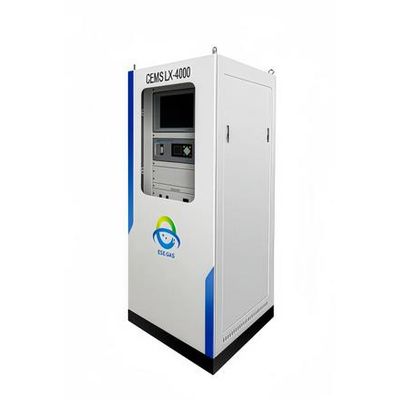
Control AnalyticalModel CEMS LX-4000-Hg -Mercury System

SHARE

ESEGAS engineered the Mercury Generator as a premium gas calibration platform serving environmental protection initiatives and industrial emission controls worldwide. This cutting-edge system enables precise calibration for urban air quality stations, indoor monitoring devices, and gas analyzer manufacturing QC processes.

Most popular related searches

Our integration team incorporated this technology into the Mercury emission monitoring system (CEMS) LX-4000-Hg platform. This innovative configuration achieves unprecedented measurement precision, demonstrating a remarkable detection threshold of 0.05 µg/m³. Such exceptional sensitivity facilitates mercury quantification in diverse industrial emission streams, particularly during: mercury ore processing operations, spent mercuric chloride catalyst recovery procedures, and coal combustion plant exhaust management.

What is The Mercury CEMS LX-4000-Hg?

  • System Composition

    Gaseous pollutant monitoring: Total Gaseous Mercury, Elemental Mercury, Ionic Mercury.

    Flue gas parameter monitoring: Flue gas temperature, pressure, and velocity.

    System control device, data acquisition system: Industrial computer

  • The CEMS LX-4000-Hg employs Cold Vapor Atomic Fluorescence Spectrometry (CVAFS) technology to deliver precise quantification of mercury concentrations in flue gas. This innovative solution continuously tracks emission trends while calculating cumulative discharge rates with exceptional accuracy.
     
    Specifically, the analyzer detects multiple mercury species including elemental, ionic, and total gaseous mercury compounds. Through advanced spectral resolution capabilities, it enables comprehensive emission profiling across diverse industrial processes.

ESEGAS leverages innovative CV-AFS technology to deliver a mercury emission monitoring solution with unparalleled precision. Our Hg stack monitoring system continuously tracks real-time mercury concentrations and calculates cumulative emission rates with high accuracy.
 
The system integrates multiple critical components: a robust sampling probe, thermally regulated extraction lines, and an advanced pretreatment unit. Furthermore, it combines a dedicated mercury analyzer with specialized generators for elemental/ionic mercury calibration. This comprehensive configuration ensures reliable data acquisition across diverse industrial conditions.
 
By implementing this cutting-edge technology, industries achieve two vital objectives: first, maintaining strict compliance with evolving environmental mandates; second, establishing proactive emission control strategies. Through precise mercury quantification and trend analysis, organizations can optimize operational processes while demonstrating environmental stewardship. Ultimately, ESEGAS empowers enterprises to balance production efficiency with ecological responsibility – a strategic advantage in today’s sustainability-focused industrial landscape.

Initially, a high-temperature sampling pump extracts gas through a probe, heated conduit, and thermal ball valve. Operators precisely blend the collected sample with high-purity nitrogen at a 20:1 dilution ratio. Following this preparatory phase, the homogenized mixture proceeds to a mercury valence converter. Within an 800°C catalytic chamber, ionic mercury transforms into atomic species, which then enter a dedicated analyzer for total mercury quantification after thermal stabilization.
 
The system employs Cold Vapor Atomic Fluorescence Spectrophotometry (CV AFS) for unparalleled sensitivity. A low-voltage mercury lamp irradiates vaporized samples with 254 nm ultraviolet energy. Atomic mercury absorbs this radiation, elevating electrons to excited states. During de-excitation, these atoms emit fluorescent light at identical wavelengths. A photomultiplier precisely quantifies emission intensity, correlating linearly with mercury concentration.

Subsequently, sophisticated signal processors amplify and digitize photometric data via analog-to-digital conversion. Integrated microcontrollers perform real-time algorithmic analysis, generating concentration metrics. Operators instantly visualize results through interactive interfaces or obtain hardcopy outputs for archival compliance.