

- Home
- Companies
- Electro-Active Technologies Inc.
- Products
- Electro-Active - Microbial and ...
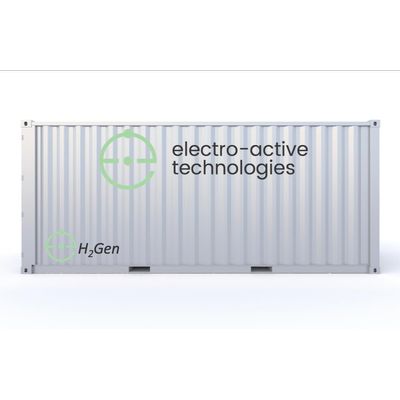
Electro-Active - Microbial and Electrochemical Modular System
Our system utilizes an advanced microbial and electrochemical process to efficiently degrade organic wastes into electrons and protons to produce renewable hydrogen. We have developed a patented process which results in a robust microbial community capable of high-rate and efficient conversion of any organic waste into electrons to produce hydrogen. The use of a waste feedstock enables our process to more than double the electrical efficiency of renewable hydrogen production compared to water electrolysis, providing a more cost-effective alternative.
Around the world approximately 40% of food is wasted, a staggering amount. This waste poses a substantial burden on landfills and accounts for 18% of methane emissions in the U.S., which is a 25 times more potent greenhouse gas compared to CO2. As a result, states and municipalities are rolling out organic waste policies and landfill bans.
To increase the proportion of renewable electricity, capacity for energy storage must grow rapidly and become more affordable as generation from solar (and to a lesser degree wind) do not typically align with demand. In 2018, CA curtailed 461 GWh and in just the first half of 2019, 700 GWh have already been curtailed.
Hydrogen is a versatile energy carrier that has the potential to transform the way we think about energy. Its use in fuel cell technologies results in a zero emission source of energy. However, almost 90% of the hydrogen used today comes from fossil fuels, and its cost for fuel cell applications is currently restricting growth.
Negative Carbon Pathway to HydrogenFood waste used locally to produce energy for local use, minimizing transport
Drastically reduces landfill emissions and offsets fossil fuel use for negative carbon pathway
Liquid fraction of food waste converted into hydrogen, and residual solids can be composted, used as animal feed, or processed into a soil product