


- Home
- Companies
- Royal Biotech
- Products
- Royal Biotech - Model qPCR - ...
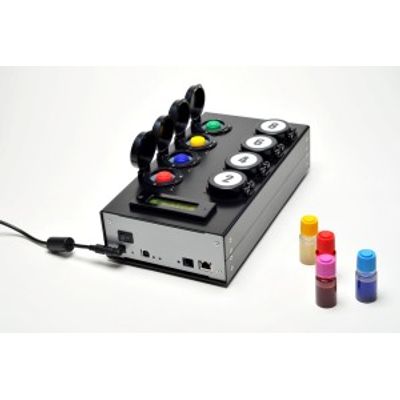
Royal Biotech - Model qPCR -Microbiological Survey Vial Lab Multi Reader
Royal qPCR Food Safety Test Kits with reader. Royal Vial Lab Multi reader with MBS method. 1.Royal qPCR Food Safety Test Kits w/ reader ( Real Time Polymerase Chain Reaction ) is recommended for HACCP control usage due to its direct trace ment of the DNA. PCR was invented by Dr.Kary Mullis, a winner of the Nobel Prize in 1985. His contributions to the World and Human Health are phenomenal.
Royal Vial Lab Multi Reader (RVLM) – MBS is used for:
Hygienic Control
- -Food (for HACCP)
- -kitchen, tools, and surface (for HACCP)
- -Water
- -Centers for Disease Control and Prevention (CDC)
- -OTC Drugs, Cosmetics
- e.g.
Family, kids and adult
Cafe, Restaurants
Water manufactories
Analytical laboratories and HACCP consultants
Agri-food companies
Pharmacies and drugstores
Environmental authorities
Water distribution companies
Civil protection agencies
Royal Vial Lab Multi reader (RVLM) —— MBS-MR
General Features:
Easy operation & Maintenance
Low-Cost-Disposal
Excellent Data analysis Software
Create Sample Plans and set (pass/fall) level
Free Software Upgrade
Excellent Sensitivities & Accuracy
USB port (connected to PC or Notebook)
2 years global warranty
Application:
Test of EHEC, Listeria, Salmonella, Staphylococcus spp for Food Safety
100% Quantitative Analysis
-100% quantitative analysis with RVLM
Easy
– Three easy steps to obtain the test results
– Without any technical training
Fast
-2 to 5 Fold Faster than Traditional Analysis
High Sensitive & High Selective
-Down to the theoretical limit of just 1 viable microbial cell present in the sample
-Up to the experimental limit of 99.999% with respect to other bacterial species
Safely Dispose of the Used Vials
-The same as expired drugs
Types of analysis of Vial Lab
Total Viable Count
Detection of aerobic or microaerophilic mesophilic microorganisms which are able to grow on complete media.
Coliforms
Rod-shaped aerobic, Gram-negative, non spore-forming, cytochrome oxidase negative microorganism; fermenting lactose with production of acids in the presence of bile salts or other surfactants.
E. coli
Rod-shaped aerobic, Gram-negative, non spore-forming, cytochrome oxidase negative microorganism; fermenting lactose with production of acids in the presence of bile salts or other surfactants; at a temperature of 44 °C produce indole from tryptophan.
Enterobacteriaceae
Gram-negative microorganisms, aerobic-anaerobic facultative, non spore-forming, oxidase negative, ferment glucose and lactose with gas production, reduce nitrate and are negative for oxidase test.
Staphylococcus aureus
Gram-positive cocci, coagulase positive, catalase positive, fixed, non spore-forming, facultative anaerobes, fermenting mannitol and osmotolerant.
Pseudomonas aeruginosa
Moveable non spore-forming microorganism, rod-shaped, Gram-negative aerobic-anaerobic facultative, cytochrome oxidase and catalase positive; produce pyocyanine.
Enterococcus faecalis
Gram-positive, fixed, facultative anaerobes, non hemolytic, catalase negative microorganism; fermenting glucose without gas production and hydrolyze esculin.
Listeria spp.
Gram-positive, non spore-forming, facultative anaerobic microorganisms, resistant to many antibiotics. Grow at pH between 5 and 9 and in the presence of NaCl to 10%. Catalase positive, oxidase negative, do not hydrolyze urea, gelatin and casein. Do not reduce nitrates and do not produce indole nor hydrogen sulfide.
Salmonella spp.
Gram-negative, aerobic-anaerobic facultative enterobacteria, able to ferment mannitol. Catalase positive, produce hydrogen sulfide, reduce nitrate to nitrite.
Yeasts (Saccharomyces spp.)
Unicellular eukaryotic, heterotrophic, highly aerobic organisms, growing in carbon-rich substrates, resistant to high concentrations of antibiotics and sulphonamides.
BACTERIAL STRAINS
- Citrobacter freundii ATCC 8090
- Escherichia coli ATCC 25922
- Enterobacter cloacae ATCC 13047
- Enterococcus faecalis ATCC 29212
- Listeria innocua ATCC 33090
- Pseudomonas aeruginosa ATCC 27853
- Salmonella enterica subsp. thyphimurium ATCC 14028
- Staphylococcus aureus ATCC 12600
Environmental conditions for Transport & Storage:
Temperature : Room Temperature , if room temperature > 35 degree C, not > 24 hours
Humidity Range : 70-80%
PS: Storaged by refrigerator ( 4 degree C) or Cool Cabinet ( – 20 degree C ), use vials within 4 weeks (Max 1 month ) when the vials out from the refrigerator or cool cabinet.