


Brechtel
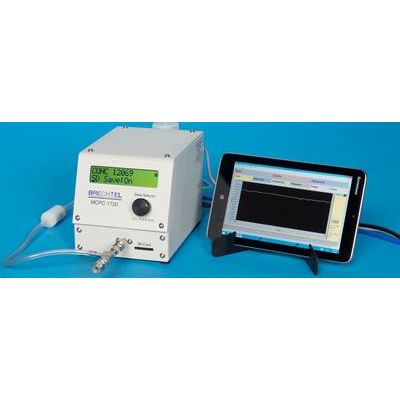
Brechtel - Model 1720 -Mixing Condensation Particle Counter (MCPC)
FromBrechtel
The Model 1720 Mixing Condensation Particle Counter (MCPC) performs ultra-fast total particle number concentration measurements for applications where high time resolution and fast response are critical. The compact size, low weight and minimal power use make it a great solution for applications requiring portability. The robust design withstands the G-forces of mobile use and the butanol handling resists problems with flooding. The MCPC’s fast time response (0.18 sec) makes it an ideal detector in the Model 2100 SEMS for rapid scanning size distribution measurements. Deploy the 1720 in conjunction with our other instruments to get a more complete picture of your aerosol.
Most popular related searches
condensation particle counter
mixing condenser
particle counter
air quality monitoring
particle sampling
cloud thickness monitoring
measure clouds
particle sizing
scanning electron microscope
air monitoring
- 180 ms ultra-fast time response
- 7.0 nm 50% detection diameter
- On-board data storage
- Tilt tested anti-flooding design
- Extremely compact and lightweight
- Proven continuous 24/7 operation
- Fully characterized
- Independently proven 100% counting efficiency
- Ideal for rapid DMA scanning
- Low butanol fluid consumption
- Resists flooding of optics block
- Low power use and small size
- Robust field-tested design
- Particle diameter size range 7 to 2000 nm
- Response time 180 milliseconds
- Concentration range 0.01-100,000 particles/cc
- Coincidence corrected concentration uncertainty @ 100,000/cc +/- 8%
- Particle sample flow / saturator air flow 0.36 lpm / 0.36 lpm
- Butanol use 1.9 ml/hr
- Butanol usage per week 320 ml/week
- Reservoir capacity 250 ml (1000 ml available)
- Ambient temperature range -20°C to 38°C
- Ambient pressure range 200 to 1,000 mb NOTE¹
- Ambient relative humidity range 0 to 95% RN non-condensing
- (a sample flow dryer is recommended for high RH operation)
- Size 5.3 x 8 x 5.8 in/13.5 x 20.3 x 14.6 cm
- Weight 6 lb/2.7 kg
- Power (@110-230 VAC)
- Notes:
- 1. Operation at pressures
- Continuous monitoring of size distributions using the Model 2002 Scanning Electrical Mobility Sizer (SEMS)
- Ambient concentration measurements
- Laboratory flow-tube reactor studies
- Cloud condensation nucleus studies
- Visibility reduction studies
- Aerosol health impacts
- Long-term air quality monitoring
- HTDMA measurements
- CVI/GCVI inlet cloud residue measurements