

- Home
- Companies
- Enviro Solutions Technology Co.,Ltd
- Products
- Model ESE-IR-100 - Greenhouse Gas ...
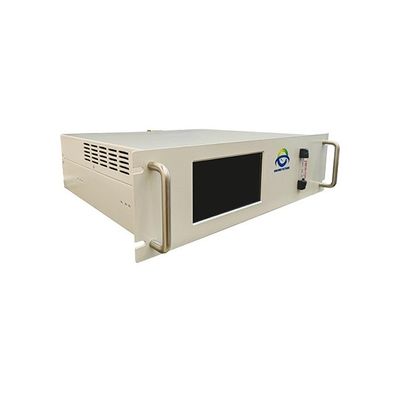
Model ESE-IR-100 -Greenhouse Gas Analyzer
The most commonly analyzed gas using a greenhouse gas analyzer is carbon dioxide (CO2). Other common gases that can be detected include methane (CH4), nitrous oxide (N2O), and various fluorinated gases. The two primary measurement techniques used for detecting these greenhouse gases are absorption spectroscopy and non-dispersive infrared detection. We mainly use NDIR technology to detect CH4, CO2, CO, N2O gases.
The Greenhouse Gas Analyzer is a tool that enables users to accurately measure and analyze the levels of Carbon Dioxide (CO2), Methane (CH4) and Water Vapor (H2O) in the atmosphere. This device can be utilized for various applications, such as industrial or agricultural research, environmental monitoring, climate change studies and energy efficiency evaluation. The Greenhouse Gas Analyzer is a highly precise and reliable instrument that provides quick, accurate and repeatable results for users. It also has the capability to store data for long-term analysis. With this device, users can easily track greenhouse gas levels in their environment and make informed decisions on how to reduce their carbon footprint. We mainly use NDIR technology to detect CH4, CO2, CO, N2O gases,due to CO2, CO and CH4 all have obvious characteristic absorption lines in the (3000-5000) nm range, so these gases can be measured simultaneously by infrared spectroscopy
The ESE-IR-100 greenhouse gas analyzer independently developed and produced by the company is mainly based on non-dispersive infrared photoelectric (NDIR) detection technology,infrared wavelength filtering technology (GFC) and self-designed long optical path gas absorption cell (L-Cell) technology The quantitative analysis of gas in the infrared band is realized. This instrument mainly measures the concentration of CO2, CO, CH4 and other gases. It hasthe characteristics of high precision, good stability, and fast response time. It fully meets the requirements of typical industries (thermal power, steel, oil and gas exploration) GHG monitoring of stationary source discharge outlets, coal mining, waste treatment, etc.
- Measuring principle: Infrared absorption (NDIR)
- measuring gas: CO, CO2, CH4
- Measurement range: (0~10/50/500/2000) ppm, other ranges can be customized.
- Sample gas flow: 0.8L/min±10%
- Response time: ≤60s
- Indication error: ≤2%FS
- drift: ≤±1%FS/24h
- Preheat time: ≤60min
- Output Interface: RS-232/RS-485/4-20mA
A greenhouse gas (GHG) analyzer is a specialized device used to measure and analyze the concentrations of different greenhouse gases in the atmosphere. Greenhouse gases, such as carbon dioxide (CO2), methane (CH4), nitrous oxide (N2O), and ozone (O3), contribute to the greenhouse effect and climate change.
The importance of greenhouse gas analyzers can be summarized as follows:
- Climate Change Monitoring: Greenhouse gas analyzers play a crucial role in monitoring the concentrations of greenhouse gases in the atmosphere. By accurately measuring the levels of CO2, CH4, N2O, and other relevant gases, these analyzers provide valuable data for climate scientists, researchers, and policymakers to understand the patterns, trends, and drivers of climate change. Continuous monitoring enables the assessment of the effectiveness of mitigation efforts and the identification of areas requiring further action.
- Emissions Inventory: GHG analyzers are used in emissions inventories to quantify the amount of greenhouse gases released into the atmosphere from various sources. Industries, power plants, transportation sectors, and other activities are required to report their emissions as part of regulatory compliance and commitments to reduce greenhouse gas emissions. GHG analyzers provide accurate measurements to estimate emissions, support emissions trading programs, and assess progress towards emission reduction targets.
- Climate Research and Modeling: Greenhouse gas analyzers are essential tools for climate scientists and researchers studying climate change. Precise measurements of greenhouse gas concentrations are used to validate climate models, refine emission inventories, and improve our understanding of the complex interactions between greenhouse gases and the climate system. This information is critical for predicting future climate scenarios and developing effective adaptation and mitigation strategies.
- Environmental Impact Assessment: GHG analyzers are employed in environmental impact assessments to evaluate the greenhouse gas footprint of specific projects, policies, or activities. This includes assessing the emissions associated with infrastructure development, land-use changes, agriculture, and waste management. By quantifying the greenhouse gas emissions and potential impacts, decision-makers can make informed choices and implement measures to minimize environmental harm.
- Verification and Compliance: International agreements, such as the Kyoto Protocol and the Paris Agreement, include commitments and targets for reducing greenhouse gas emissions. GHG analyzers are used to verify compliance with these agreements, ensuring that countries and organizations meet their emission reduction commitments. Accurate and reliable measurements are crucial for assessing progress, verifying greenhouse gas inventories, and promoting transparency and accountability.
Greenhouse gas analyzers employ various measurement techniques, including infrared spectroscopy, gas chromatography, and laser-based spectroscopy, depending on the specific gas being analyzed. These analyzers provide critical data for understanding climate change, guiding policy decisions, and developing strategies to mitigate greenhouse gas emissions and minimize the impacts of climate change.