

- Home
- Companies
- Enviro Solutions Technology Co.,Ltd
- Products
- Model HF - Gas Analyzer Based on ...
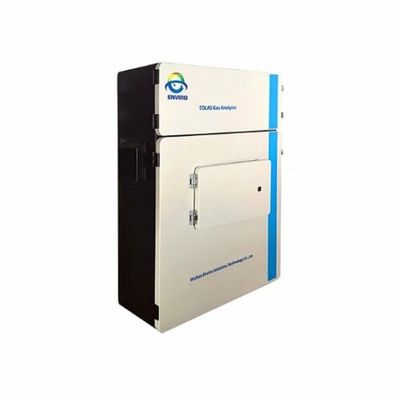
Model HF -Gas Analyzer Based on Tunable Diode Laser Absorption Spectroscopy (TDLAS)
Our HF gas analyzer based on Tunable Diode Laser Absorption Spectroscopy (TDLAS) technology ,Can measure from ppb,ppm to % according to your measurement. The HF gas analyzer is a comprehensive solution for measuring HF gas concentrations in both industrial and environmental settings. It utilizes TDLAS technology to measure the concentration of hydrogen fluoride (HF) gases with high accuracy and precision, even at low concentrations. The instrument features an advanced optical platform that ensures reliable measurements over long periods of time and has been designed to be easy to use and install.
- High Sensitivity and Selectivity: TDLAS is a highly sensitive technique that can detect and measure HF gas at very low concentrations. It offers excellent selectivity, specifically targeting the absorption lines of HF molecules, resulting in accurate and reliable measurements even in the presence of interfering gases.
- Wide Dynamic Range: TDLAS HF gas analyzers have a wide dynamic range, allowing them to measure HF concentrations ranging from trace levels to high concentrations. This flexibility enables the same analyzer to be used in various applications and environments without the need for multiple instruments.
- Fast Response Time: TDLAS technology provides rapid real-time measurements, allowing for quick detection and response to changes in HF concentrations. The fast response time is particularly important in safety-critical applications where immediate action is required in the event of HF leakage or high concentrations.
- Extractive and In-Situ Measurements: TDLAS HF gas analyzers utilize a laser beam that can be directed into the gas sample without physically contacting it. This non-intrusive measurement technique eliminates the need for sample extraction, reducing the risk of contamination and sample loss. It also enables in-situ measurements, allowing the analyzer to be directly installed in the process or monitoring point, providing continuous and representative measurements.
- Remote Monitoring and Control: TDLAS HF gas analyzers often come with advanced features for remote monitoring and control. The measurement data can be transmitted to a central control system or accessed remotely, allowing for convenient monitoring of HF concentrations from a control room or off-site location. This feature is particularly useful for large-scale industrial operations or distributed monitoring networks.
- Low Maintenance and Long-Term Stability: TDLAS HF gas analyzers typically have low maintenance requirements. The absence of moving parts and the long-term stability of the laser source contribute to the overall reliability and longevity of the analyzer. This reduces downtime and ensures consistent and accurate measurements over extended periods.
- Compact and Modular Design: TDLAS HF gas analyzers often have a compact and modular design, allowing for easy integration into existing monitoring systems or industrial processes. The modular nature of the analyzers enables flexibility in selecting measurement ranges, integrating additional features, and adapting to specific application requirements.
- Measured gas: HCL/HF
- Method: Tunable Diode Laser Spectrometry (TDLAS)
- Range: HCL/HF: 0-50ppm,0-100ppm,0-500ppm( Customized)
- Accuracy: ± 1% full scale reading depending on integration stability (temperature & pressure)
- Precision: 1ppm
- Displayed resolution: 0.1ppm
- Response time: Less than 15S (at gas flow rate of 3 L/min)
- Sampling Gas Temperature: ≥180?
- Analog Output: 4`20mA DC, Insulating output, maximum load is 900 ohm,
- Digital Output: RS232/485
- Power Supply: 90-240VAC / 50/60Hz 120W
- Warm up time: 30 minutes
- Interface: RS232
- Ambient Temperature: Temp:-10-50?, Humidity:0-90%RH
An HF gas analyzer is a device used to measure and analyze the concentration of hydrogen fluoride (HF) gas in a sample or environment. Hydrogen fluoride is a highly corrosive and toxic gas that is generated from various industrial processes, such as metal processing, glass manufacturing, and semiconductor fabrication. It is also released during the combustion of certain materials, such as coal and biomass.
The importance of HF gas analyzers can be summarized as follows:
- Occupational Safety: HF gas analyzers are crucial for ensuring the safety of workers in industries where HF may be present. Exposure to high levels of HF can cause severe health effects, including respiratory irritation, lung damage, and skin burns. By monitoring HF concentrations in work environments, gas analyzers enable employers to implement appropriate safety measures, such as proper ventilation, personal protective equipment (PPE), and emergency response protocols, to minimize the risk of exposure and protect workers’ health.
- Environmental Monitoring: HF emissions can have adverse effects on the environment, including damage to vegetation and ecosystems. HF gas analyzers help in monitoring and assessing HF concentrations in ambient air to ensure compliance with environmental regulations and identify areas that require pollution control measures. This information is valuable for environmental agencies and policymakers in evaluating the impact of HF emissions and developing strategies to minimize environmental harm.
- Process Optimization: In industries where HF is used, such as the production of aluminum, steel, and certain chemicals, accurate measurement of HF concentrations is essential for process optimization. HF gas analyzers enable real-time monitoring of HF levels, allowing operators to adjust process parameters and control measures to ensure efficient and safe operations while minimizing HF emissions.
- Leak Detection: HF gas analyzers play a critical role in detecting and locating leaks in industrial systems that handle or store HF. Timely identification of leaks is essential to prevent the release of HF into the atmosphere and mitigate potential health and environmental risks. Gas analyzers can be used as part of leak detection systems to continuously monitor HF concentrations and trigger alarms when levels exceed predefined thresholds.
- Emergency Response: In case of accidental releases or emergencies involving HF, gas analyzers provide essential information for emergency responders. By quickly measuring HF concentrations in the affected area, responders can assess the severity of the situation, determine appropriate evacuation or containment measures, and implement effective emergency response strategies to protect public safety and minimize the impact of the incident.
HF gas analyzers utilize various measurement techniques, including TDLAS tecnology which can accurately measure HF concentrations. These analyzers are vital tools for ensuring occupational safety, environmental protection, and emergency preparedness in industries and settings where HF is present.