


- Home
- Companies
- Roctest - part of Nova Metrix LLC
- Products
- Model OTDR - DiTemp Harsh Reading Unit ...
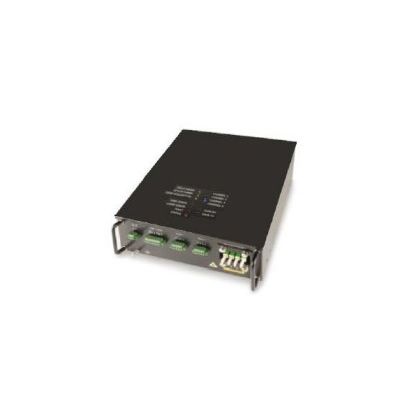
Model OTDR -DiTemp Harsh Reading Unit Raman
The DiTemp Harsh is a unique tool for the measurement of distributed temperature over several kilometers in harsh environment (from desert to arctic). It is a powerful diagnostic instrument for the identification and localization of potential problems. It allows the monitoring of local temperature at thousands locations by mean of a single optical fiber and in just one measurement. Its inherent high stability and self-referenced principle of operation, allows on-line or off-line long-term monitoring of large structures.
The DiTemp® Harsh is a unique tool for the measurement of distributed temperature over several kilometers in harsh environment (from desert to arctic). It is a powerful diagnostic instrument for the identification and localization of potential problems. It allows the monitoring of local temperature at thousands locations by mean of a single optical fiber and in just one measurement. Its inherent high stability and self-referenced principle of operation, allows on-line or off-line long-term monitoring of large structures.
The measuring principle is based on the RAMAN effect and the Optical Time Domain Reflectometry (OTDR) method. Laser pulses are coupled into the fibres where the photons interact with the molecules of the fibre material. Some photons are scattered backwards and they carry information on the thermal motion of the molecules they were scattered by. Consequently, the spectrum of the backscattered light carries information on temperature of the fibres. This effect can be used to measure temperature along the optical fibre.
The spectral analysis is combined with measuring the propagation time of the laser pulses along the fibre (radar principle) as the speed of light in the fibre is known. Scanning the entire length of the fibre by short intervals (e. g. 1m) the temperature profile along the fibre is determined. It is important to know that the measured temperature of each interval is the average temperature of that individual fibre section. Due to the high speed of light, fibre lengths of many kilometers can be scanned within fractions of a second.
The system consists of autonomous, low powered reading unit, sensing cable and accessories (connection boxes, extension cables, splice protectors etc.). The optical fibres which are integrated into robust cables are the temperature sensitive elements and allow the measurement of temperature profiles at arbitrary times, quasi-continuously with a high spatial and temperature resolution along the cable. This is a requirement for the investigation of thermal processes.
The system is used in a wide range of applications in extremely harsh environments requiring distributed temperature sensing, such as temperature monitoring of concrete in massive structures, waste disposal sites, on- and off-shore sites in gas and oil industry, hot spots, cold spots and leakage detection of flow lines and reservoirs, building installations, just to name a few.
- Wide Reading Unit temperature range -40°C to +65°C
- High temperature accuracy and spatial resolution
- Short measuring time
- Long-term stability
- Easy and fast installation
- Cost effective
- Very low power consumption
- Remote operation
- Non volatile on-board memory