

- Home
- Companies
- DIA DOXA FOLEX
- Products
- Model PUR-ICF - Modular Elements
Model PUR-ICF -Modular Elements
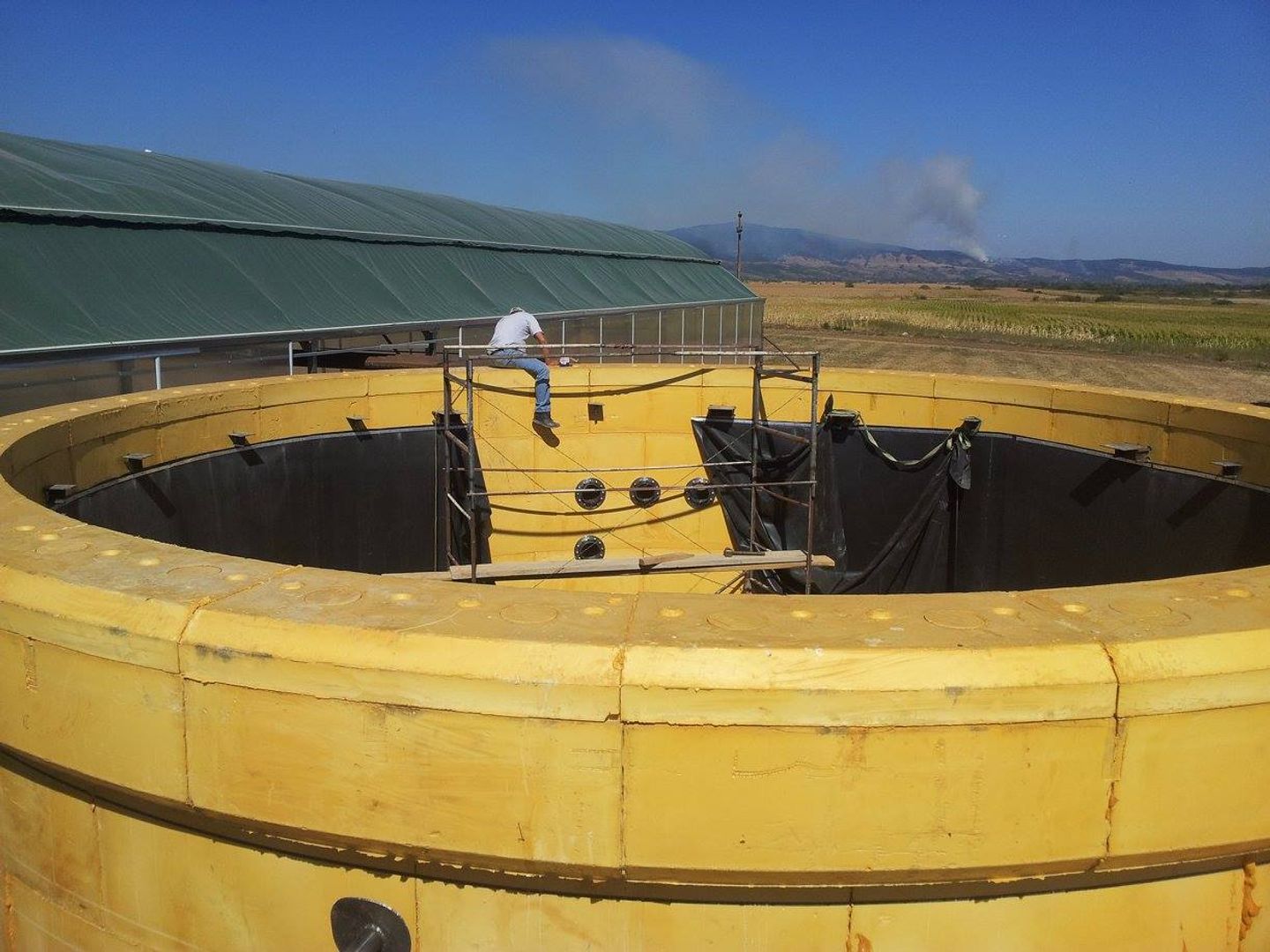
The PUR-ICF (Polyurethane-Insulated Concrete Forms) modular elements are blocks of polyurethane foam with an average density of 45 kg/m3 . A building constructed from PUR-ICF offers a very high level of thermal insulation as well as good sound insulation, which makes it suitable for use in the construction of any civil buildings (houses, blocks of flats), industrial buildings (warehouses, factories), swimming pools and thermal accumulators, isothermal warehouses for vegetables and fruits, etc. By cladding the walls built from PUR-ICF modular elements with various boards (magnesium oxide, plasterboard, etc.), the construction is adapted according to the field of use.
The PUR-ICF (Polyurethane-Insulated Concrete Forms) modular elements are blocks of polyurethane foam with an average density of 45 kg/m3 . A building constructed from PUR-ICF offers a very high level of thermal insulation as well as good sound insulation, which makes it suitable for use in the construction of any civil buildings (houses, blocks of flats), industrial buildings (warehouses, factories), swimming pools and thermal accumulators, isothermal warehouses for vegetables and fruits, etc. By cladding the walls built from PUR-ICF modular elements with various boards (magnesium oxide, plasterboard, etc.), the construction is adapted according to the field of use.
The modular elements made of PUR-ICF polyurethane foam are presented in several constructive forms depending on their role in the construction as a whole. They generally have an area of 1 square meter (200cm x 50cm x 32cm, 11 kg/element) and have inside a network of channels through which the steel reinforcement is inserted and the concrete is poured, thus resulting in a structure (network) of resistance formed by reinforced concrete pillars and particularly effective lattices. The modular elements are designed to be assembled with precision, having provided assembly holes, resulting in a perfectly flat and straight wall. The floor elements are mounted between prefabricated beams.
PUR-ICF polyurethane modular elements are the materials with the best thermal insulation on the market.
The heat transfer on an external wall is less than 5 W/m2 at an internal – external temperature difference of 40°C. PUR-ICF modular elements have a thermal conductivity 50% lower than polystyrene . Mineral wool has even lower properties.
A construction of 100 m2 of PUR-ICF modular elements, if the losses through the windows were not taken into account, has a thermal requirement of less than 1kWh. The thermal insulation of the 32 cm PUR-ICF modular element wall is equivalent to:
- = 1,200 cm of wooden wall
- = 6,000 cm concrete wall
- = 40 cm brick wall + 30 cm polystyrene layer
Thermal bridges are those areas of construction where heat is lost more quickly and unnecessarily. These thermal bridges are caused by a leaky assembly of the load-bearing elements of the building.
The construction with ICF modular elements eliminates thermal bridges which means (besides contributing to increasing the level of thermal insulation) the elimination of:
- condensate
- mold
- the possibility of the development of bacteria.
By eliminating thermal bridges, more comfort and health is created for the people who live in such buildings . Premature degradation of the building`s finishes is also prevented.
The polyurethane foam from which the PUR-ICF elements are built is particularly resistant to the action of water, even salt water, parasites and diluted acids. Since the elements are made by molding with polyurethane foam, the PUR-ICF modular elements have an extremely low permeability to water, because it has a closed cell structure.
In the long term, polyurethane foam withstands temperatures between -40 degrees C and +100 degrees C. Experience has proven that after 50 years from the manufacture of the first polyurethane foam (German manufacturer BASF), the level of thermal insulation has decreased by less than 1%.
Compared to the polyurethane from PUR-ICF elements, polystyrene is clearly inferior in terms of weather resistance, especially to the action of water. polystyrene degrades under the action of water, allowing infiltrations, which gives it an average lifespan of 10-12 years. This remark must be made considering that the most "evolved" construction elements on the market (in terms of insulation level) use only polystyrene. In this context, it is also worth mentioning the case of using polystyrene for the thermal cladding of buildings (in the case of Romania, there was an intense campaign supported by public funds for the thermal rehabilitation of buildings using polystyrene plates, an action that proved to be a failure).
Another important aspect to note is the fact that polystyrene loses 3% per year of its insulation level, and polyurethane only loses 3% of its insulation level in 150 years.
Cladding the PUR-ICF modular elements with magnesium oxide boards (not with plasterboard boards as is usual at the moment) is an element that contributes to the resistance of the walls to external factors. Magnesium oxide boards are impact and water resistant and can be completely flooded without degrading , compared to plasterboard which is brittle and absorbs water, leading to premature degradation.
By mounting the reinforcements and pouring concrete into the network of voids in the load-bearing walls, a resistance structure of latticed columns is created. This internal reinforcement structure allows the construction of tall buildings in areas with intense seismic activity. The fact that the concrete fills the structure both vertically and obliquely provides the structure with increased resistance, the house made of this material is a construction with a high coefficient of durability and resistance to external factors (vibrations, wind action, earthquakes, etc.)
The estimated life of the construction made of PUR-ICF polyurethane modular elements is at least 100 years.
The resistance to earthquakes is very high due to the resistance structure formed by reinforced concrete pillars and lattices . This structure is obtained due to the fact that the PUR-ICF modular elements have a network of channels, which extends to the entire wall due to the way in which these modular elements are joined, and in these channels the reinforcements are mounted and concrete is poured, thus resulting in a network of reinforced concrete posts and latticework.
This network is completed by the system of beams, columns, belts and slabs , also made with PUR-ICF elements. The building will have a monolith structure due to the fact that the concrete in the floors and the load-bearing masonry of one level are poured at the same time.
The PUR-ICF modular elements and the way in which their assembly was conceived allows for high-speed construction, doubled by great precision.
The construction process is very simple. The masonry is built like a "Lego" , the elements centering and joining each other, obtaining flat and precise walls.
After assembly, a straight wall is obtained on which magnesium oxide plates (recommended), plasterboard (plasterboard), etc. are mounted, thus resulting in a flat surface, so extensive and expensive finishing works are not required.
Due to the low weight of the PUR-ICF modular element (11 kg/element, 200cm x 50cm x 32cm), its handling is very easy , resulting in a short construction time. It only takes 4 days for a construction level, at the semi-finished stage, with an area of 100m2, having 4 workers. It does not require the use of heavy machinery, and due to the easy assembly, the working staff does not require high qualification .
The resulting construction is approximately 300% lighter than a construction using conventional materials.
Due to the physical properties of the polyurethane foam and the way in which the PUR-ICF modular elements are designed and made, a very good sound insulation of the construction that uses such elements is obtained, generating increased comfort .
The manufacturing process of modular PUR-ICF polyurethane elements does not generate polluting factors on the environment .
Building works with such modular elements are much "cleaner". This is due (among others) to the fact that heavy machinery is not required, formwork is not required, noise is reduced, packaging and other residues are few, personnel is reduced and the speed of execution is very high.
Any polyurethane foam waste will be reused in the production process.
As an example, we mention that a square meter of a similar product as thermal insulation existing on the market, considered "the top of the current technique" (made of polystyrene) is 90 euros, while a square meter of PUR-ICF costs 70 euros.
Another relevant aspect is the reduced cost with the finishes of a passive house built with PUR-ICF due to the perfect flatness of the walls.