


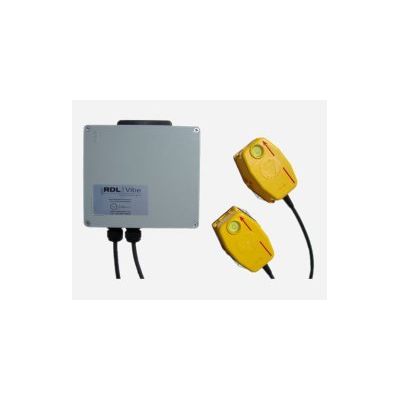
Model RDL//Vibe -Construction Vibration Monitoring System
The RDL//Vibe is a robust self powered remote vibration monitoring system ideal for monitoring vibration levels arising from construction activities such as piling, demolition, blasting and other works that generate ground vibrations. With online reporting and real time email and SMS alarms when vibration levels trigger threshold limits, you can continue work onsite comfortably knowing that the RDL//Vibe will alert you of potentially damaging or annoying vibration levels as they happen.
Prevent damage or annoyance
The RDL//Vibe allows you to manage vibration levels and reduce vibration complaints from residents in neighbouring propert, as well as demonstrating compliance with tender requirements and British Standardsty
The RDL//Vibe`s simple design allows minimal effort to install and set up which can be completed within minutes
Access data and events online as well as receiving real time alerts by email and SMS if alarm thresholds are triggered
- Parameters measured: Peak Particle Velocity (PPV), acceleration, and displacement
- Trigger levels: minimum 0.18mm/s and maximum 43.4mm/s
- Frequency range: 4.5Hz to 500Hz
- Low frequency response: 0.3Hz (with alternative geophone)
- Operating temperature: -5°C to +60°C
- Dimensions: 178 x 156 x 75 mm
- Casing: IP66 die cast aluminium
- Battery power: 2 x Lithium D Cell
- Manage system settings online via the CDLSmartHub
- Manage alarm thresholds online via the CDLSmartHub
- Receive email and SMS alerts when vibration levels reach alarm thresholds
- Input for up to two tri-axial geophone sensors
- Event log of all alarms, logins, settings changes and unit power ups
- Average battery life 1-2 months with upto 1 year battery life when using low sampling and reporting frequencies
- Effortlessly easy to install
- Reduce the need to visit site by managing and monitoring data online
- Increased due dilligence with independant uneditable storage of data
- Every security measure taken to protect your data
Construction activities can generate ground vibration at varying levels, which spread through the ground and can affect neighbouring properties, buildings and their residents. It is common for construction work to generate vibration complaints from neighbouring residents and building owners, and this places an emphasis on construction companies to identify, assess and monitor problem areas.
The main concerns include:
- Causing damage to property
- Causing annoyance to people in nearby properties and buildings
It is common for construction projects to stipulate remote monitoring in the project requirements and guidelines, to avoid damage and annoyance, and to prove due diligence on-site.
The construction activities most commonly known to generate severe vibration levels are blasting and impact pile driving. Other sources of ground vibration on construction sites include pile-driving, vibratory compaction, demolition, drilling and excavation.
Most susceptible to damage
Ground vibration monitoring
As available space becomes tighter it will be imperative to protect surrounding properties from the effects of excessive vibration during such works, particularly in cities across the UK.