


Polygon
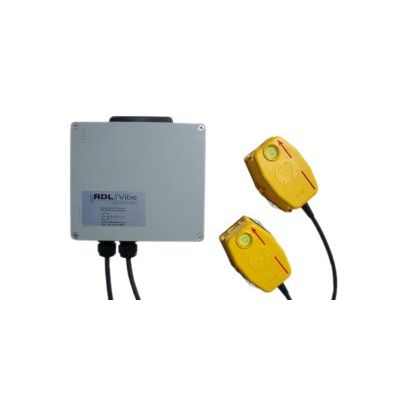
Model RDL//Vibe -Remote Ground Vibration Monitoring System
FromPolygon
The number of tender guidelines and risk assessments requiring remote vibration monitoring continues to grow. In addition to tender requirements, a range of international, national and corporate standards exist to inform project managers and contractors on the best practice for measurement of shock and vibration in buildings. By using the RDL//Vibe you can demonstrate compliance with the above requirements (in most cases).
Most popular related searches
ground vibration monitoring
vibration monitoring system
remote vibration monitoring system
remote vibration monitoring
vibration monitoring
monitor ground vibration
construction vibration monitoring
remote monitoring
remote monitoring system
piling vibration monitoring
Long battery life
Typically 1-2 months battery life (Mains power adaptor available for long-term applications).
Simple setup and easy-to-use
Switch it on and go, and manage all system settings online with the CDLSmartHub
Ground vibration monitoring with the RDL//VibeThe RDL//Vibe is a complete ground vibration monitoring system - that offers wireless (mobile) connectivity, long battery life (usually 1 - 2 months), alarming (Email and SMS), and constant access to data online via the CDLSmartHub portal.
Caption Data began manufacturing the RDL//Vibe in 2012 and it was originally designed to be robust for use in harsh environments such as construction sites, yet simple to use and sensitive enough to capture low frequency vibrations.
Since 2012, RDL//Vibe systems have been used on hundreds of construction sites to monitor vibration levels arising from activities such as: piling, demolition, blasting, excavation, heavy truck use as well as monitoring ground vibrations generated from road and rail traffic.
In addition, RDL//Vibe systems have been used to monitor vibration levels in some of the UK`s most prestigious buildings, landmarks such as the Natural History Museum and the most iconic lighthouse in the British Isles.
Caption Data began manufacturing the RDL//Vibe in 2012 and it was originally designed to be robust for use in harsh environments such as construction sites, yet simple to use and sensitive enough to capture low frequency vibrations.
Since 2012, RDL//Vibe systems have been used on hundreds of construction sites to monitor vibration levels arising from activities such as: piling, demolition, blasting, excavation, heavy truck use as well as monitoring ground vibrations generated from road and rail traffic.
In addition, RDL//Vibe systems have been used to monitor vibration levels in some of the UK`s most prestigious buildings, landmarks such as the Natural History Museum and the most iconic lighthouse in the British Isles.
Specifications
- Parameters measured: Peak Particle Velocity (PPV), acceleration, and displacement
- Geophones: 1 or 2 tri-axial geophone sensors
- Trigger levels: minimum 0.18mm/s and maximum 43.4mm/s
- Frequency range: 4.5Hz to 500Hz
- Low frequency response: 0.3Hz (with alternative geophone)
- Operating temperature: -5°C to +60°C
- Dimensions: 178 x 156 x 75 mm
- Casing: IP66 die cast aluminium
- Battery power: 2 x Lithium D Cell
RDL//Vibe features and benefits
The RDL//Vibe was designed to offer a cost-effective ground vibration monitoring system to the construction industry.
Using remote vibration monitoring systems puts control back in the hands of project managers and contractors, who can now make informed decisions in real time about work methods that ensure minimal vibration impact from their operations on neighbouring buildings and structures.
Using remote vibration monitoring systems puts control back in the hands of project managers and contractors, who can now make informed decisions in real time about work methods that ensure minimal vibration impact from their operations on neighbouring buildings and structures.
Key features
- Manage system settings online via the CDLSmartHub
- Manage alarm thresholds online via the CDLSmartHub
- Receive email and SMS alerts when vibration levels reach alarm thresholds
- Input for up to two tri-axial geophone sensors
- Event log of all alarms, logins, settings changes and unit power ups
Key Benefits
Ground vibration monitoring Companies are already requested to take care planning the sequence of works in order to minimise the transfer of vibration to neighbouring properties, and in some cases project managers are instructed to monitor ground borne vibrations, react and adjust work methods to ensure vibration levels are kept below specific levels.
As available space becomes tighter it will be imperative to protect surrounding properties from the effects of excessive vibration during such works, particularly in cities across the UK.
Piling vibration monitoring Piles are the permanent foundation support to so many different structures throughout the UK, so it is of great importance to know the likelihood of disruption that could be caused through installing piles in order to minimise or alleviate it altogether. An increasingly important aspect of project management during construction work, is to understand the impact of ground-borne vibration, on the surrounding community.
Building vibration monitoring
- Average battery life 1-2 months
- Effortlessly easy to install
- Reduce the need to visit site by managing and monitoring data online
- Increased due dilligence with independant uneditable storage of data
- Every security measure taken to protect your data
Applications
Construction vibration monitoring When carrying out construction works which may produce vibration, all potential receptors must be considered, with particular attention paid to occupiers and users of buildings, hospitals or laboratories, as well as cosmetic or structural damage to buildings or heritage sites.Ground vibration monitoring Companies are already requested to take care planning the sequence of works in order to minimise the transfer of vibration to neighbouring properties, and in some cases project managers are instructed to monitor ground borne vibrations, react and adjust work methods to ensure vibration levels are kept below specific levels.
As available space becomes tighter it will be imperative to protect surrounding properties from the effects of excessive vibration during such works, particularly in cities across the UK.
Piling vibration monitoring Piles are the permanent foundation support to so many different structures throughout the UK, so it is of great importance to know the likelihood of disruption that could be caused through installing piles in order to minimise or alleviate it altogether. An increasingly important aspect of project management during construction work, is to understand the impact of ground-borne vibration, on the surrounding community.
Building vibration monitoring
Most susceptible to damage from ground vibrations are fragile and historic buildings. A building’s response to ground-borne vibration is affected by various different factors and while a concern doesn’t always mean that there’s potential for damage, without an auditable trail of vibration data it can be difficult to link damage with a particular cause.
Demolition vibration monitoring As available space becomes tighter it will be imperative to protect surrounding properties from the effects of excessive vibration levels arising from demolition works, particularly in cities, as well as on sites near historic building and sensitive structures such as railway viaducts, railway lines, hospitals, server rooms, electrical sub stations and gas mains.