

- Home
- Companies
- Restek Corporation
- Products
- Model Rt-Alumina BOND/MAPD - Fused ...
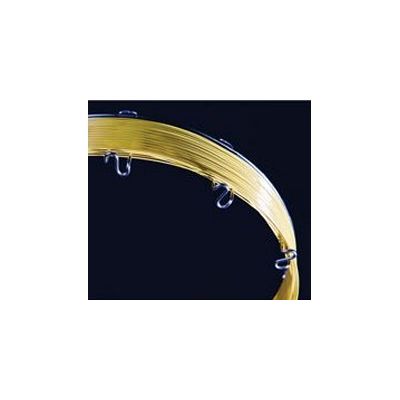
Model Rt-Alumina BOND/MAPD -Fused Silica Plot Columns
Optimized deactivation produces maximum response when analyzing trace levels of acetylene, methyl acetylene, and propadiene. Stable response factors make this column ideal for process-type applications where recalibration must be minimized. High loadability reduces peak tailing and improves separations. Extended temperature range up to 250 °C for fast elution of high molecular weight (HMW) hydrocarbons and accelerated column regeneration following exposure to water. Rt-Alumina BOND/MAPD PLOT columns are made specifically for the analysis of petrochemicals and downstream products such as ethylene, propylene, butylenes, and butadiene.
- Highly selective for C1-C5 hydrocarbons; separates all unsaturated hydrocarbon isomers above ambient temperatures.
- Reactivity of aluminum oxide stationary phase is minimized so that column response for polar unsaturates, such as dienes, is optimized. Column sensitivity or response ensures a linear and quantitative chromatographic analysis for these compounds.
- Strong bonding prevents particle generation. The column can be used in valve switching operations, without release of particles that can harm the injection and detection systems.
- Rt®-Alumina BOND columns are stable up to 200 °C (250 °C for BOND/MAPD columns). If water is adsorbed on the column, it can be regenerated by conditioning at the column`s maximum temperature. Full efficiency and selectivity will be restored.High sample capacity gives exceptionally symmetric peaks; ideal for volatile hydrocarbon separations at percent levels, as well as impurity analyses at ppm concentrations.
Guaranteed Reproducibility
Each Rt®-Alumina BOND column is tested with a hydrocarbon test mix to ensure proper phase thickness and selectivity. 1,3-Butadiene is used to calculate k (capacity factor), which is a measure of phase thickness. Selectivity is measured using retention indices for propadiene and methyl acetylene. The resolution of trans-2-butene and 1-butene is also verified. To measure coating efficiency, plates per meter are checked using 1,3-butadiene. Extensive testing assures reproducible retention times and predictable flow behavior column-to-column.
- Optimized deactivation produces maximum response when analyzing trace levels of acetylene, methyl acetylene, and propadiene.
- Stable response factors make this column ideal for process-type applications where recalibration must be minimized.
- High loadability reduces peak tailing and improves separations.
- Extended temperature range up to 250 °C for fast elution of high molecular weight (HMW) hydrocarbons and accelerated column regeneration following exposure to water.
Restek`s R&D chemists have optimized the deactivation technology applied to our Rt®-Alumina BOND/MAPD column for improved analysis of trace concentrations of polar hydrocarbons like acetylene, methyl acetylene, and propadiene in hydrocarbon streams containing higher levels of C1-C5 hydrocarbons. Our new Alumina PLOT deactivation produces an incredibly inert column that offers superior reproducibility and stable response factors to maximize the number of analyses before recalibration is required. Its high sample capacity reduces peak tailing, thereby improving the separation of target compounds. In addition, a 250 °C maximum operating temperature lets you more quickly elute hydrocarbons up to dodecane and reduces regeneration time when the column is exposed to water from samples or carrier gases.