


Mold
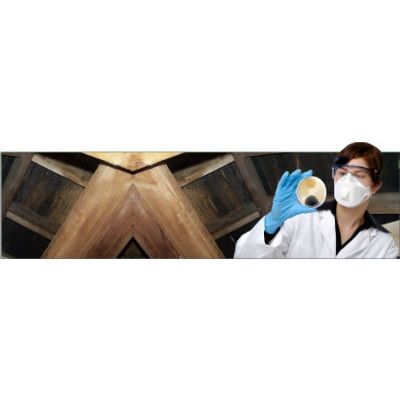
Mold is the general term used to designate microscopic fungi, which are generally organisms that live from the assimilation of decomposed organic matter. They are brought indoors by drafts, pets and humans. Mold develops in humid areas where the temperatures vary from 2° C to 40° c (35°F to 104° F) and where there are available nutriments like food products (fruit, vegetables, pet foods…) carpets and rugs, books and documents, damp clothing or cloth, organic glues and coatings, wood, cardboard, and plaster blocks. Mold is often found in basements, kitchens, and bathrooms, as well as in storage areas, behind furniture or in bookcases, especially if ventilation is insufficient. It can also be found on other moist surfaces such as walls and window frames where humidity from leaks or condensation is present.

There are thousands of species of mold. Penicillium, which is the basis for penicillin, is one of them; aspergillum, which causes a respiratory disease, is another. Mold can be detected by the presence of blackish or brownish spots on the infested surfaces, a distinctive moldy, earthy or alcoholic smell, and detachment, deformity or other signs of water infiltration that indicate the presence of mold colonies under the materials.
It is usually easy to prevent the development of mold by ensuring proper air circulation in rooms and by storing linens, cardboard, plaster blocks, wood or other porous materials in correctly ventilated areas. Dryer vents should be correctly installed and checked, humidifiers properly cleaned, and any damage from leaks should be repaired immediately. Careful attention to cleanliness is necessary, especially in the rooms where humidity is present. If the mold is discovered, it can be treated with appropriate products, the infested spot cleaned and properly dried, and the contaminated materials removed and disposed of. Should the infestation be critical, or the building structure affected, it is necessary to get assistance from a specialist to eliminate the mold.
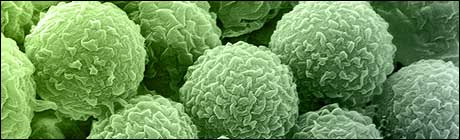
If present in small quantities, and regularly treated and eliminated, mold is not a serious health hazard. On the other hand, if there are large, uncontrollable colonies, the mold releases tiny particles into the surrounding air. These particles, if inhaled, can by highly toxic. Since the 1980’s, the authorities in several countries, in particular in North America and Europe, have become concerned about the increase in the number of cases of mold-related pathologies. Spores and mold dust can cause allergies and other respiratory problems in sensitive patients, trigger asthma attacks, and even be the cause of potentially deadly diseases. Some mold produces mycotoxins in certain environmental conditions, particularly in the industrial and agricultural sectors, where the combination of chemical or phytosanitary products and mold can lead to very serious health issues.
Long-term indoor exposure to air that is polluted by spores and mold dust can lead to serious lung disease and cause cancers or hepatotoxic, neurotoxic, mutagenic and immunosuppressive pathologies. This is the case when patients have been exposed to Stachybotrys, or toxic black mold, which causes severe health problems especially in families and young children living in dilapidated housing that cannot be properly sanitized. Symptoms are allergic reactions, nausea, vomiting, dizziness and even pulmonary bleeding, and severe cases can be fatal. Aspergillum sometimes affects patients in poor health and can be found in hospitals as a nosocomial disease. It can also cause death if the patient is severely immunodeficient. Other types of fungi can be found in bird droppings and can cause a sickness similar to influenza. Finally, food contaminated by mold can lead to food poisoning the gravity of which depends on the fragility of the person and the quantity of mold consumed.
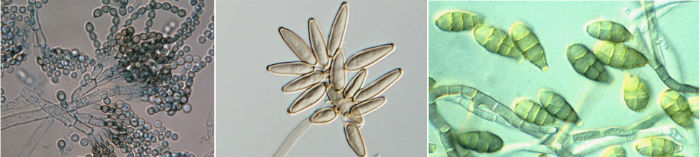
Though mold is generally easy to detect by sight or by smell, it is sometimes necessary to have laboratory analyses carried out to determine the spread of the infestation so that appropriate treatment and repairs can be done. Such analyses are useful for medical purposes when families suffer from affections that may be mold-related, especially if the environment is favorable to the development of mold. Lab analyses are also a non-invasive way of ensuring that mold is not present in a building before purchasing it. Finally, lab analyses may be required as legal proof in case of conflict or latent defects.
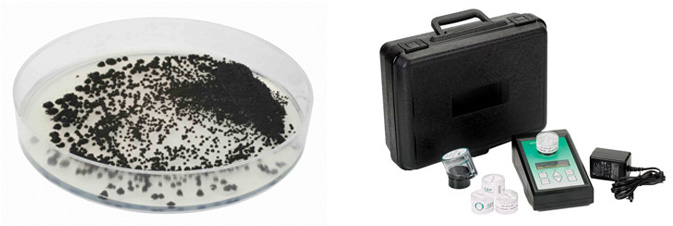
One method consists of taking samples and developing them in culture glasses in order to detect any mold and determine the type and quantity. This « live » method usually takes about 15 days. The second method is an ordinary microscopic examination. Samples are taken of the air or surface matter, colored and then placed under a simple light transmission microscope in order to see if spores or mold dust is present and what type. The results are usually available in less than a week with this method. Once the contamination has been treated, it is useful to do a second analysis in order to ensure that all the mold has been eliminated and the surfaces are healthy again.

Axxonlab offers analyses to detect mold using both the live sample culture and the microscopic examination methods. The results are available within 24 to 48 hours and under certain conditions, the results can be available on the same day the samples are taken.