

- Home
- Companies
- MTE Instruments
- Products
- MTE BeDNA - Land-Based eDNA Sampler
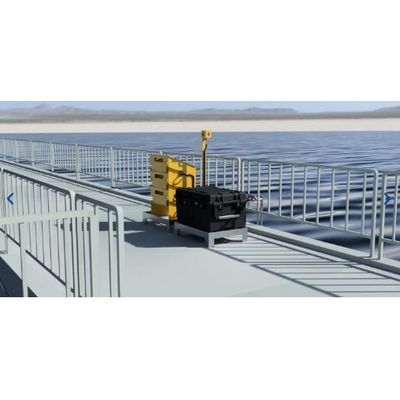
MTE BeDNA - Land-Based eDNA Sampler
The BeDNA Land-Based eDNA Sampler is an innovative solution for periodic sampling from oceanograhic buoys. The system is ready to install on an MTE or third party buoy. This system automates the collection of environmental DNA from water, enabling researchers, environmental agencies, and marine industries to efficiently track biodiversity, detect invasive species, and assess ecosystem health without requiring constant fieldwork.
Equipped with extended preservation technology, the system ensures high-quality DNA samples for accurate species detection and long-term ecological monitoring. Integrated remote data transmission capabilities allow users to access real-time system status and configuration.
Unlike manual sampling methods, our shore-based eDNA system minimizes human intervention while providing consistent, repeatable eDNAcollection. By offering a scalable, cost-effective, and non-invasive approach to environmental assessment, this solution supports sustainable resource management, conservation efforts, and regulatory compliance.
Whether for scientific research, environmental impact assessments, or early detection of ecosystem changes, our Buoy-based eDNA system provides reliable, high-resolution insights, transforming how we monitor and protect aquatic environments.
- Sampling Method: Automated water pumping with eDNA filtration.
- Telemetry: Satellite or cellular data transmission.
- Data Access: Remote connectivity via cloud or local storage.
- Power Supply: Solar and battery.
- Deployment Options: Fixed mounting on land-based structures.
- Sampling Volume: Configurable based on research requirements.
- Filter type: 25/47mm filters with 1.5 micron porosity.
- Temperature & Salinity Tolerance: Optimized for various water conditions.
- Mounting: Designed to be mounted on oceanographic buoy.
- Biofouling control: UV-Based protection method.
- Automated Sampling: Collects water samples at scheduled intervals, using a constent sampling process.
- Large Sample Volume : Several liters sampling volume capacity, limited by filter saturation.
- Extended Sample Preservation : Automated sample treatment for up to 3 months preservation.
- Large sample count : Collects up to 96 samples, preserved for several months
- Resistance to Cross-contamination: Laboratory-validated cross contamination control.
- Negative sample control: Self contamination detection using MilliQ water.
- Real-Time Data Transmission: Remote access to data for continuous system status monitoring.
- Non-Invasive Technology: Detects species without disturbing the environment.
- Biofouling control: UV-Based protection method.
- Multi-Environment Compatibility: Suitable saltwater and freshwater environments.
- Low Maintenance: Designed for long-term, hands-free operation with minimal upkeep.
- Customizable Sampling Parameters: Adjustable for different water conditions and research objectives.
- Easy sample retrieval: Rugged sample units are easy to replace and ensure safe transportation of the samples to the laboratory.
- Marine Biodiversity Monitoring: Detect and track marine species presence near shorelines, harbors, and coastal habitats.
- Invasive Species Detection: Early identification of non-native species that may threaten local ecosystems.
- Fisheries Management: Monitor fish populations to support sustainable fishing practices and resource management.
- Pollution Impact Assessment: Assess the effects of pollutants, such as chemical runoff or microplastics, on aquatic life.
- Aquaculture Health Monitoring: Track disease presence and ecosystem changes in fish farms and shellfish farming sites.
- Climate Change Studies: Observe shifts in species distribution and ecosystem responses to environmental changes.
- Wetland & Estuary Conservation: Support habitat restoration projects by tracking biodiversity and water quality.
- Harbor & Coastal Infrastructure Monitoring: Evaluate the environmental impact of ports, marinas, and offshore structures.
- Regulatory Compliance & Environmental Assessments: Provide data for government agencies and industries to meet environmental regulations.
- Education & Research: Enhance scientific studies, student research projects, and environmental education programs.