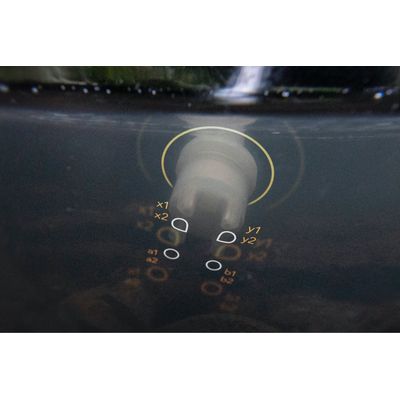
Phathom - Multi-Beam Turbidity Sensors
Phathom’s multi-beam turbidity sensors provide unrivalled accuracy that single-beam sensors simply can’t supply. Phathoms generate multiple light beams that are synthesized into a ratio-metric algorithm that, once calibrated, precisely calculates turbidity or total suspended solids and self-compensates for common sources of measurement error.
Phathom turbidity sensors offer reliable, accurate, continuous monitoring
Phathom turbidity and TSS sensors provide sophisticated multi-beam technology in a rugged, durable package. Phathom’s self-compensating algorithms correct for measurement errors that other sensors can’t handle so you get real-time information, all the time.
Continuous, reliable, rugged water sensors
When you need to know what’s in the water, you need the science of water monitoring. Phathom’s multi-beam sensors deliver Total Suspended Solids and turbidity readings you can rely on.
Just like a doctor taking a patient’s vital statistics, monitoring water is a crucial health check. And just like a doctor, we have to be able to trust the results our instruments are giving us.
That’s why we developed Phathom’s multi-beam sensors to provide unrivalled accuracy that single-beam sensors simply can’t supply. How? The short answer is that it’s all in the maths. For the longer answer, keep reading.
This might not be the multi-beam you think you know
But first, a warning. This might not be the multi-beam sensor you think you know. Some manufacturers have tried bundling together a few single-beam sensors and calling that a multi-beam, but that’s a bit like sticking a few snakes together and calling them an octopus.
Phathom sensors are different because they’re true multi-beam sensors.
Phathom sensors generate multiple alternating beams of light to create a ratio-metric algorithm
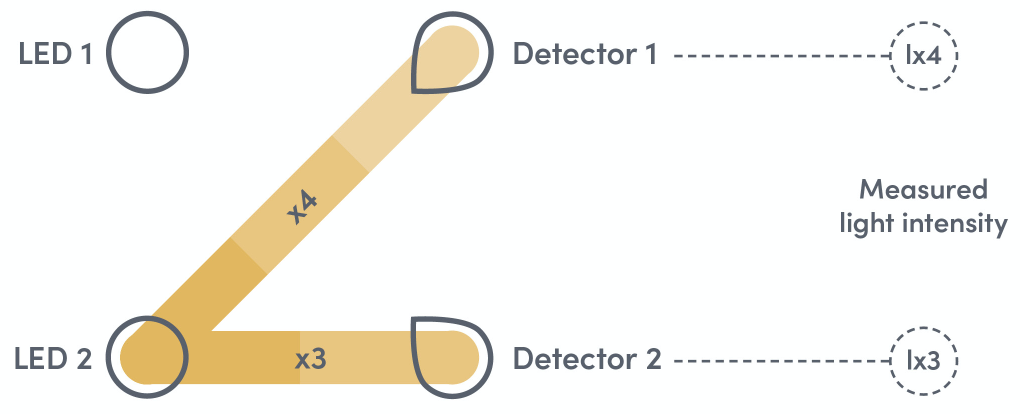
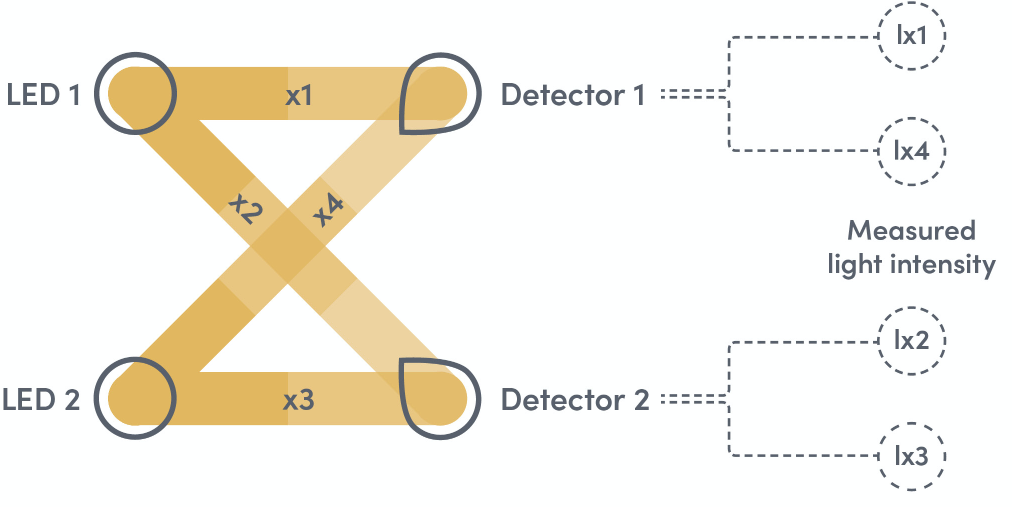
Each Phathom sensor has two LED light sources and two light detectors. LED 1 switches on and the light is picked up by detector 1 and detector 2. Then LED 1 switches off and LED 2 switches on. Again, the light is picked up by detector 1 and detector 2.
This array creates multiple beams of light—four in total—which can provide a measurement of light transmission and scatter as they pass through the water.
The magic happens when these multiple beams are synthesized into a ratio-metric algorithm that, once calibrated, precisely calculates turbidity and total suspended solids.
Read about the difference between TSS and turbidity
Single-beam sensors can’t correct for common measurement errors
To understand how this works, start by imagining a single-beam sensor. A single light source sends a single beam to a single detector which records the intensity of the light it receives. That light intensity will be affected by four variables: the distance between the light and the detector (since intensity reduces over distance), the intensity of the beam generated by the light itself, the characteristics of the detector, and absorption by anything in the water like suspended solids or dyes.
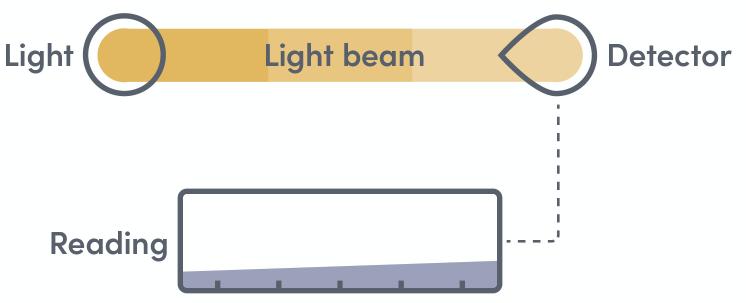
The first variable, distance, can be controlled by fixing the distance between the light source and the detector. The last variable, absorption, is the one that water monitoring is supposed to measure. But that leaves two other variables that can change and skew the results. For example, if the detector performance changes because it’s getting old, or if there is accumulated dirt on the light source, a sensor will wrongly read this as a change in the water itself.
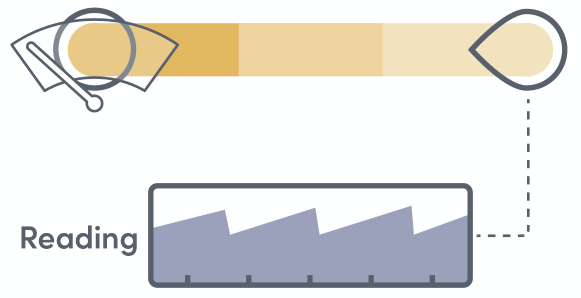
Single-beam sensors can’t correct properly for these issues. For one thing, there’s no control for the performance of ageing components. For another, they can be cleaned to get rid of dirt, but as more dirt accumulates their readings will get less and less accurate until the next clean. If you need to be able to trust the readings between cleans, you need a more accurate sensor. That’s where Phathom’s multi-beam, ratiometric approach comes in.
Phathom sensors self-compensate to correct for potential measurement errors
When LED 1 switches on, it generates a short path of light to detector 1 and a long path of light to detector 2. (The short path is direct attenuated light. In the T-series sensor, the long path is 90 degree scattered light, and in the S-series the long path is direct attenuated light.)
Because detector 2 is further away on the long path, it receives a lower intensity of light. These two light paths can be used to create a light intensity ratio: Ra = Ix1/Ix2 Because there are two detectors receiving the light source, this ratio compensates for any changes in light intensity, like changes caused by dirt building up on the sensor and restricting the light path. If there are any changes, they affect each light path equally and the ratio cancels out the difference. For example, if accumulated dirt means the light reaching each detector reduces by 25 percent, the ratio stays the same.
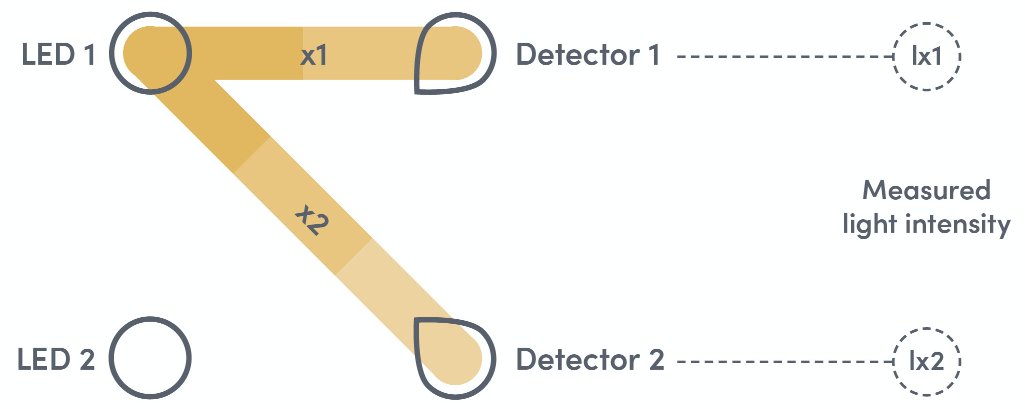

But that’s not all. After LED 1 switches off, LED 2 switches on and generates a long path of light to detector 1 and a short path of light to detector 2. Now, the alternating light paths can be used to create another light intensity ratio: Rb = 1x1/1x4
Because these two beams of light are hitting the same detector, this ratio compensates for detector variations. For example, if detector 1 loses 10 percent sensitivity due to ageing, the light intensity received from LED 1 and from LED 2 will both be reduced by 10 percent but the ratio will remain the same.

The unique advantage of Phathom sensors is that they bring both of these corrections together. LED 1 and LED 2 switch on and off alternately, creating ratios across light paths x1 and x2, and x3 and x4, and producing ratios Ra and Rc which compensate for contamination or ageing of the LEDs. Now, the Phathom sensor creates a new ratio by comparing these two ratios to eliminate the effects of contamination or ageing of the detectors: Rc = Ra/Rb.
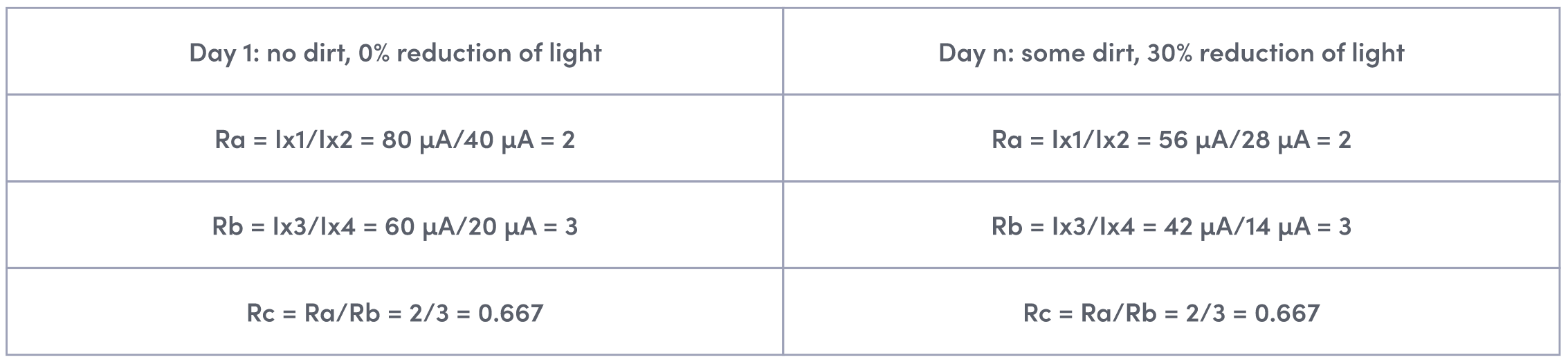
If the last few paragraphs have seemed like a blur of maths, then here’s the simple takehome message: by using these ratios for calibration and measurement, rather than simply measuring the direct output from detector 1 and detector 2, errors introduced by contamination and component ageing are eliminated in virtually every application.
The ratiometric approach means that after they’ve been calibrated, Phathom sensors are self-compensating. Because they compensate for reductions in light intensity, Phathom sensors give accurate readings even when they’re dirty (except in some rare environmental applications where specific kinds of growth can cause reflections or refractions of light; this can be solved with an attachment).By contrast, single-beam sensors misread their own contamination as something in the water and need to be constantly cleaned to be accurate in every type of application. If Phathom sensors get clogged, which can happen occasionally, they simply stop giving a reading and you know it’s time for the simple cleaning process.
There are sensors using Phathom technology that have been running for years without interference. So if the health of your water matters, use an instrument you can trust.
Phathom sensors come in a rugged package developed to endure harsh mining environments and high-pressure industrial processes. They’ve proven their worth standing up to water hammer, temperature shocks, and all the other challenges of active sites. With a durable, single-piece polypropylene head, Phathom sensors won’t let you down.

Phathom sensors don’t require the expense of multiple site visits, unlike grab sampling, and they’re economical on power. With their sophisticated yet simple design, Phathom sensors are highly affordable. All that makes Phathom sensors a great return on investment even before you bank the financial benefits of having accurate data.
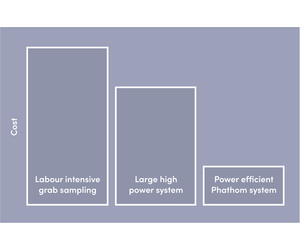
There aren’t too many power sockets in nature so Phathom sensors don’t just work on mains power, they can also work on low power supply from a 5V battery. Coupled with a solar panel to recharge them, they can last for years. Other sensors might be power-hungry, but not Phathom.

To hear nature’s voice, you need to stay connected. Phathom sensors can be used with the most open platforms, 4-20mA, Modbus RS485 and SDI-12, making it compatible with a broad range of telemetry options. With Phathom sensors, you’re always online.

Phathom sensors are easy to install, use, and maintain. They’re designed to be intuitive and user-friendly, and you can calibrate them against international standards or directly against the site you want to monitor. Phathom sensors aren’t just sophisticated, they’re beautifully simple too.

Phathom sensors have wide-ranging applications, from construction, to industry, to agriculture, to municipal, to environmental monitoring. If you need to monitor turbidity or TSS, there’s a Phathom sensor for your project.