

Qilee - Multi-Effect Evaporator
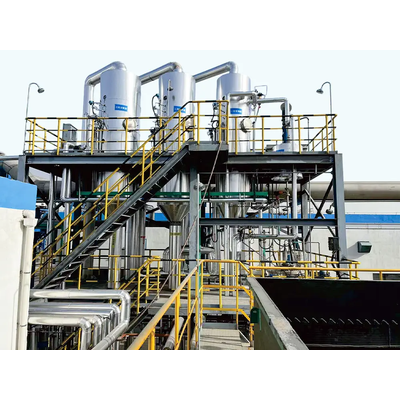
Maximize Energy Efficiency with Multi-Stage Steam Reuse. A Multi-Effect Evaporator is a combined system consisting of multiple single-effect evaporators. Its core advantage lies in reusing the waste steam generated by the previous effect as the heating medium for the next effect, significantly reducing energy consumption. Common configurations include double-effect, triple-effect, and even multi-effect evaporation systems. The number of effects should be selected based on specific operating conditions, as more control points lead to greater influencing factors and smaller temperature difference driving force under different impacts.
Working Principle: Energy-Saving via Steam Reuse
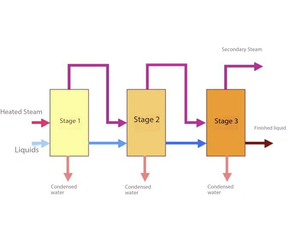
In a multi-effect evaporation system, the steam generated by heating the first effect with fresh steam does not enter the condenser directly. Instead, it is reused as the heating medium for the second effect. This principle alone can reduce fresh steam consumption by approximately 50%.
By repeating this steam reuse principle across multiple effects, fresh steam consumption can be further reduced. The total temperature difference is formed between the maximum heating temperature of the first effect and the minimum boiling temperature of the last effect, which is distributed among each effect. As a result, the temperature difference per effect decreases with the increase in the number of effects.
To achieve the specified evaporation rate, the heating area must be increased. Preliminary estimates show that the total heating area required for all effects increases proportionally with the number of effects. Consequently, while steam savings gradually diminish, the investment cost rises significantly-making the selection of effect number a key balance between energy efficiency and investment.
Our MVR Evaporator is widely used in evaporation, concentration, crystallization, miscellaneous salt separation and drying processes in various industries, providing efficient and energy-saving solutions for industrial production and wastewater treatment:
- Chemical & Dyeing Industry
- Petrochemical, Coking & Coal Chemical Industry
- Metallurgy & Smelting Industry
- Power Plants & Steel Mills (Desulfurization & Denitrification Wastewater Treatment)
- Electroplating Industry & Circuit Board Waste Liquid Treatment
- Pharmaceutical & Pesticide Industry
- Lithium Battery New Energy Industry
- Hazardous Waste Industry & Landfill Leachate Treatment
- Food & Biological Fermentation Industry