

AMWEI - Model 80C 470 Ohm PTFM04BF471Q2N34BS -Murata POSISTOR Cross Screw Clamp PTC Lug Sensor
AMWEI Screw Clamp PTC Limit Temperature Sensor Metal Tag Lug Probe Assemblies, Resistance @80C Tsense Protection Temperature 470 ohm min. R25: 100 Ω max, Vmax 30V, Murata Code PTFM04BF471Q2N34BS POSISTOR Cross, for Transistors, Thyristors, stereo main amplifiers, devices having risk of overheat Overheat Sensing Protection Temperature. More details in https://amwei.com/murata-ptfm04bf471q2n34bs-ptc-lug-sensor-80c-470-ohm/Max. operating voltage (TA = 0-40 C) Vmax: 30 V DC
Measuring voltage (TA = 25 C Tsense) Vmeas : 2.5 V DC
Rated resistance R25: 100 Ohm max.
Sensing temperature Tsense: 80C centigrade.
Resistance at 65C (Tsense-15C): 330 Ohm max
Resistance at Sensing temperature 80C (Tsense): 470 ohm min .
Maximum permissible current: 100mA
Operating temperature range Top -25–+130 C
Operating temperature range (V = Vmax) Top 0–+40 C
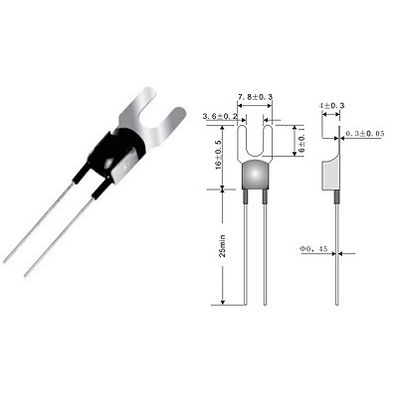
Screw clamp type temperature sensor, for sensing the temperature of transistors, thyristors, stereo main amplifiers, and other devices having risk of overheat.
Limit temperature sensor with epoxy resin coating.
Tinned pin leads wire.
Metal lug tag screw clamp type easy mounting.
Metal tag lug permits good thermal coupling and thus short response time.
Making use of the characteristics that the resistance of ceramic PTC thermistors increases sharply above curie temperature, when ambient temperature increases abnormally, protective circuit installed PTC thermistor will turn on or cut off loop through resistance changing, achieving thermal protection purpose.
PTC thermistors protect such equipment and components as motors, transformers, power transistors and thyristors against over-temperature.
A PTC thermistor is less expensive than a thermostat, and its switch temperature can be more accurately specified. It is also smaller and easier to design-in to electronic circuitry. Therefore PTC thermistors can be ideal devices for temperature detection, monitoring, indicating, limiting and over (excessive) temperature protection.