


- Home
- Companies
- JPK BioAFM Business - Bruker Nano GmbH
- Products
- NanoTracker - Model 2 - Optical ...
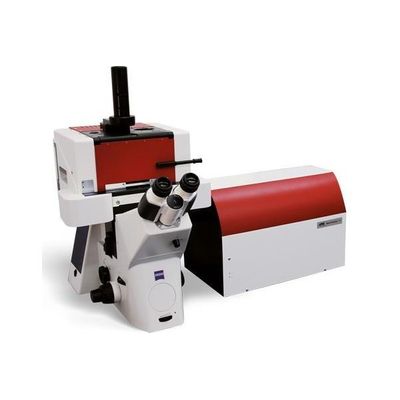
NanoTracker - Model 2 -Optical Tweezers
Modular force-sensing optical tweezers and optical trapping platform. The NanoTracker™ 2 is an optical tweezers platform based on research-grade inverted optical microscopes and designed for sensitive manipulation, force and tracking experiments. With the NanoTracker™ 2, the user can trap and track particles from several µm down to 30nm with the ability to control, manipulate and observe samples in real time with nanometer precision and femtoNewton resolution.
Multiple Traps
Precise optical trapping and 3D-manipulation
Trap and track particles from several µm to 30 nm: Beads, oil bubbles, bacteria, single-molecules, and small cells. For live cells studies and materials science.
Smallest Forces
Precise force measurements
Quantitative sub-pN force measurements and position tracking at MHz sampling rates. Ultra-stable 1064 nm trapping laser.
Versatile
Couple with confocal microscopy
Combine with standard optical microscopies, AFM and Raman-spectroscopy. Simultaneous optical trapping, tracking, and advanced fluorescence investigation.
NanoTracker™ 2 - designed for quantitative force measurements
With the NanoTracker™ 2, the user can trap and track particles from several µm down to 30nm with the ability to control, manipulate and observe samples in real time with nanometer precision and femtoNewton resolution.
NanoTracker™ technology provides precisely quantifiable and reproducible measurements of particle/cell interactions. The system delivers precise information about single molecule mechanics and may also be used to determine mechanical characteristics such as adhesion, elasticity or stiffness on single molecules.
The video shows confocal scanning microscopy combined with optical particle manipulation
Highest performance & modular design
The new system is designed to detect the smallest forces and manipulate particles or molecules with the highest precision. Special laser stabilization and newly designed detection electronics in the head provide to very low noise levels. Additionally, the compact folded design of the laser beam path makes the system immune to drift.
Double-beam or multi-beam configurations, combined solutions for coarse and extra precise sample positioning give the user flexibility. Several beam steering options including the newly designed pivot-point piezo-driven mirrors and fast acousto-optic deflectors (AODs) perfectly match requirements of any application.
In addition to extensive sample positioning control including a customized closed-loop piezo sample stage option, the traps can be steered individually in 3D through the sample. Moreover, the laser power can be controlled for both traps independently. This freedom is required to allow a wide range of experimental assays and geometries.
The two traps are available full time and are generated from a single laser source by polarization splitting. This makes the system ultra-stable against drift.
The new back focal plane interferometry detection unit of the NanoTracker™ 2 is equipped with individual detectors for each trap having separate diodes to lateral (XY) and axial (Z) displacements of the trapped bead.
Such a detection approach, in combination with software-controlled dimming filters, allows the use of the full dynamic range of the detectors, achieving the highest possible sensitivity for any selected bead types, laser intensities and trap split ratios.
Single-molecules & biopolymers
- Intra-molecular elasticity & protein folding dynamics
- Motor protein tracking
- DNA/RNA mechanics
- Protein-DNA binding
- Nanopores & 3D polymer network probing
Cell-particle interaction and infection studies
- Membrane organization (e.g., lipid rafts)
- Trans-membrane processes, trafficking
- Intracellular forces
- Receptor-ligand experiments
- Cell mechanics and cell motility
- Membrane tether dynamics
- Micro-rheology of cells and gels
Cell-particle interaction and infection studies
- Tracking of pathogen-host interaction and escape forces
- Bacterial and virus adhesion forces
- Local gene or drug delivery
- Entrance mechanism studies
- Nanotoxicity & endocytosis studies
Advanced measurements
- Complex optical trap geometries
- Optical guiding & artificial crystal building
- Local field enhancement & Raman/SERS applications
- Brownian motion tracking, Photonic Force Microscopy (PFM)
- Colloidal and polymer meshworks force probing
- Video particle tracking and optical spectroscopy
- 3D force measurements with femto-Newton sensitivity and sub-nm precision
- Highest stability and lowest noise level for the most accurate measurements
- Simultaneous fluorescence imaging
- Powerful, flexible control and data analysis software
- Class 1 laser certified
- Flexible, modular design for applications ranging from single-molecules to living cells
Bruker’s BioAFMs allow life science and biophysics researchers to further their investigations in the fields of cell mechanics and adhesion, mechanobiology, cell-cell and cell-surface interactions, cell dynamics, and cell morphology. We have collected a gallery of images demonstrating a few of these applications.
- 3D particle tracking
- Point and Trap™ for easy trap positioning
- Online calibration based on power spectrum
- Advanced Force Spectroscopy including Force Clamp and Force Ramp with the new JPK RampDesigner™
- Active and passive force mapping
- Micro-rheology mode
- Optical sorting
- Trap oscillation
- Multiplexing for 3D trap arrays
- Line traps & circular traps
- Microfluidics control
- Nanoassembly
- Optical z-stacking
- Brightfield transmission illumination (standard)
- Differential Interference Contrast (DIC) in transmission (standard)
- Epi-fluorescence microscopy (standard)
- Raman spectroscopy
- TIRF microscopy
- Confocal microscopy
- FRET microscopy and more