

- Home
- Companies
- New England Hydropower Company, LLC ...
- Products
- NEHC - Two Turbine Technology

NEHC - Two Turbine Technology
Two Turbine Types: Every project presents different parameters--flows, space, environmental dynamics, size and scale. As a hydro developer, we respond with two distinctly different machines from our technology partners.
It is critical to tailor the right systems to each project and maintain them well.
Hydropower projects are in place for long periods of time--40 years and often much more.
We select the correct turbine type for each site, choosing the right size and number of machines to fit specific conditions.
This ensures the most efficient and cost effective system over the lifetime of a project. Engineering detail and continuous operational maintenance programs protect the initial investment.
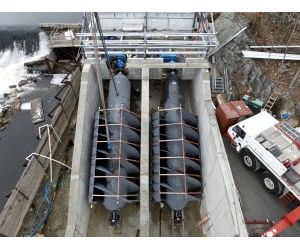
A gearbox at the top of the screw connected to the generator produces standard three phase power for either the grid or direct users as state distribution laws allow. The entire facility is linked to an electronic monitoring and control system that runs automatically, communicating to an operator whenever requested. Safety, shutdown and management protocols are strict and efficient. Their run-of-river operation are compatible with fish and other wildlife safety as extensive studies have shown in the UK and in the U. S.
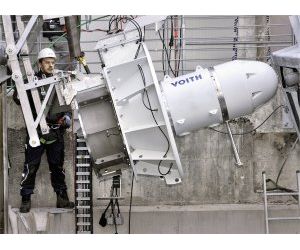
The StreamDiver was designed to keep construction effort and peripheral equipment to an absolute minimum. This allows for power creation at locations where conventional plants are not viable for economical or ecological reasons. The StreamDiver’s compact design brings maintenance-free operation to minimize costs and its water lubricated drive train is totally oil and grease free, thus environmentally friendly. Fish protection is ensured by the impeller shape as well as well as by a ?ne trash rack with low spacing and tailored fish migration optimized design. The trash rack‘s optimal inclination of around 15° generates a ?ow velocity that is ideal even to smaller-sized ?sh to prevent them from getting too close to the rack.
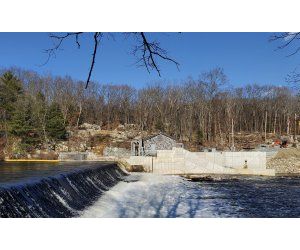
During the feasibility stage, all elements of a project site are considered in determining the choice of turbine type as well as the optimal size of either turbine type for optimal performance throughout the year. Local rainfall and the size of the river catchment upstream or canal system and volume determine this. Additionally, a key in the decision process is to protect both the aesthetics and environment of the site. An allowance is made for a significant water volume to by-pass the turbine and sustain the river habitat with continuing flow over dams, even in dry periods. At every site this is part of the calculus that drives balance.
NEHC’s systems are designed for entirely safe operation under all conditions. Water flow velocities at the intake are kept low ensuring safe recreational activities. The entire screw mechanism and all the flow channels are fenced and secured to ensure that no one can fall in to the turbine. Every aspect of the electronic monitoring and control system is designed to be ‘fail safe’ so that if a problem occurs the system will automatically shut down without the need for power or intervention. There are operational and safety sensors as well as river height sensors customized to each installation.
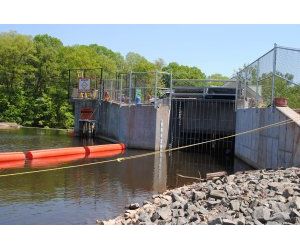
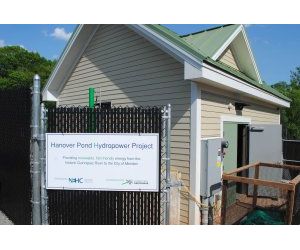
NEHC sites require a “power house.” One of the first questions NEHC constituents want to know is, “What does it look like?” The answer parallels the engineering conversation: Each site is unique and requires good selection and design sensibility. The goal is to create a facility that is a good complement to what is around it. It will be part of the local landscape. The power houses are tailored to mirror the local community or environment and historical landscape: clapboard, stone and brick facing along with more standard external materials are considered in the context of the project costs and the local environment.
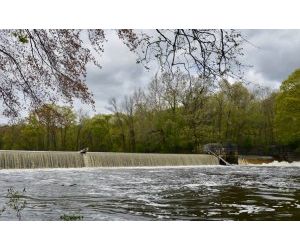
Dams and canal systems need repair. Fish need to migrate. NEHC is careful to evaluate the quality of dams that are promising for power generation. In some cases, these requirements may be beyond the company’s ability to repair and then build an economically viable generating facility. At other sites, there may be excellent reason to pursue both repairs and improvements prior to developing generation. Each site requires feasibility study to determine the course of action.
New England Hydropower combines a highly analytic culture across many disciplines with practical, "can do" project execution.
Proven Machines
Our two technologies have been successfully deployed in the U.S., Europe and other parts of the world for over a decade.
Regulatory/Permitting
Our in-house regulatory and permitting team has many years experience working with Federal, State, and local agencies and governments.
Outreach
We provide experienced outreach to agencies, environmental and river organizations, and others toward mutually beneficial, low-impact hydro generation.
Engineering
Our NEHC engineers manage the design and engineering process for each project, working with leading engineering and construction companies.
Value and Cost
Our financial analysis and modeling helps determine the viability of individual sites by balancing the cost of permitting, interconnection, construction with electricity pricing.
Site Selection
It is one thing to find a site that will generate power by analyzing river flow, head, river cycles, appropriate equipment size, and other elements. It is another to understand how to bring a site to fruition considering history, permitting challenges, distribution, price, and green energy incentives. We do it well.
Owner Interface
There are many categories of potential owners--municipal, state, private, corporate, non-profit--and each have different profiles with different goals. It is our job to match each goal with our own to generate clean electricity.
Operations and Maintenance
We operate existing plants including preventative maintenance and emergent repairs. We supervise dam safety, environmental and regulatory compliance, and we prepare and undertake emergency action plans.
We combine site knowledge—annual flows, potential head, available space, interconnection viability--with one of our two technologies to find the best solution for generating stable, green, low impact electricity.
Low-impact, small-scale hydropower
The world is faced with finding new ways to deliver renewable energy on the one hand, and protecting the environment on the other. The equation is complex whatever the technology and energy source, and NEHC believes that small-scale hydropower is a complement to either solar or wind—and far more productive based on capacity utilization factors. Accounting for dry summers and frozen winter periods in the Northeast, NEHC can produce power at about 50%-80% capacity factors in rivers and canals—several times the capacity of wind and solar. The fuel—water—is plentiful and in run-of-river circumstances our systems do not deplete water or change the flow dynamics. The overall river flows remain unchanged.
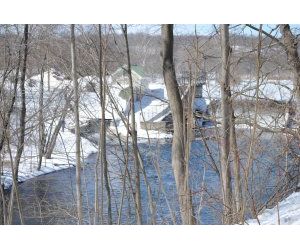
Every hydropower site is different. The physical circumstances--space limitations, distance to connectivity, flood requirements--as well as the social interests--fish protection, historical elements, recreational activities--are all part of the calculus of a site.
We can chose between a range of turbines and technologies from our partners to ensure the best implementation.

NEHC works with owners to establish the best approach to site development. Each site has different parameters, and while there are parallels between sites, each presents variables in geology, flow, history, finance, permit approach, wildlife, constituent base, scale, and ownership goals.
Recognizing broad differences in situations, NEHC’s primary aspiration is to develop, build and operate low-impact, hydropower facilities. Our ability to finance, permit, construct, and market power on a scale that is commercially viable is determined by all of these and other factors.
Renewable, green, zero-emission goals while generating incomeOften, smaller sites can be developed independently by owners whose primary aspirations are to develop small-scale hydro in support of renewable, green, zero-emission goals while generating income.
NEHC supports owner’s interests on a fee-for-service basis from initial site review to final commissioning. After an initial, “quick look” to determine viability of even very small sites, we will provide:
- A phased approach to review the site and costs affiliated it.
- Align with the owner’s goals to determine interest.
- Typically, the next phase would include a site visit resulting in a baseline feasibility study to reveal the conservative potential of the site, permitting viability, hurdles to development, potential grant access for development, and an initial cost analysis.
- If agreed, NEHC would develop a comprehensive plan for the site.
- NEHC could manage the permitting, public interface, design, construction oversight, grid interconnection and commissioning at the owner’s discretion and acceptance of a fee-for-service contract.