


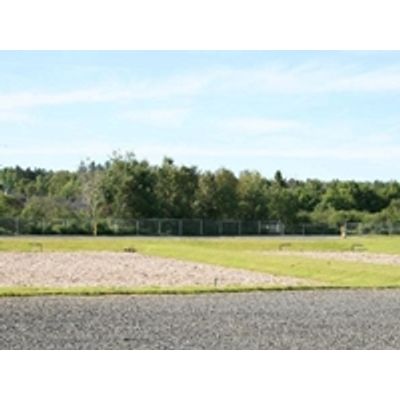
Nitrification & BOD/TSS Reduction
Total ammonia in wastewater is comprised of un-ionized ammonia (NH3) and ionized ammonia (NH4+). The ratio of un-ionized to ionized ammonia is a interrelation of pH and temperature. The un-ionized portion is toxic to fish at low concentrations, and wastewater treatment systems that discharge to flowing streams typically have ammonia or toxicity limits to protect fish living in the receiving stream.
Decreasing the toxicity of wastewater effluent can be accomplished in part by decreasing the temperature of the effluent or by reducing the pH. In most cases temperature and pH manipulation are not viable and the toxicity must subsequently be lowered by the reduction of total ammonia through nitrification.
Lagoon or pond based treatment systems provide some ammonia removal capability during the summer months, but are generally incapable of meeting current standards during prolonged periods of low water temperatures. The problem with nitrification in cold climate lagoons is two-fold:
- Nitrifying bacteria, Nitrosomnas and Nitrobacter, are generally not able to compete with heterotrophic bacteria in high BOD wastewater, so nitrification is easiest to accomplish near the back end of a lagoon system once BOD has been reduced to below 30 mg/l.
- In cold climate winter conditions, the lagoon water temperature near the back may be below 1°C. Nitrifying bacteria are very temperature sensitive, resulting in reduced (negligible) treatment rates as water temperatures drop below 5°C.
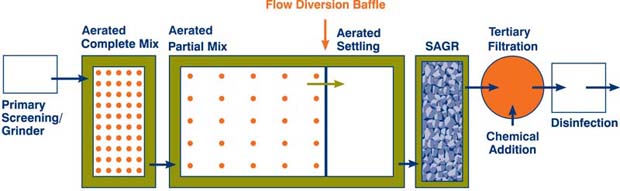
Nitrification (ammonia conversion to nitrates) in the OPTAER system is performed by the SAGR. The SAGR is ideally suited for post lagoon nitrification in severe cold to moderate climates where water temperatures can be below 0.5°C for extended periods of time.
The SAGR can be combined with aerated or facultative lagoons to meet effluent ammonia requirements in systems that operate as continuous discharge or controlled discharge.
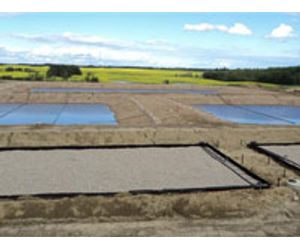
Extensive data collected from demonstration facilities in Steinbach, Manitoba and Lloydminster, Saskatchewan shows that the SAGR can reliably nitrify lagoon effluent year round consistently meeting effluent levels of 1.5 mg/l. SAGR systems in cold climate areas across North America are allowing communities to meet their new ammonia and toxicity limits without abandoning their existing lagoon infrastructure.
Extensive data collected from demonstration facilities in Steinbach, Manitoba and Lloydminster, Saskatchewan shows that the SAGR can reliably nitrify lagoon effluent year round consistently meeting effluent levels of 1.5 mg/l. SAGR systems in cold climate areas across North America are allowing communities to meet their new ammonia and toxicity limits without abandoning their existing lagoon infrastructure.