

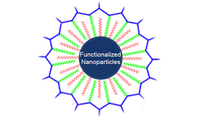
- Home
- Companies
- Stemgenics, Inc.
- Products
- Stemgenics - Model NIMFA-NP - ...

Stemgenics - Model NIMFA-NP -Non-Integrating Multi-Functionalized Activated NanoParticles
Stemgenics Non-Integrating Multi-Functionalized Activated NanoParticles (NIMFA-NP) are well suited for precise regulation of intracellular signaling pathways and targeted control of cell fate
CELL AND TISSUE REJUVENATION AND LONGEVITY
Multi-specific nanoparticles functionalized with different bioactive molecules like telomerase, an enzyme that extends the length of telomeres shortened with age, resulting in resetting the biological clock of the cell and renewing the life cycle
REGENERATIVE MEDICINE
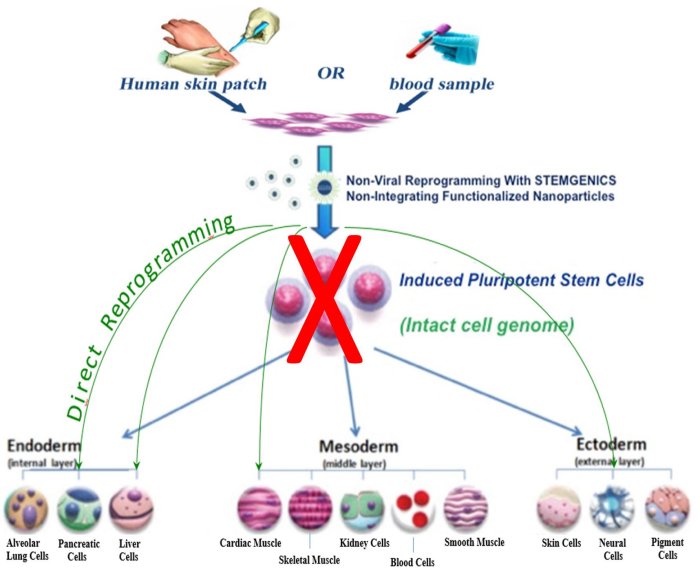
Multi-specific nanoparticles functionalized with peptides, proteins and mRNA turn on or off expression of cell lineage-specific genes and trigger Direct Reprogramming of patients’ cells into
- functional hepatocytes - NASH, cirrhosis, liver fibrosis, etc.,
- beating cardiomyocytes - myocardial infarction, cardiac fibrosis, etc.,
- dopaminergic and other specialized neurons – neurodegenerative diseases
Direct cell reprogramming using hepatogenic, cardiogenic, neurogenic or other cell-type specific multi-functionalized nanoparticles is an attractive and preferred alternative to pluripotent stem cells that are known to trigger tumorigenesis.
ONCOLOGY
Multi-specific nanoparticles functionalized with siRNAs and mRNA inhibit expression of abnormal genes and restore expression of silenced tumor suppressor genes
- Hepatocellular carcinoma
- Glioblastoma
mRNA-BASED VACCINES AND ANTI-VIRAL THERAPEUTICS
Vaccines:
Multi-specific nanoparticles functionalized with one or more viral gene-specific mRNAs induce expression of one or more viral proteins and activate immune response
Anti-viral therapeutics:
Multi-specific nanoparticles functionalized with two or more viral gene-specific siRNA knock down expression of viral-specific genes preventing viral particle reassembly, viral multiplication and infection
Stemgenics multi-functionalized nanoparticles rapidly within minutes penetrate through cell membrane and enter the cytoplasm and the cell nuclei to reprogram mature human cell into a new cell type of interest
The multi-functionalized nanoparticles exhibit nearly 100% efficiency in cytoplasmic and nuclear delivery of the cargo and demonstrate virtually no cytotoxicity as determined by flow cytometry analyses
Stemgenics multi-specific nanoparticles are highly efficient in delivering bioactive molecules into the cytoplasm of adherent and non-adherent hematopoietic cells
Imaging of human cells treated with nanoparticles functionalized with cytoplasmic targeting elements and labeled with a green fluorescent dye demonstrates that functionalized nanoparticles exhibit nearly 100% efficiency in penetrating through plasma membrane and entering the cytoplasm of the cells. Representative high-resolution images of the cells with cytoplasmic localization of functionalized nanoparticles are depicted in Figure 2 (human fibroblasts) and Figure 3 (human hematopoietic cells).
Fluorescently (FITC) labeled nanoparticles multi-functionalized with cell reprogramming polypeptide molecules, cytoplasmic and nuclear targeting elements effectively enter the cells and concentrate in the nucleus of treated cells. Representative high-resolution images of fluorescently labeled nanoparticles in live cells (Figure 4) or fixed cells (Figure 5) demonstrate virtually 100% efficiency in intracellular delivery of proteins of interest into the cell nuclei using Stemgenics multi-functionalized nanoparticles.
Culturing mature human cells with cell reprogramming nanoparticles functionalized with bioactive molecules produces early stage stem cell colonies of 100 microns as shown in Figure 7 and late stage stem cell colonies of 200 microns as shown in Figure 8.
Human primary fibroblasts (A) were reprogrammed into human pluripotent stem cells (niPSC) using nanoparticles multi-functionalized with Oct4, Sox2, Nanog and Lin28 transcription factors in complete absence of DNA and characterized by morphology, growth, and presence of characteristic pluripotency markers.Intracellular delivery of gene-specific siRNAs with Stemgenics NIMFA-NP
Fluorescence images of control and treated cells demonstrate 100% efficiency in intracellular delivery of gene-specific siRNA into the cell cytoplasm using Stemgenics multi-functionalized nanoparticles.
NIMFA-NP functionalized with gene-specific siRNA are highly efficient in knocking down target gene expression in human cellsStemgenics NIMFA-NPs functionalized with 75 picomoles (pmol) of gene-specific siRNA virtually abolish expression of a target gene as determined by RT-PCR.
Highly efficient intracellular delivery and robust expression of gene-specific mRNA using Stemgenics lipid-free multi-functionalized nanoparticles.
Gene-specific mRNA generated in-house from cDNA was further modified and functionalized onto Stemgenics nanoparticles. Primary human cells treated with mRNA-functionalized nanoparticles were cultured overnight, fixed, and fluorescent images acquired using high resolution fluorescence microscope.
Nanotherapeutics platform technology has broad applications for therapeutic drug development
Stemgenics multi-functional nanoparticles may be used to introduce a wide range of bioactive molecules alone or in various combination into cells, tissues, organs, and organisms.
The Stemgenics technology uses patent-protected non-integrating multi- functionalized activated nanoparticles (NIMFA-NP) to deliver therapeutics. The NIMFA-NP are similar to FDA-approved nanoparticles and further modified with additional molecules to target intracellular processes. Stemgenics customizable NIMFA-NP can be functionalized with different bioactive molecules alone or in various combinations and control simultaneously several intramolecular targets, making them more robust and highly effective. Stemgenics nanotechnology protected with 12 issued and pending patents is well suited for regenerative medicine, revitalization and longevity, oncology, and vaccine and anti-viral nanotherapeutics.
- Tissue rejuvenation, organ revitalizations and lifespan extension: in patient administration of nanoparticles functionalized with telomerase mRNA to rebuild chromosome telomeres and restart biological clock
- Liver Regeneration: In vivo direct reprogramming of fibrotic cells/scar tissue of patients directly into functional hepatocytes for liver regeneration
- Heart Regeneration: In vivo direct reprogramming of fibrotic cells/scar tissue formed after heart attack into beating cardiomyocytes for heart regeneration
- Neurodegenerative Diseases: direct reprogramming of human fibroblasts to dopaminergic, GABAergic neurons or other neural cells for treatment of Parkinson’s, Alzheimer’s and other neurodegenerative diseases
- Functionalization with one or more target gene-specific mRNA (mRNA-based vaccines) and/or target gene-specific siRNAs (anti-viral therapeutics)
- Knock out expression of oncogenes with siRNA and restore expression of silenced tumor suppressor genes with mRNA
- Intracellular delivery of small and/or large bioactive molecules of various origin including small molecules, peptides, proteins, antibodies, short miRNAs, siRNA, saRNA, mRNA alone or in various combinations for in vitro and in vivo therapeutic applications
Stemgenics` breakthrough platform nanotechnology has industry-changing advantages over other delivery systems
The patent-protected multi-functionalized nanoparticles very effectively deliver biologics including small molecules, peptides, proteins, siRNAs, miRNA and mRNAs alone or in various combinations into different intracellular compartments without toxicity and in the absence of DNA or virus which may cause mutagenesis and tumor formation.
The multi-functionalized nanoparticles are very stable and do not require extreme low temperatures in preparation or storage.
Most importantly, the multi-functionalized nanoparticle delivery may be used “in vivo” as “off the shelf” regenerative medicine therapeutics as a powerful and safe alternative to to time- consuming and expensive cell therapy approaches.
Stemgenics nanotechnology is applicable to a broad range of core-based and polymeric biodegradable nanoparticles approved by FDA for use in humans.
Stemgenics uses biodegradable nanoparticles multi-functionalized with small and large molecules capable of reprogramming mature human cells into other pre-determined specialized cell types
- The reprogramming nanoparticles do not contain viruses or DNA and they preserve the integrity of genomic DNA of
newly-generated cells. - Stemgenics` functionalized nanoparticle-reprogrammed cells may be used in clinical regenerative medicine.
- Stemgenics` reprogramming functionalized nanoparticle technology platform is covered by patent applications and is grandfathered into the old system of "first to invent," rather than "first to file."