


- Home
- Companies
- NS Instruments
- Products
- NS-Instruments - Model MultiTalent 318 ...
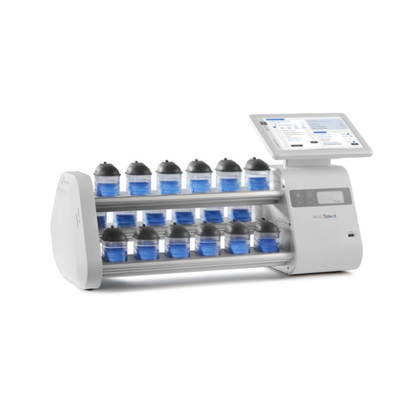
NS-Instruments - Model MultiTalent 318 -Fully Automated Methane Potential Tester
MultiTalent PX2 is a fully automated, standardized platform for biodegradability analysis. It evaluates the aerobic biodegradability and disintegration of plastics under composting, soil, or aqueous culture medium conditions by measuring the carbon dioxide produced by naturally occurring microbial degradation of organic matter.
According to GB/2035-2008, degradable plastics are defined into four main categories: biodegradable plastics, hydrolytically degradable plastics, oxidatively degradable plastics, and photodegradable plastics. The MultiTalent PX2 biodegradation analyzer is widely used in various testing standards and is specifically designed for the aerobic degradation of plastics by microorganisms. It complies with relevant domestic and international standards in all aspects, including experimental design, sample and inoculum processing, material sampling and preservation, measurement principles, measurement indicators, experimental measurement devices, data acquisition, and data analysis and calculation.
Our system allows you to easily and accurately measure the degradation of different types of experimental materials under controlled composting conditions, providing detailed data on plastic degradation kinetics and leading the industry trend towards standardized testing. It further guides the classification and labeling of biodegradable plastic products, strengthening the control of plastic pollution.
- Support international and domestic standards for plastic composting degradation
- Effectively saves time and labor
- Standardized testing process and data output
- Secure data storage & local touchscreen access
In recent years, the EU, the Americas, and China have attached great importance to the control of plastic pollution, and have introduced laws and regulations including restrictions on plastics, bans on plastics, and taxation , . The requirements for biodegradable plastics have now reached a stage that emphasizes higher standards of health and safety and circularity.
According to the "Classification and Labeling Guidelines for Biodegradable Plastic Products" formulated and issued by the China National Light Industry Council , biodegradable plastics exhibit different degradation behaviors in different environments. Based on these environmental conditions, biodegradable plastics are classified into : soil-degradable plastics, compostable plastics, marine-degradable plastics, freshwater-degradable plastics, sludge anaerobic digestion-degradable plastics, and high-solid-state anaerobic digestion-degradable plastics. The guidelines stipulate that the biodegradability rate of biodegradable plastics should be ≥90% , and specify content requirements for heavy metals and specific elements.
Stirring system
Two systems are available: mechanical stirring and magnetic stirring in aquatic environments. The brushless motor provides precise control and high-intensity mechanical stirring with a stirring speed range of 10-200 rpm to meet the mixing requirements of various solid materials. Low-frequency precise stirring below 50 rpm reduces shear stress on fermenting microorganisms. Advanced functions such as individually setting the rotation direction of each stirring shaft and the stirring interval are available. An optional magnetic stirring system can simulate freshwater and seawater environments.
Unattended precision measurement
Employing an ARM embedded processor improves testing accuracy and stability. It offers broad test coverage suitable for the resolution of biodegradable respiration tests. Advanced 15- channel parallel testing provides optimal experimental throughput. Operation and maintenance are simplified. Once sample is loaded, the MultiTalent PX2 can perform over 1500 hours of unattended, accurate analysis from the start of the experiment. Experimental progress can be observed via remote internet access or a standalone connection, allowing for advance preparation of sample analysis or other operations after the experiment.
Bio-fermentation unit
- Maximum number of reactors per batch of experiments: 18
- Reactor material: Glass; Reactor volume: 500 mL
- Water bath dimensions: 58 × 42.5 × 32.5 cm (33.6 L)
- Temperature control: Ambient temperature - 90? (accuracy ± 0.1?)
- Material mixing: Mechanical stirring, with controllable stirring rate and cycle, maximum speed up to 200 rpm.
- Bio-fermentation unit (optional for testing in freshwater and marine environments)
- Maximum number of reactors per batch: 18; Reactor material and volume: glass, 500 mL.
- Voltage: 110 - 240 ± 10% V
- Magnetic stirrer dimensions: 250 × 350 × 25 mm
- Ultra-thin 304 stainless steel casing design, sturdy and durable, easy to clean.
- Material mixing: Maximum speed 2000 rpm
Gas flow rate and DAQ unit
- Principle: Gas-liquid displacement and buoyancy control method
- 18 sets of trace gas flow acquisition devices can operate simultaneously.
- Built-in temperature and pressure sensors
- Embedded chips enable fully automated data acquisition and analysis.
- Measurement resolution: 3.2 mL (standard configuration)
- Detection capacity: Single standard configuration channel (2mL resolution), cumulative gas production measurement limit up to 35L.
- Specifications and dimensions: 69 × 30 × 36 cm
- Material: Engineering plastics
- Repeatability accuracy: ±1%
CO2 Adsorption Unit
- Number of CO2 adsorption bottles: Up to 18 reactors can be connected simultaneously.
- Embedded adsorption-filtration alkali block design: 18 reactors inside
- Absorption solution: 80 mL , 3M NaOH solution and pH indicator (not included in the supply).
- Carbon dioxide absorption efficiency : >98%