


- Home
- Companies
- Numed Healthcare
- Products
- Numed - Model Pro-Larva a-Virion - ...
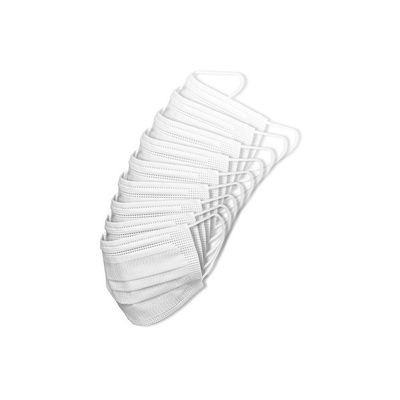
Numed - Model Pro-Larva a-Virion -Antiviral Face Mask (Pack of 50)
The innovative Pro-Larva Antiviral Face Mask with a-Virion™ technology has been clinically proven to kill up to 99.9% of coronaviruses, including COVID-19, and influenza for up to 7 hours.
The unique a-Virion™ layer of the mask offers a virucidal barrier which provides enhanced protection for the wearer and those in proximity compared to equivalent type II masks. The 4 layers of the mask provide a physical barrier for users against pathogens, microorganisms, body fluids and particles.
As the Pro-Larva Face Mask doesn’t need to be changed as often as regular medical masks, it is more cost effective and better for the environment by reducing medical waste. This anti-Covid-19 mask was designed and developed in the UK and is based on research by Dr Gareth Cave, Principal Lecturer at Nottingham Trent University’s School of Science and Technology.
a-Virion™
α-Virion™ is a proprietary anti pathogenic nanotechnology (patent pending: GB 2016813.4, 22 October 2020) which is incorporated into the anti-viral copper layer of Pro-Larva. It is based on research by Dr Gareth Cave, founder of Pharm2Farm and Principal Lecturer at Nottingham Trent University’s School of Science and Technology.
Copper is known to kill coronaviruses. The copper nanoparticles create a larger surface area and have been independently tested to ensure they remain within the mask for maximum efficacy and safety for the wearer. On contact with the virus, the nanoparticles emit ions that penetrate the surface of the virus, destroying its genetic material causing it to die and stop reproducing. This nanoparticle layer within the mask ensures enhanced protection compared to equivalent type II masks, for both the wearer and those in proximity.
The α-virion™ layer in Pro-Larva has been certified to ISO 18184 – a standard protocol to quantify the antiviral properties of textile materials.
To test materials to this standard, a specific concentration of virus is coated onto test and reference material. Following incubation at room temperature for seven hours, the samples are then washed and the amount of live virus left in the suspension is quantified using a TCID50 assay.