


- Home
- Companies
- Cole-Parmer
- Products
- Omnifit Columns - Nitrate Water ...
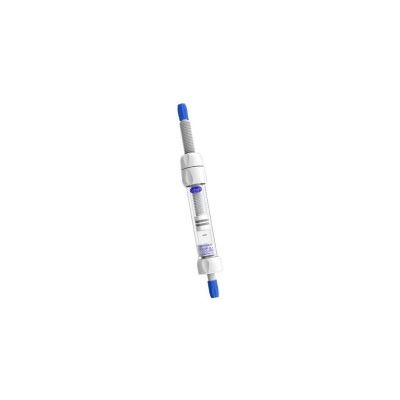
Omnifit Columns - Nitrate Water Analysis
Nitrates are essential plant nutrients, but in excess amounts they can cause significant water quality problems. One of these is to accelerate eutrophication where the response of the ecosystem to raised nitrates or phosphates is a “bloom” caused by the great increase of phytoplankton or cyanobacteria. Excess nitrates can also cause dramatic increases in aquatic plant growth and changes in the types of plants and animals that live in the aquatic ecosystem. This subsequently lowers the levels of dissolved oxygen, causing hypoxia which in turn induces reductions in specific fish and other animal populations.
Nitrates can become toxic to warm-blooded animals at higher concentrations and cause livestock poisoning and also human health effects – in drinking water, high levels of nitrates can cause methaemoglobinaemia (blue baby syndrome) in very young children.
Sources of nitrates include wastewater treatment plants, agricultural runoff from fertilisers or manure storage, failing on-site septic systems, sewage sludge disposal to land and industrial discharge.
The cadmium reduction method is a colourimetric method commonly used in testing water for nitrate. A filtered sample is passed through a column containing granulated copper-cadmium to reduce nitrate to nitrite which then reacts with another reagent to form a red colour with intensity proportional to the original amount of nitrate.
Omnifit Labware columns are ideal as reaction columns for the cadmium reduction method. A variety of dimensions are available, to suit the precise needs of the sample preparation. For example a 25mm bore x 100mm length column can accommodate 15g cadmium granules (0.3–1.6mm diameter), supported by 25um polyethylene frits and with adjustable endpieces delivering a continuous packed bed that can be plumbed inline to a suitable pump and detector. (e.g. Torvar et al., 2002).
Omnifit columns are constructed from inert, non-reactive PTFE and glass, with optional PTFE or PE frits. Coupled with PTFE tubing, PTFE connectors and valves, a complete inert fluid path can be achieved. If you’re developing your own continuous flow system, you may be interested in our range of: