


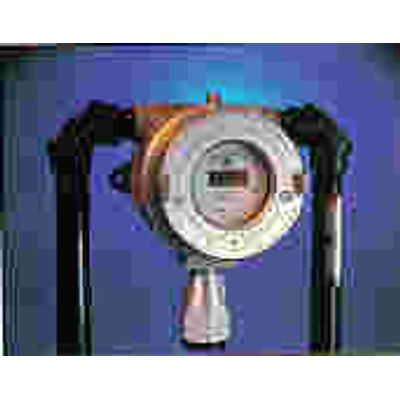
Delphian - Model SafeCAL -One Touch Calibration Stand Alone-Gas Monitoring System
The SafeCAL module installs in a Class ABCD (FMRC) conduit box with a glass dome. A Delphian sensor attaches through gold plated keyed connectors and a weather-proof fitting for easy installation and reliable operation. The entire system is sealed. All calibration is completed without opening the explosion-proof housing. SafeCAL will endure temperatures from -40oC (-40oF) to +85oC (+185oF). It will operate even when its conduit box is one third full of water.
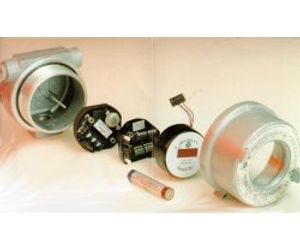
The SafeCAL gas monitor consists of two water and shock-resistant epoxy encapsulated modules, the transmitter and a processor/display. These deceptively simple components contain a microcontroller, surge and brownout protected high efficiency electronics, RFI protection, ample system memory and all necessary digital and analog circuitry.
For some facilites, the standalone features of the SafeCAL unit are sufficient. Others will want to take advantage of SafeCAL`s unique, lowcost optional SafePRO software for PCs. The SafePRO option which includes PC compatible software and a hardware fixture, allows users to program individual SafeCAL units - where you decided you need this capability - without incurring the time and expense of returning them to the manufacturer for re-programming.
With SafePRO you can check to see how a module is programmed, change claibration gases, gas sensitivities, alarm parameters and alarm levels. SafePRO remembers all apprvoed/preferred setpoints - so there is no need to learn confusing programming sequences - and stores exactly how each SafeCAL has been programmed.
In addition the user-friendly, full color screen - with information presented in written English - makes for an efficient PC based management of your hazardous gas monitoring system.
Calibration of a gas detector fitted with SafeCAL is quick and simple. Various checks are performed by SafeCAL during calibration to prevent most errors that could cause improper calibration. The display is used to guide the calibration. During calibration the output current is held at a fixed level to prevent alarms. All SLAM alarm relays are reset and held off. The Delphian calibrator is required to initiate calibration. Calibration is started by momentarily placing the Zero end of the calibrator over the CAL mark near the display.
ZERO calibration requires that the sensor be exposed to clean air. The best way to assure accurate ZERO calibration is to apply a source of clean or zero air to the sensor. Once this is done calibration can be initiated by touching the ZERO end of the calibrator to the conduit box window over the designated CAL point. The display will first respond by stepping the letter C from left to right. After a short delay, the display will show C 0. This indicates successful ZERO calibration and readiness for SPAN calibration.
Remove the clean air source and apply the span gas of the appropriate concentration. Touch the SPAN end of the calibrator to the CAL point on the window. The display will first respond by stepping the letter S from left to right. After a delay which depends on the type of sensor being used, the display will read Cxxx, where xxx is the concentration of the calibration gas. This indicates successful SPAN calibration.