
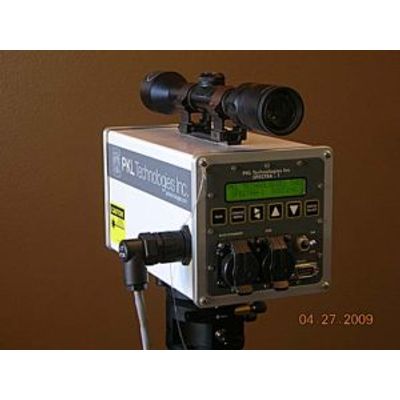
Spectra - Model 1 -Open Path Gas Monitor
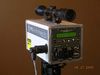
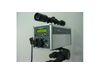
Spectra-1, a portable lightweight open path TDLAS gas monitor uses proprietary hardware and software to provide a low cost open path gas sensing instrument. The enclosure for Spectra-1 was selected for its resistance to extreme shock and vibration. Spectra-1 can be used for portable as well as fixed site installations. RS232 serial communications are used for continuous data transfer. USB memory stick data downloading is used for logged data files. Applications include environmental monitoring, fugitive emission work, greenhouse gas reduction, fertilizer manufacturing, Ammonia, confined feeding operations monitoring, aluminum manufacturing HF monitoring, and landfill monitoring.
- Aluminium Manufacturing
- Fertilizer Production
- Confined Feeding Operations
- Environmental Monitoring
- Greenhouse Gas Reduction Programs
- Cold Storage, Ice Rinks
- Landfill Operations
- Spectra-1 alignment with retro-reflector
- 2 X 20 character LCD display:
- gas concentration
- ppm or ppm-m
- distance to retro-reflector
- signal level bar graph
- signal level % reading
- configuration/menu display
- distance to retro-reflector
- gas concentration – ppm or ppm-m
- averaging time 1 to 600 seconds
- maximum signal level set (i.e. 90%)
- minimum signal level set (i.e. 5%)
- RS232 com port setting (baud rate)
- logging options
- logged data transfer – USB memory stick
- calibration settings (Factory set)
- Spectra-1 settings output
- display IP address
RJ45 Ethernet weatherproof connector USB weatherproof connector Sealed on/off power switch Sealed RS232 com port 12 VDC @2A.
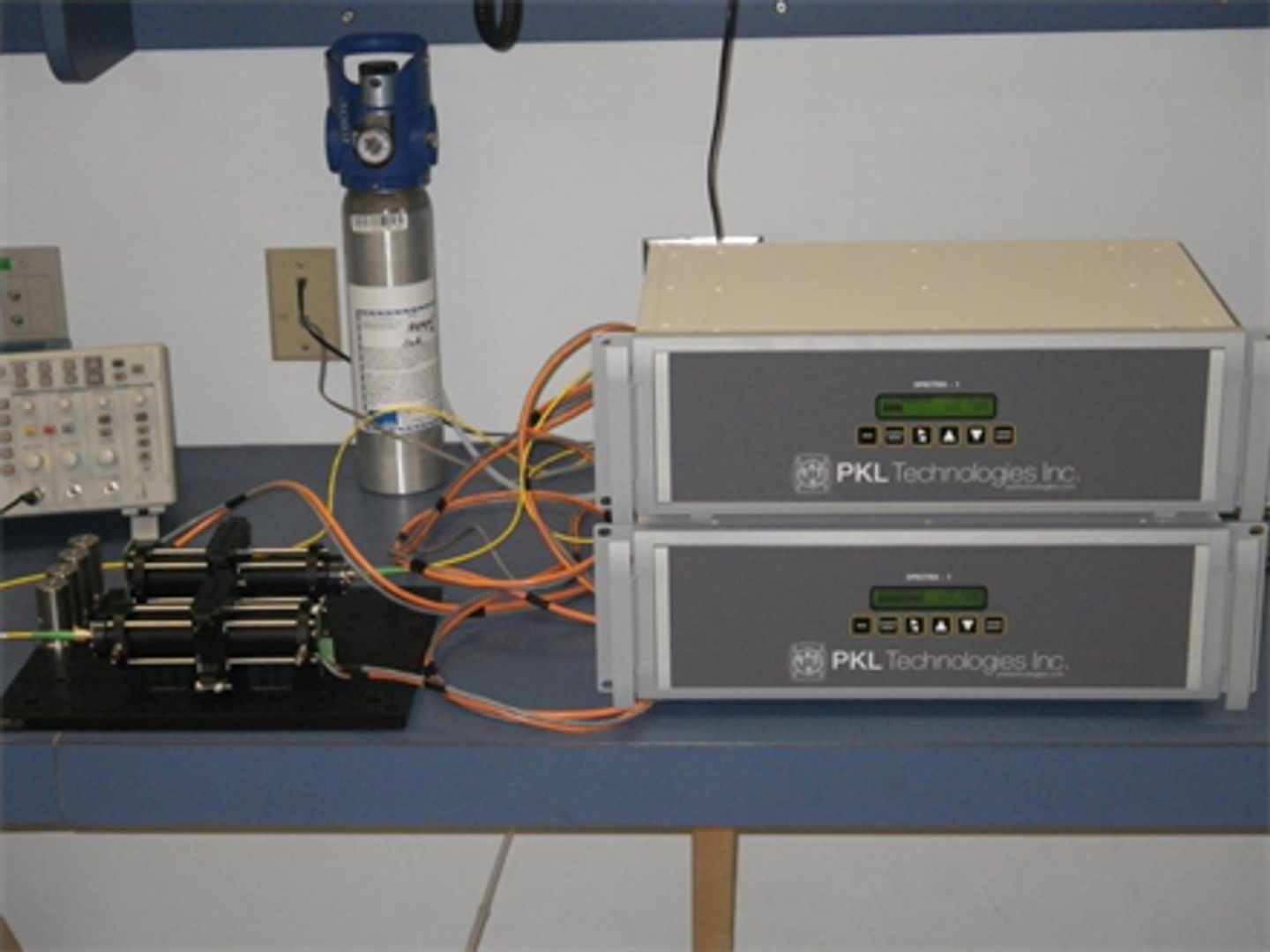
PKL Technologies Inc. has developed a Tuneable Diode Laser spectrometer “core”, which can be readily adapted to suit many applications. This “core” TDL spectrometer uses an industrial embedded computer, along with a custom low noise laser diode driver circuit. The DSP enhanced gas detection methodology has reduced the analog electronic components required by typical laser spectrometer devices. This reduces system complexity, ultimately lowering spectrometer costs.
Detectable gases include:
HF, HCN, O2, C2H2, C2H4, C2H6, H2O, CH4, NH3, CO, CO2, and H2S.
Most laser gas detection monitors are based on tuneable diode laser absorption spectroscopy (TDLAS). The identification of gas species by absorption spectroscopy goes back several decades. A molecule can be identified by its characteristic absorption spectra. If the frequency (or wavelength) of the infrared (IR) light source matches the vibrational frequency of the molecule, then light will be absorbed. The Beer-Lambert law is the linear relationship we use to calculate molecule concentration (ppm) from the characteristic absorption a molecule exhibits.
Infrared Absorption spectra of Methane (Absorbance vs. Wavelength (µm)
One of these absorption features is chosen that does not coincide with any other molecule absorption spectra. The wavelength of the tuneable laser is set very close to the absorption feature we want to measure. A laser is ideally suited for this - as the light output is monochromatic. The laser wavelength is then scanned back and forth over this absorption feature. The resulting change in laser intensity when scanned over the absorption feature provides the information required to calculate the molecule concentration.
Open path monitors measure the total amount of a specific molecule (gas) in the path between the laser source and the reflector. The result of this “total path” measurement is given as ppm-m. A reading of 100 ppm-m is converted to ppm by dividing by the path length. A path-average concentration measurement is provided by the open-path gas monitor. If one requires more information (Is the concentration of gas uniformly distributed?) shorter optical paths may be chosen to determine distribution of the monitored gas species.
Sensitivity and MDL’s
Sensitivity and MDL are determined by the particular molecule absorption line chosen, and the optical path length. Absorption line widths and line strengths are different for each absorption line, and molecular species. We have the ability to increase or decrease the optical path length to increase or decrease our sensitivity to the molecular species we are monitoring.
Detectable Gases: HF, CH4, NH3, CO2, CO, HCN, C2H2, C2H4, C2H6, H2S and others.
Spotting scope:
- Spectra-1 alignment with retro-reflector
2 X 20 character LCD display:
- gas concentration
- distance to retro-reflector
- signal level % reading
- ppm or ppm-m
- signal level bar graph
- configuration/menu display
Keypad for system configuration:
- distance to retro-reflector
- gas concentration - ppm or ppm-m
- averaging time 1 to 60 seconds
- maximum signal level set (i.e. 90%)
- minimum signal level set (i.e. 5%)
- RS232 com port setting (baud rate)
- logging options
- logged data transfer . USB memory stick
- calibration settings
- Spectra-1 settings output
- display IP address