


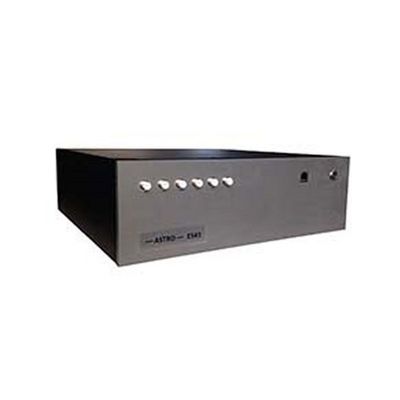
Optromix - Model DTS 1000 Series -Distributed Temperature Sensing Sensor
Optromix DTS 1000 Series remotely measures temperature along a fiber optic cable of up to 100 km (62 miles) long in real-time.
This fiber optic cable is not subject to electromagnetic interference, chemical effects and the impact of corrosion. It does not require any extra power supply along the entire length.
- Sensing element length/cable : Up to 62 mi : Up to 100 km
- Spatial resolution : 980 feet : 300 m
- Temperature accuracy : 9°F : 5°C
- Measurement time, seconds : from 10
- Temperature measurement range : -40 to +250°F : -40 to +120°C
- Wavelength, nm/fiber type : 1550/SMF, 9/125
- Operating conditions : -15 to +130°F : -10 to +55°C
- Number of active channels : 1 to 12
Distributed temperature sensing can be deployed successfully in multiple industrial segments:
- Temperature monitoring of Transmission & Distribution power lines
- Oil & gas wells and reservoirs monitoring
- Leakage detection in oil and water pipelines
- Fire detection in tunnels, industrial conveyor belts and special hazard buildings
- Temperature monitoring and control in mines
- Research & Development
Distributed temperature sensing (DTS) systems are optoelectronic devices which measure temperatures by means of optical fibers functioning as linear sensors. Temperatures are recorded along the optical sensor cable, thus not at points, but as a continuous profile. A high accuracy of temperature determination is accomplished over great distances. Optromix DTS systems can locate the temperature down to a spatial resolution of 0.5 m with accuracy to within ±1°C at a resolution of 0.1°C.
Laser pulse is transmitted through the fiber optic cable from one side. As soon as the pulse transposes the fiber, it causes backward scattering depending on local temperature. Based on the intensity of backward scattering we can perform temperature measurement. In order to determine the distance we calculate the time required for backward scattering to come back. Therefore, the optical fiber cable operates like the sensor. It means that the fiber optic installation and maintenance are not complicated.