- Home
- Companies
- OreScanner
- Products
- OreScanner - Sensor-Based Sorting ...

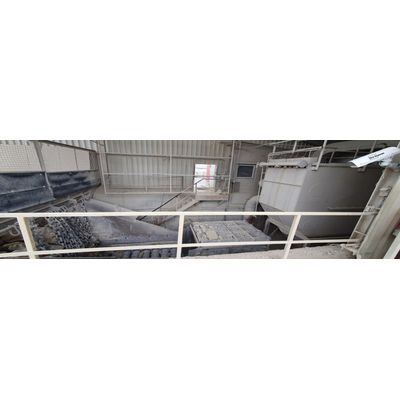
OreScanner - Sensor-Based Sorting System
Ore bodies are naturally diverse, and the degree of grade heterogeneity can be influenced by multiple factors such as ore deposit itself, mining methods, ore handling, crushing, and blending processes before being sent to the plant. This variability can significantly affect the product quality, recovery rate and result in losses amounting to millions of euros for mining operations. However, current mining practices tend to blend out the variation to create a consistent feed for the processing plant, which unfortunately results in lower mineral recovery rates.
One solution to enhance the efficiency and profitability of mining operations is the utilization of real-time ore sorting or ore grade blending approaches. The sensor technologies have advanced significantly in recent years and offer numerous benefits for such solutions.
We provide sensor-based ore classification at the early stage of mining, either before or after crushing.
Ore grade control before crushing or after the primary crusher is more efficient than in later ore processing steps. This is because, at this stage, the ore remains unmixed and is not broken into small fragments. Determining the ore grade becomes simpler, and the sorting process is less reliant on complex or expensive machinery.
Pre-Crush Scanner
A sensor array is installed at the point of ore discharge to a primary crusher. Based on ore assessment the average grade of the truckload is calculated. This information is then used to divert the crushed ore to the appropriate grade silo or different processing lines.
Alternatively, when utilizing a single stockpile or production line for processing plant feed, the selective truck loading method can be employed. By selectively bringing truckloads from different zones in the mine to a crusher, the feed to the processing stage can be blended, ensuring maximal utilization of mined ore without compromising the overall quality of the plant feed.
Conveyor Belt Scanner
When the surface of rocks weathers, it may not accurately represent the entire bulk. To address this, OreScanner is installed on a conveyor belt after primary crushing. This setup allows for sorting ore in smaller batches, which is especially helpful when the ore body shows variations in quality within a single truck load.
The benefits of real-time grade control vary depending on the specific mining operation and the type of ore being processed. However, here are some general estimates of the potential benefits of ore sorting:
Higher Ore Recovery:
Slashes low-grade ore waste piles by up to 20%, maximizing mining operation revenue.
Improved Product Quality:
Reduce the standard deviation of your raw material quality by up to 10%. This ensures stable mineral processing and guarantees the final product always meets the clients’ requirements.
Reduced fuel and energy consumption:
Reduce fuel and energy consumption in the calcination and beneficiation processes by up to 5%. This results in substantial savings in operational costs and leads to a more sustainable mining operations.
OreScanner is focused on delivering modern sensor solutions for the mining industry, providing superior decision-making capabilities at every stage of mineral processing. Our easy-to-install system provides real-time ore assessment above a conveyor belt or at the loading/unloading stage.
OreScanner employs a sensor fusion technique to obtain crucial information about your ore type. This approach involves combining multiple sensors to construct the necessary classification models and address mineral complexity and measurement environment challenges. We rely solely on non-destructive measurement techniques, and there is no need for ore sample preparation for our assessments. Our measurement principles are both environmentally friendly and safe, with no radiation emission involved, unlike traditional methods like PGNAA and X-Ray.
Computer Vision
Computer vision plays a vital role in modern ore sorting processes. Through the use of advanced imaging and machine learning algorithms, computer vision technology enables efficient and accurate identification of different types of ore based on their visual characteristics.
Recent advancements in hardware and sensor technology have led to the availability of cost-effective high-resolution cameras and imaging systems. These cameras, coupled with efficient image processing capabilities, enable accurate and detailed analysis of ore particles without requiring expensive or specialized equipment.
This technology revolutionizes traditional ore processing methods, enabling mining companies to optimize their operations and extract maximum value from their ore resources.
Multispectral imaging
The technique captures and analyzes the electromagnetic spectrum at different wavelengths. It involves capturing images of ore in multiple spectral bands, enabling the identification of materials based on their spectral signature.
Multispectral imaging can serve as a cost-effective and efficient technique for identifying and separating valuable minerals from a waste rock on a conveyor belt. Typically, multispectral imaging systems employ a combination of visible and infrared wavelengths to capture images of the ore stream as it passes through the sorting system.
Near-infrared (NIR) sensors
Near-infrared (NIR) sensors function by illuminating minerals with a near-infrared light source and measuring the resulting reflected light. As different minerals possess distinct spectral signatures within the NIR range, they can be identified and separated based on their unique composition.
Mid-infrared (Mid-IR) spectrometry
Mid-IR spectroscopy targets the molecular vibrational modes of chemical compounds, which provide detailed information about the chemical structure and composition of substances. This spectral region corresponds to fundamental vibrational frequencies and overtones, allowing for more specific identification and quantification of chemical bonds and functional groups.
Sonic sensors
Sonic sensors operate by emitting sound waves at a designated frequency and measuring the resulting vibrations in minerals. Each mineral possesses distinctive acoustic signatures, enabling their identification and separation based on their composition.
To accurately differentiate ore quality from waste or valueless rock, data from multiple sensors is analyzed using computer vision, machine learning (ML) and chemometric algorithms.
Most sorting and ore measurement technology suppliers available in the market only focus on one type of sensor, and there is a lack of cooperation between competing parties. As a result, clients are responsible for combining different technologies to obtain a more comprehensive service. However, it is difficult to achieve this without sufficient domain knowledge of each measurement technology.
In contrast, OreScanner is not tied to any particular technology and selects an array of sensors suitable for the specific application. Moreover, OreScanners are equipped with only the necessary sensors to provide the required data for confident decision-making in process control. This approach reduces the overall cost of sorting applications compared to other vendors who provide excessive data that is not required for performing the task.
Optimizing Mining Efficiency and Profitability
In the challenging landscape of mining and mineral processing, efficiency and profitability reign supreme. As industry professionals, we constantly seek innovative ways to optimize production, reduce costs, and enhance resource utilization. One such innovation that has gained traction in recent years is ore sorting—a process that promises to revolutionize how we extract and process valuable minerals from raw ore.
Unveiling Modern Ore Sorting
Ore sorting is a transformative process that segregates raw ore based on their properties. Traditionally, mining relied on manual ore quality control or conventional processing methods, which are slow, inefficient, and prone to errors. But with sensor technologies like optical, electromagnetic, and X-ray transmission, sorting has entered a new era of efficiency. By using advanced algorithms, ore grade control systems can distinguish valuable minerals from waste material accurately and cost-effectively.
Technologies
Various technologies used to sort mined ore, each with unique advantages. From X-ray transmission (XRT) to infrared spectroscopy (IR) and optical and electromagnetic sensors, these technologies identify minerals quickly and accurately based on their properties. The choice depends on factors like ore type, particle size, and sorting accuracy. Detailed information is available in technical publications and case studies like “Sensor-Based Ore Sorting Technology in Mining—Past, Present and Future.”
The Cost of Ore Sorting
Implementing ore grade control or waste rejection systems varies in cost. Factors include the sensor type and the operation’s scale. While long-term benefits are evident, both initial investment and ongoing expenses matter. For instance, technologies like XRT have higher upfront costs. Systems for “stone by stone” sorting are mechanically complex and need intensive maintenance, leading to higher operating costs. The average cost of such a system can range from 30-50 cents per ton of ore sorted. While stone-by-stone sorting is suitable for precious metals or high-priced commodities, it might not work for industrial minerals. In such cases, bulk sorting is the only viable option.
Bulk Ore Sorting: Maximizing Profitability
Bulk ore sorting introduces a strategic approach to separating ore based on batches, ranging from several hundreds of kilograms to a truckload. This method offers several advantages over stone-by-stone sorting. These include increased throughput, reduced complexity, and lower operational costs.
Bulk ore quality control finds its niche, notably in open-pit mining operations characterized by distinct heterogeneity within the ore body.
The cost per tonne of ore sorted using bulk methods can be significantly lower—up to 10-15 times less than that of stone-by-stone sorting. This cost differential makes such a system a practical and economically viable solution for most miners seeking to improve mineral recovery.
Mining companies face the challenge of reducing the cost of raw material sorting while maximizing its benefits. One solution is integrating existing infrastructure with new sensor technologies, such as OreScanner, into the mining workflow. By using existing conveyor belts, loading/unloading stages, and processing equipment, companies can cut capital expenditure while improving mineral recovery through sorting.
Unlocking Hidden Value: Re-MiningRe-mining, or waste ore reprocessing and secondary mining, offers another opportunity for mining operations to unlock hidden value and maximize resource utilization. Secondary mining involves extracting and processing ore material from waste or tailings piles. These piles often contain significant quantities of valuable minerals that traditional mining methods couldn’t economically recover. However, advancements in sorting technology are making re-mining financially viable for modern operations. One recent example of this approach was just presented in The Mining Technology magazine.
Embracing Ore Sorting: Success and Versatility
Ore sorting technology has transformed mining operations across various industries such as limestone, gold, copper, iron, and quartz. It has significantly enhanced efficiency and profitability. Moreover, its adaptability goes beyond traditional sectors. Modern technologies enable the detection of numerous minerals, making ore sorting applicable to any mining operation, even those involving critical raw materials like lithium. This versatility empowers mining companies to optimize resource utilization and explore new revenue streams.
Conclusion
In conclusion, ore sorting marks a significant shift in our approach to mining and mineral processing. By harnessing advanced technologies and innovative approaches in raw material handling, companies can fine-tune their operations for maximum profitability and sustainability. As evidenced in the paper “Integrating Bulk Ore Sorting into a Mining Operation to Maximise Profitability”, the strategic incorporation of sorting technology yields tangible benefits, including cost reduction, improved recovery rates, and minimized environmental impact.