


- Home
- Companies
- Metso Outotec
- Products
- Outotec Larox - Model VPF - Security ...
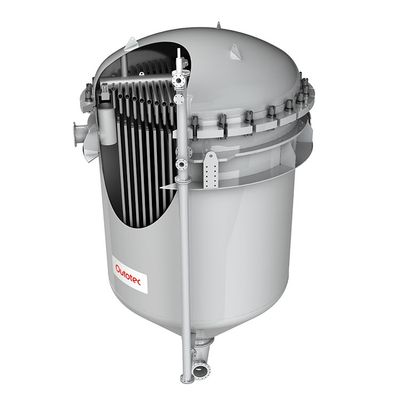
Outotec Larox - Model VPF -Security Filter
Optimize the removal of suspended solids before alumina hydrate precipitation with the Outotec Larox® VPF security filter. With filtration cycle times of up to 18 hours, our VFP filter reduces entrained particulate concentrations in the supersaturated sodium aluminate solution to a level of only a few milligrams per liter. The filters can use a wide range of media for filtration depending on your process requirements.
- Produces high-quality filtrate
- Offers fully automatic cloth cleaning and cake discharge
- Improves safety during both operation and maintenance
- Offers low capital costs, low operating costs, and minimal maintenance costs
- Uses proven technology
Outotec Larox® VPF technology has a solid reference base, with the first units installed in Australia in 1979. There are more than 80 VPF units in operation, most of them in Australian alumina refineries. VPF security filters have been designed for the superior removal of suspended solids before hydrate precipitation.
With Outotec Larox® VPF filters, the pregnant liquor polishing, also known as security filtration, produces both a high-quality product and a high equipment throughput. The impurities of pregnant liquor are polished from 100–200 mg/l (ppm) down to less than 10 mg/l before alumina tri-hydrate precipitation. Low impurity in pregnant liquor is required for further production of metal grade alumina. The filtration area of the Outotec Larox® VPF is 400 m², expandable to 440 m², and the unit has a maximum capacity of 600 m³/h.
The Outotec Larox® VPF ensures a high filtration rate per filtration building floor area. The filtration cycle is up to 18 hours, which minimizes the filter technical time including cake sluice and cloth cleaning. Automatic (PLC) control of the cloth cleaning and cake discharge at the end of each filtration cycle ensures maximum filtration time in subsequent cycles. This leads to low impurities in the filtrate and reduces manpower requirements by eliminating the need for frequent supervision.