


Super Systems Inc.
- Home
- Companies
- Super Systems Inc.
- Products
- Super Systems - Model SuperOX - Oxygen ...
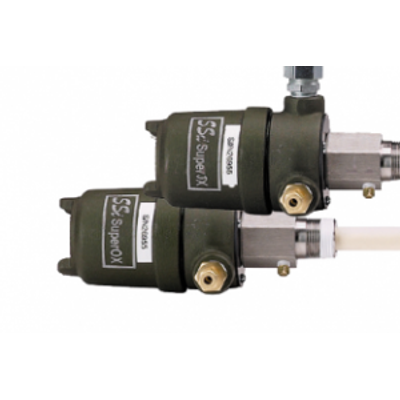
Super Systems - Model SuperOX -Oxygen Sensor
Oygen sensor for combustion control in re-heat furnaces, boilers and incinerators. This in-situ oxygen sensor measures % Oxygen concentrations directly in the combustion area of high temperature furnaces, boilers and incinerators. It is intrinsically safe and generates a very low millivolt output based on the oxygen content of the atmosphere.
Most popular related searches
in-situ oxygen sensor
oxygen sensor
high temperature furnace
in-situ oxygen monitoring
zirconia electrolyte
oxygen concentrator
kiln emissions
exhaust stack
sampling pump
oxygen monitoring
- Available in a number of standard lengths - 18" (457mm), 27" (685mm), and 36" (915mm)
- Available in both alumina and silicon carbide outer sheaths
- Rapidly replacing older/outdated, non-current patented, non-rebuildable in-situ oxygen sensors
- Field performance can be collaborated using external "verification" port
- "B", "S", and "R" thermocouples are available
- Temperature Range: 1150 to 3000 °F (620 to 1650 °C)
- Useful O2 Range:
- 10-26 to 20.95% (air reference)
- 10-25 to 100.0% (pure oxygen reference)
- Cooling air maintains positive pressure to ensure the integrity of the electrical connections in harsh environments
- Outer electrode is not "painted" on the zirconia electrolyte, eliminating the antiquated "boot" design
- Years of application experience maximizes sensor life and performance in high-slag, turbulent environments
Glass Melting – Glass Furnace / Ceramic Kilns Exhaust Stacks
Features:
- 24/7 monitoring of combustion stack oxygen
- Interface with existing combustion control system
- Low maintenance, NO calibration
- Probe verification
- Oxygen sensor is rebuildable
- Optional "sample" dryer
- Optional "sample" pump
- Optional interface with Ethernet
- Optional interface with 4-20mA Damper Control
What does this do for you?
- It gives you an input to control your air-fuel ratio
- It will improve the QUALITY of the product
- It will reduce maintenance costs
- It will allow product consistency