


- Home
- Companies
- Ozone Research and Applications India ...
- Products
- Oraipl - Ozone Diffuser
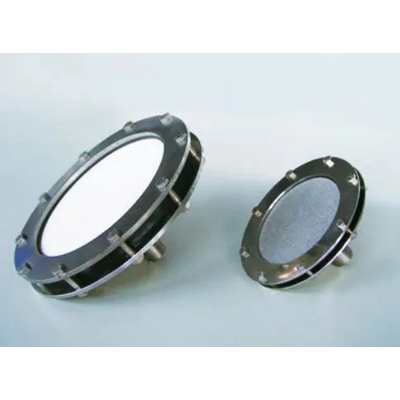
Oraipl - Ozone Diffuser
ORAIPL is your trusted manufacturer and supplier of Ozone Diffusers for use in various Ozonation systems. We can design, manufacture and supply various types of Ozone Diffusers, based on your requirements. We manufacture Ceramic Dome Diffusers, Rod Diffusers, Fine Bubble Diffusers and Teflon Gaskets for Fine Bubble Ozone Diffusers. Coupled with our wide range of Ozone Generators, these Ozone Diffusers will greatly improve the efficiency of your Ozone treatment system.
The efficiency of an Ozonation system depends greatly on the ability of the system to diffuse Ozone in water. This is done by using a diffuser that has very fine pores, so as to create very small bubbles of Ozone that can come in contact with more volume of water, thereby improving the Ozone mixing in water. Usually a stone or ceramic diffuser is placed at the bottom of the water tank, so that the Ozone bubbles can rise up slowly and mix properly with the water.
ORAIPL’s fine-pore ozone diffusers are used specifically for ozone applications. They come in several sizes to accommodate your reaction vessel & flowrate. Glass-bonded diffusers & Kynar (or SS) material ensure long life in ozone rich environments.
- Multiple sizes
- Completely ozone resistant
- Choose from 1/8″, 3/16″, 1/4″ Kynar barb, or 1/8″ & 1/4″ MPT SS Connections
- Accommodates flowrates from 0.05-1.0 CFM (higher flowrates available)
- Easily cleaned with HCl
- Max pore size – 80 microns
- Nominal particle retention – 25 microns
- Flexural strength – 3,500 PSI
Ozonation is the process of diffusing ozone in water. ORAIPL manufactures Ozone Diffusers that have a very high diffusion rate, thereby improving the efficiency of your Ozonation system. In an aqueous solution, ozone may act on various compounds in one of two ways:
- by direct reaction with the molecular ozone, and
- by indirect reaction with the radical species (hydroxyl radical) that are formed when ozone decomposes in water.
These two properties of ozone enable it to react in three ways:
- Cyclo addition (Criegee mechanism)
- Electorphilic reaction
- Nucleophilic reaction
Cyclo addition:
Ozone molecules may lead to the formation of primary ozonide. The primary ozonide decomposes into a carbonyl compound (aldehyde or ketone) and a zwitterion that quickly leads to a hydroxy-hydroperoxide. The hydroxy-hydroperoxide, in turn, decomposes into a carbonyl compound and hydrogen peroxide.
Electrophilic reaction:
The electrophilic reaction is restricted to molecular sites with a strong electron density, in particular certain aromatic compounds. Aromatics substituted with electron donor groups (OH, NH2 and similar compounds) are highly reactive with ozone (at the ortho and para positions). Aromatics substituted with electron withdrawing groups (-COOH, -NO2) are weakly reactive with ozone. The initial attack on the substituted positions leads to the formation of ortho- and para-hydroxylated by-products, although these compounds are highly susceptible to further ozonation. The compounds lead to the formation of quinoid and, due to the opening of the aromatic cycle, to the formation of aliphatic products with carbonyl and carboxyl functions.
Nucleophilic reaction:
The nucleophilic reaction is found locally on molecular sites showing an electronic deficit and, more frequently, on carbons carrying electron withdrawing groups. The molecular ozone reactions are extremely selective and limited to unsaturated aromatic and aliphatic compounds as well as the specific functional groups.