


- Home
- Companies
- Ruiyuan Group Limited
- Products
- Ruiyuan - Palladium (II) Acetate
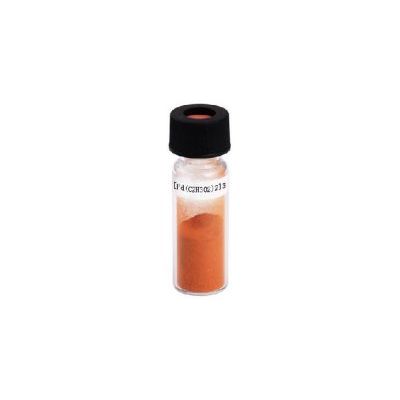
Ruiyuan - Palladium (II) Acetate
Cas No.: 3375-31-3, Molecular formula: Pd(CH3COO)2, Molecular weight: 224.4, Use: Catalyst, material for synthesizing many kinds of palladium compounds and catalyst material.
Palladium(II) acetate is trimeric, consisting of an equilateral triangle of Pd atoms each pair of which is bridged with two acetate groups in a butterfly conformation. Each metal atom achieves approximate square planar co-ordination.
Palladium acetate can be prepared by refluxing palladium sponge with hot glacial acetic acid and nitric acid. An excess of palladium sponge is used to prevent contamination by PdNO3•OAc.[2][3][4]
Pd + 2 HNO3 → Pd(NO3)2 + H2
Pd(NO3)2 + 2 CH3COOH → Pd(O2CCH3)2 + 2 HNO3
Palladium(II) propionate is prepared analogously; other carboxylates are prepared by reacting palladium(II) acetate with the appropriate carboxylic acid.
When warmed with alcohols, or on prolonged boiling with other solvents, palladium(II) acetate decomposes to palladium.
Palladium acetate is a catalyst for many organic reactions by combining with many common classes of organic compounds such as alkenes, dienes, and alkyl, aryl, and vinyl halides to form reactive adducts. The greater the pi-backbonding is, the greater the reduction in the bond order of the alkene or π-allyl.[5] Reduction of the alkenes or π-allyl by coordination to palladium(II) acetate reverses the reactivity of the organic ligand allowing them to undergo reactions with nucleophiles rather than electrophiles.[6]
Examples of palladium(II) acetate catalyzed reactions are:
- Vinylation: An example is the Heck reaction
- Rearrangement of Acyclic Dienes: An example is the Cope reaction
- Carbonylation reaction: carboxylation of aryl halides and benzyl chloride derivatives in ionic liquid media (l-butyl-3-methylimidazolium hexafluorophosphate, tetrafluoroborate, and Aliquat336 )
- Reductive amination of aldehydes or ketones using potassium formate.[7]
- Wacker process: the oxidation of ethylene in water to form acetaldehyde (precursor to poly(vinyl acetate), a common glue).
- Buchwald-Hartwig synthesis of aryl amines from aryl halides/pseudohalides and primary or secondary amines.[8]
Pd(O2CCH3)2 converts aryl bromides into aryltrimethylsilanes, an important functional group in many organic compounds including the fungicide "Latitude".
RC6H4Br + Si2(CH3)6 → RC6H4Si(CH3)3 + Si(CH3)3Br
Pd(O2CCH3)2 is compatible with the electronic properties of aryl bromides, and unlike other methods of synthesis, this method does not require high pressure equipment.
Palladium acetate is used to produce other palladium(II) compounds. For example, phenylpalladium acetate, used to isomerize allylic alcohols to aldehydes, is prepared by the following reaction:
Hg(C6H5)(CH3COO) + Pd(CH3COO)2 → Pd(C6H5)(O2CCH3) + Hg(O2CCH3)2[10]
Palladium(II) acetate reacts with acetylacetone to produce Pd(acac)2, a precursor to Pd(0).[citation needed]
Light or heat reduce palladium acetate to give thin layers of palladium and can produce nanowires and colloids.