

ParkUSA - Submersible Non-Clog Pumps
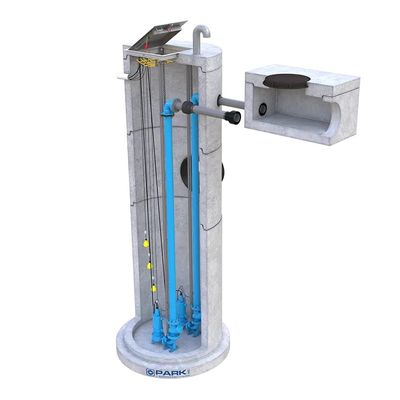
Used frequently for wastewater applications, this pump lift utilizes a submersible solids-handling pump that sits at the bottom of a wet well or sump. They have a wide range of flow capabilities, typically between 25 and 7000 gpm. These pumps are favored due to their affordability, ruggedness, and diversity. They are easy to install and can be lowered into the well on guide rails, whereas split case and vertical suction pumps require more mounting hardware and have longer shafts that can torque during operation. Non-clog pumps are a good choice for wastewater as they handle solids and debris that are commonly found in wastewater, such as paper, rags, and other materials. Unlike traditional pumps, which can easily become clogged when handling these types of solids, non-clog pumps are specifically designed to prevent clogging and maintain reliable performance.
ParkUSA PumpTrooper® pump lift stations are suitable for any application where wastewater and stormwater need to be lifted and pumped away in a reliable, efficient, and cost-effective manner.
Residential Areas
Areas with a large concentration of homes or apartment complexes produce significant amounts of wastewater and stormwater that need to be efficiently and effectively transported to treatment plants or sanitary sewer systems.
Commercial Properties
Commercial properties including hotels, restaurants, retail, and office space generate high volumes of wastewater and require a reliable and efficient means of pumping it away. Stormwater pumps typically installed in sump pits prevent flooding in basements and other low-lying areas.
Municipalities
Municipalities and local governments need to lift and pump wastewater from municipal sewage systems to wastewater treatment plants. They also use stormwater pumps to prevent flooding in low-lying areas during heavy rainstorms.
Transportation
Transportation agencies use stormwater pumps to manage runoff from roads and highways. The pumps capture and treat the runoff before it enters nearby waterways.
Parks and Recreational
Parks and recreational areas use stormwater pumps to manage excess rainwater that can cause damage to trails, fields, and other amenities.
Agricultural Operations
Agriculture operations use stormwater pumps to manage excess rainwater that can flood crops and cause erosion. The pumps are used to capture and redirect the water to irrigation systems or storage tanks.
Livestock
Livestock and crops produce large volumes of wastewater that needs to be pumped away for treatment or disposal.
Industrial Facilities
Manufacturing plants and refineries produce large amounts of wastewater that must be pumped away from the site for treatment or disposal.
Remote Areas
Pump lift stations can be used in remote areas where wastewater and stormwater treatment is not readily accessible. The pumps can help transport water to a central location for treatment.