


Brechtel
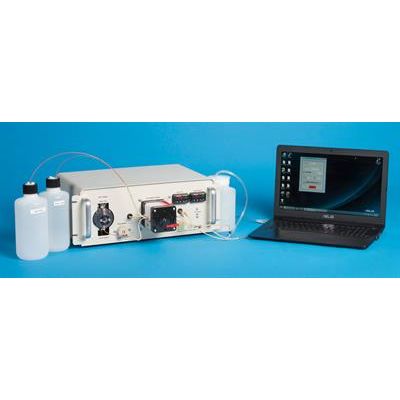
Brechtel - Model 4001 -Particle Into Liquid Sampler (PILS)
FromBrechtel
The PILS is one of the simplest methods available to acquire samples for aerosol chemistry applications. It can be easily integrated with the analytical method of your choice. Ion chromatography systems and total organic analyzers are routinely used with the PILS. These analytical methods allow on-line analyses of aerosol chemistry for major water soluble ions and organic species. Brechtel also offers a vial collection system to deliver liquid sample to vials if you don’t want to bring your aerosol chemistry lab to the field. The vial collection also lets you set your sample time resolution based on your research needs and not based on the speed of your analytical method.
Most popular related searches
liquid sampling
particle into liquid sampling
aerosol chemistry
ion chromatography system
air quality monitoring
chemical detection
aerosol sampling
organics analyzer
organics detection
ambient aerosol
- PM1 or PM2.5 bulk aerosol sampling
- Fully characterized and field tested
- Vial collection with multiple vial sizes using optional Auto-collector
- Rack mount tabs fits standard 19 inch racks
- Software to record PILS temperatures and control optional auto-collector
- Easy to operate and install with compact size
- Continuous unattended long-term operation
- Low maintenance
- Analyze samples using multiple analytical techniques
- PILS inlet sample flow 11-15 lpm
- Washflow and sample liquid flow rates 0.03-2.0 ml/min
- SO4, NO3, NO2, Cl, NH4, K, Na, Ca, Mg detection limits 100 ng/m³ Chemical Species Detected
- Acetate, formate and oxalate organic acids detection limit 50 ng/m³ Chemical Species Detected
- Water soluble organic carbon detection limit 10 ppb Chemical Species Detected
- Supply voltage 110 OR 230 VAC Electrical
- Supply current 5 amps @ 110 VAC Electrical
- Operating temperature range 15-35°C Electrical
- Dimensions 17.2 x 6.9 x 16 in/43.25 x17.5 x 4.75 cm Physical
- PILS system total weight 20 lbs/9 kg Physical
- Auto-collector total weight 20 lbs/9 kg Physical
- Continuous monitoring of ambient aerosol composition
- Laboratory smog chamber studies
- Cloud condensation nucleus studies
- Visibility reduction studies
- Aerosol health impacts
- Long-term climate and air quality monitoring