


- Home
- Companies
- Pecma Air Systems Pvt Ltd
- Products
- Pecma - Emission Control System
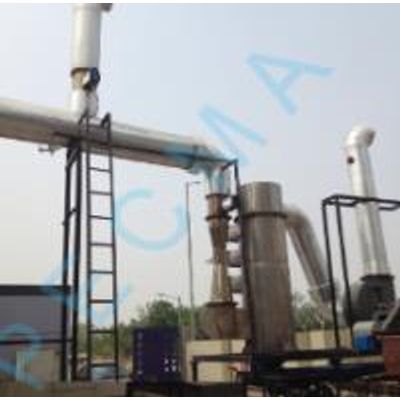
Pecma - Emission Control System
Air Pollution Control/Emission Control Systems to control Particular Matter (PM) (PM0.1, PM1.0, PM 2.5, SOx, NOx, HC, CO2, CO & Organic/Inorganic Hazardous,ToxicFumes.
Based on-
Zero Emission–Zero Discharge Philosophy
to achieve NET-ZERO TARGET by the Year 2070Retrofit Emission Control Device (RECD) to control PM, SOx, NOx, CO2,CO,& HC Generated by combustion of fossil fuel based on- Zero Emission – Zero Discharge PhilosophyDIFFERENT TECHNOLOGIES FOR RETRO FIT EMISSION CONTROL DEVICE (RECD)
Different technologies for Retro Fit Emission Control equipment in order to control the gaseous pollutants [particulate matter (PM2.5) SOx, NOx, HC, CO, CO2, etc.] generated from flue gas exhaust of D.G Sets offered by us are:-
- Dry Particulate Filters Technology (DPFs)
- Flow through Filters technology (FTFs)
- Diesel Oxidation Catalysts Technology (DOCs) to control particulate matter(PM2.5) with greater than 70-90% efficiency for 250KVA , 300KVA,500KVA,750 KVA,1000KVA,1500KVA, 2000kva DG Sets based on ADSORPTION & REGENARATIONPRINICIPAL
- We are offering Dry / Wet Ventury cum Impingement cum Packed Tower Absorption System to control flue gas Emission of D.G Sets of any capacity (500KVA, 750KVA,1000KVA,1500KVA 1750KVA,2000KVA etc) and the Emission Control System for different combination capacities based on ABSORPTION & AGGUMELARATION AND DIFFUSTION PROCESS for
(2 X 1000KVA, 3 x 1000KVA, 2x 1500KVA, 2X1750KVA, 4x 1000KVA, 3 X 1000KVA + 350KVA, 3X 2000KVA, etc.) mainly to control particulate matter (PM2.5,SOx, NOx, HC, CO2, CO, etc.) with greater than (>) 90% efficiency.These systems are designed to have 100% clean Air Exhaust and the technology offered by us is based on Zero Emission – Zero Discharge Philosophy i.e. control of PM1.5, PM2.5, SOx, NOx, HC, CO2, CO ≥99.9% reduction efficiency.
BASIS OF DESIGN
It is extremely necessary to analyze what type and concentration of Air Pollutants are being generated during fossil fuel combustion in D.G. Sets exhaust.
Different type and concentration of Air pollutant generated from D.G. Sets flue gas exhaust which contributes to Particulate Matter (PM2.5, PM10, etc.).
(i). Unburnt Particulate Matter (PM)
Particulate Matter (PM) from 1 micron (µm) to 40 micron which contributes 70 to 80% PM percentage and contributes to PM (2.5)70% from 1 micron to the 5 micron.
Total particulate matter PM
- PM(10) to PM(40) Upto 60%
- PM(2.5) to PM(5) Upto 10%
- PM (1) to PM2.5 Upto 10%
- PM 0.1 to PM 1 to PM 2.5 Upto 20%
(ii) SOx – Most of the fossil fuel carry sulfur which get oxidized to sulphur Dioxide which is also a particulate matter having different physical & chemical properties ( Particulate matter ranges from 0.01µm to 5µm) percentage share towards total particulate matter concentration 10% to 15% , contributes to PM (2.5)
(iii) CO & HC– is also a particulate matter generated due to incomplete combustion of hydro carbons with particulate matter contribution (1 µm to 10µm) up to 10% to 15% , contribution to PM(2.5)
(iv). NOx – Nitrous compound are comprise of (NO + NO2) are also in the from particulate matter in the range (0.01µm to 1µm) having hazardous component contributes 20% to 30% to PM2.5 and responsible for Acid rain and ozone depletion/ green house gases.
(v). All the pollutants / products of unburnt combustion as mentioned above are homogenously present in flue gas exhaust need to control 100% in order to have minimum 70% reduction efficiency. -
It is evident that the gaseous pollutant SOx & NOx need to be treated and to be controlled in RECD. In order to have PM(2.5) and PM(0.1) to have min Specified Particulate Matter capture efficiency of at least 70%.
-
Unless or until RECD is not capable to neutralize SOx, NOx which contributes to PM (2.5) and PM (0.1) the desired performance as required by statuary Authority cannot be achieved.
RECD designed, constructed and assembled in compliance with provisions of statutory regulations
(i) Directions under section 31 (A) of Air (Pollution and Control of Pollution) Act 1981 read with Rule 20A (6) of the Air (Pollution and Control of Pollution) (Union Territories) Rules, Act 1983 for Retrofitting of Emission Control Devices/ Equipments in DG Sets with a capacity of 125 KVA and above in NCT of Delhi
(ii) Retro Fit Emission Control System to Control Hazardous Gaseous Pollutants (Particulate matter (PM2.5), SOx, NOx, HC, CO, CO2, etc.) from D.G. Sets Flue Gas Exhaust
(iii) In Compliance to C.P.C.B Notification dt. 01.02.2022 for System and Procedures / Testing of Retro-fit Emission Control Device (RECD) For Diesel Power Generating Set Engines Up To Gross Mechanical Power 800kW.
- RECD family designation based on Engine / Engine family
- Irrespective of level of pollutant in flue gas exhaust, particulate matter reduction >70 upto90% is achieved with No / Zero back pressure on the engine.
- Continuous measurement of engine exhausts back pressure, having warning system.
- At a preset point exhaust pressure regulation system is activated
- For higher capacity above 500kVA twin chamber particulate filtration is provided , one chamber under absorption / filtration another on regeneration operating on pressure differential
- Having automated swing operation from Absorption to Regeneration and vice- versa.
- No variation in outlet NOx concentration from engine base line parameters.
Advantages of Wet Absorption System
Controls PM1.0, PM2.5, SOx, NOx, HC, CO2, CO ≥99.9% reduction efficiency means 100% Clean Air after treatment in RECD is exhausted out.
-
Hydro Carbon and other gaseous pollutants are converted by process of absorption / adsorption , diffusion and agglomeration of particulate matter of higher size results in 100% capture of sub-micronic particulate matter
-
Pollutant concentration after treatment can be achieved less than 10mg/NM3 irrespective of the inlet pollutant concentration.
-
The system is capable of handling fluctuations in inlet pollutant concentration and flue gas flow rate.
-
Easy start up and shut down synchronization with D.G Sets running, at all time there is no back pressure on the engine.
-
WET ABSORPTION RECD system is based on Zero Emission – Zero Discharge Philosophy i.e. PM1.0, PM2.5, SOx, NOx, CO, CO2, HC ≥99% reduction efficiency.
-
Online removal of gaseous pollution prevents choking / clogging of eliminator plates i.e. self regenerative process
-
The chemical used is of low running costs in comparison to the operation cost of other systems
-
Tailor made for specific exhaust gas flow rates and inlet pollution concentration.
Relaxation of reducing stack height is given by CPCB/SPCB i.e. after treatment of the flue gases in wet absorption system we can discharge treated gases at GL