


- Home
- Companies
- Manx Technology Group
- Products
- People counting using WIFI and ...
People counting using WIFI and Bluetooth
WIFI and Bluetooth device can be used to create rich data sets that lead to valuable business insights. Applications include WiFi and Bluetooth people counting, spatial analytics, smartphone detection, vehicle counting, dwell times, travel routes, commute times and vehicle occupancy rates. Any operator must give due consideration to data protection, privacy laws and the appropriate use of data. In this blog post, we explore the features of the Libelium Meshlium Scanner, outline several applications and highlight the essential issues to consider regarding data protection and data privacy.
WIFI and Bluetooth devices periodically broadcast messages that indicate their presence or participation in a network (i.e. “Hello” messages). The Libelium Meshlium scanner can identify these messages and extract relevant meta-data and other vital information. The scanner can detect WIFI devices (on 2.4GHz and 5.8GHz) bands at a range of up to 500m (depending on conditions). The Bluetooth scanner can detect Bluetooth devices at a 20m range.
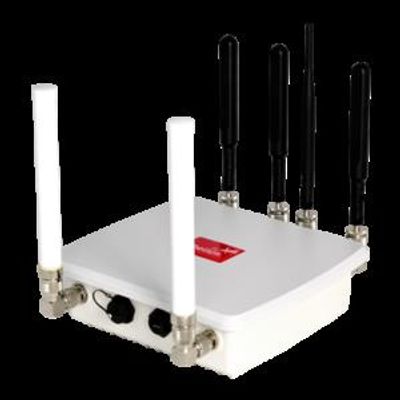
The scanner itself is a self-contained unit in an IP67 rated outdoor case with several external Omni-directional antennas. The unit is powered using POE and can support a 3G/4G SIM for seamless transmission of data back to a cloud platform, API or MySQL database.
The scanner also features a GPS receiver which allows relevant location data to be stored alongside sensors readings – this is important for mobile or nomadic applications. During operation, the scanner stores data in a local MySQL database (on the unit), before either synchronising or transmitting the data to another platform.
WIFI Scanning
The device scans WIFI frequency bands and identifies the following information:
- Unique ID – Auto-generated numeric identifier.
- Timestamp – Time/date of the measurement.
- MAC – Source MAC address of the station
- RSSI – signal strength of the device from the scanner (measured in dBm)
- Vendor – Device vendor of the detected device (i.e. Apple, Samsung, etc.)
- AP – the SSID or network to which the device is associated
Bluetooth Scanning
Bluetooth scanning is similar to WIFI but includes the COD (Class of Device), this indicates the type of Bluetooth device (i.e. Phone, Handsfree, etc.)
WIFI and Bluetooth scanning data can be used directly to develop insights directly or to support, enhance or reinforce data sources derived through other means. We highlight many potential applications of the technology below.
WiFi People and Crowd Counting
The scanner can be used to count people or estimate the size of a crowd. The data does not provide 100% accuracy (not everyone has a Smartphone or WIFI enabled); the information is still precious. The ratio of actual people vs devices detected can be used to generate an adjustment factor that can be used to estimate the exact number of people.
WIFI and Bluetooth scanning can be used alongside existing measurement systems, to add a rich set of meta-data. The concept of state is a valuable asset in any counting application – but particular consideration needs to be given to privacy and data protection law.
The most common applications of crowd counting are in retail, leisure, urban or recreational environments. The systems work best when it is used alongside a WIFI network or public hotspot.
Vehicle Counting
Vehicle counting works in a similar principle to people counting but can detect both vehicles and the occupants of cars by listening for frames broadcast by the occupant’s phones, or the vehicle itself. Meshlium scanners are positioned along roads and key transport routes, counting the number of unique or repeat devices visible to the scanner. Using a similar adjustment factor as before, the scanner can provide a good indication of trends relating to traffic levels.
Vehicle counting using WIFI and Bluetooth works best when used alongside more traditional traffic counting measures such as pneumatic tubes, inductive loops or other methods.
Commute Times and Traffic Flow
Many local authorities and organisations are interested in measuring commute times to indicate congestion and transportation effectiveness. When the Meshlium Scanners are positioned along a key transport route, the devices can be used to provide an indication of commute times. The first device can measure the first occurrence of a passenger or vehicle, while the second device – further along, the route, records the second occurrence. The time difference between the two indicates the commute time and traffic flow.
Vehicle Passenger Occupancy
One proposed method of reducing congestion and improve the environment is to promote the use of car sharing. When combined with vehicle counting systems to count vehicle density, the Meshlium Scanner can augment this data with Passenger density. With some basic logic, a responsible body can visualise traffic levels (number of vehicles) and passenger levels (number of people).
Efforts to increase car sharing or improve the load factor of public transport can be measured in this manner.
Event Attendance
Attendance at concerts, public events, fairs and trade show can be measured using the Meshlium Scanner. With multiple devices positioned throughout the venue, an organiser can count the number of people but also develop a picture of movement around the site, visit duration and repeat visits. The scanners can be used in exhibition centres, outdoor venues or events distributed over a wide area. Using GPS alongside the scanner means organisers can develop a sense of movement throughout the entire event footprint.
Sporting Event and Stadium Attendance
Being able to measure the attendance at sporting events in stadiums and similar venues is well suited to the Meshlium Scanner. The scanner can count people, supporting other metrics (i.e. ticket sales) but provides the user with a sense of state, identifying repeat visitors as opposed to new attendees.
Outdoor Sport Events
Largescale outdoor events such as marathons, cycling, triathlons and some motorsport events can be particularly challenging to measure spectators around a large scale course. Using Meshlium scanners, either fixed throughout the course or mounted on a course vehicle, enables organisers to develop a sense of crowd density throughout.
This data can be used for decision making, allowing the organisers to deploy safety better, retail or concessions throughout the course. Spectator counting and crowd counting for outdoor cycling, marathons and sporting events is well suited to the Meshlium Scanner.
MTG piloted mobile people counting using our IoT vans and anonymous scanning data during the Isle of Man TT.