


- Home
- Companies
- Apoaqua Group
- Products
- Apoaqua - Model ApoPar-JUI - Pig Manure ...
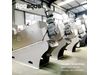
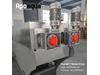
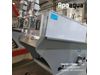
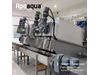
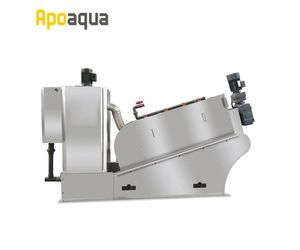
Apoaqua - Model ApoPar-JUI -Pig Manure Sludge Dewatering Screw Press Machine
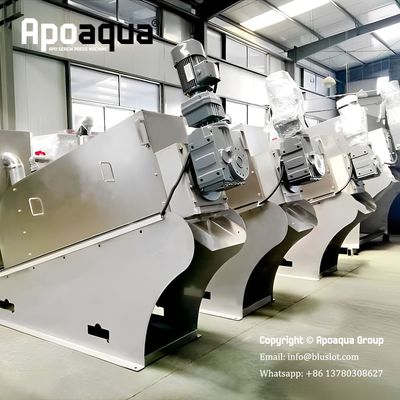
The wastewater from farms also seriously pollutes the environment. Sewage and feces contain high concentrations of organic matter, high ammonia nitrogen and high suspended solids. It also contains a large amount of bacteria, ammonia nitrogen and organic phosphorus. Directly discharging sewage containing pollutants into the natural environment will cause damage to the ecological environment. All farms need to centrally treat and purify wastewater before discharging it. It can only be discharged into the natural environment if it meets the discharge standards.
For this purpose, we have specially designed a new type of pig manure sludge dewatering system.
Precautions
In the process of manure screw press treating farm fecal sludge, PAM cationic agent is essential.
The process of dissolving chemicals requires large amounts of water.
Usually the dissolved concentration of PAM cations is 1%-3%, and the dissolving agent is generally tap water from the farm.
For every ton of fecal sludge in the sludge thickening tank, about 0.3-0.5 tons of tap water is required. Probably about 1.5-2 times the amount of filtrate is produced.
For example, in a farm with a daily raw water treatment capacity of 60 tons, the manure screw press produces approximately 10 tons of filtrate water per day.
Function of Dewatering Screw Press
Generally used after anaerobic or aerobic biochemical treatment. Some are also used after flotation treatment and are suitable for sludge dewatering processes. It is an indispensable equipment in the dehydration room.
The advantage of dewatering screw press over traditional filter press is that it can be fully automated. Unattended operation for effective dehydration. Practice has proved that manure screw press can achieve objective economic benefits.
Save the amount of poly(acrylic acid) amine (PAM) cationic agent. According to experiments, using filtrate water for PAM cation dosing can reduce the dosage of the agent by about a quarter, thereby reducing the cost of the agent.
Use filtrate water to reduce tap water usage. Taking a treatment system with a capacity of treating 60 tons of aquaculture wastewater per day as an example, it can reduce the consumption of tap water by 5-8 tons per day.
Increase the treatment capacity of the aquaculture wastewater treatment system and reduce the use of tap water. This in turn increases the amount of aquaculture wastewater that the system can treat.
The filtrate water is recycled to avoid the impact of poly(acrylic acid) amine (PAM) cationic reagent on the subsequent system.