


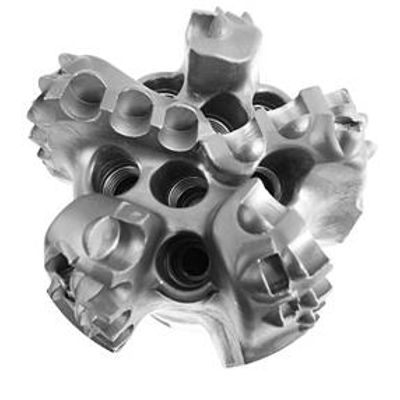
Endura - Model Series 1000 -Polymer Composite Diamond Coatings
Polymer composite diamond coatings combine the benefits of a composite diamond coating (a unique, patented technology for dispersing diamond particulate throughout an autocatalytic nickel alloy) with a proprietary infused fluoropolymer matrix. This technology allows Endura®Coatings to apply and integrate diamond with specialized polymers to most alloy surfaces. The combination offers unparalleled benefits of wear resistance, surface hardness, high release, non-stick, low friction, and dry lubrication.
Coating Patents
Endura® has exclusivity within many of these patents. CDC is covered by these U.S. Patents:
- 4,997,686
- 5,145,517
- 5,300,330
- 5,863,616
- 6,306,466
At Endura Coatings, we offer the Series 1000 Polymer Infused Composite Diamond Coating for dispersing diamond particulates throughout an autocatalytic nickel alloy matrix. Our proprietary infusion process alloys us to apply and integrate diamond to most alloy surfaces for a wide range of applications used in a variety of industries.
Step 1: Our proprietary surface cleaning.
Step 2: Our bath deposition process.
Step 3: Composite Diamond Matrix Deposit. Both the size and density of diamond particles can be varied, depending on your surface finish and performance requirements. Diamond particles can be engineered as small as 2 microns or as large as 40 microns.
Step 4: Fluropolymer Deposit. The newly formed composite diamond matrix is vacuumed infused with sub-micron sized particles to optimize specific coating performance objectives.
Step 5: Fluropolymer Deposit. The newly formed, hardened, and bonded coating will not chip, crack, flake or peel.
Step 6: Fluropolymer Infusion. Different fluoropolymers are utilized to optimize specific performance objectives.
Suitable Coating Materials
Polymer composite diamond coatings can be successfully integrated with most ferrous and non-ferrous metals: steel, stainless steel, iron, brass, bronze, copper, Hastelloy™, Inconel™, Monel™ and other nickel alloys, as well as aluminum and their alloys.
Composite Coating Thickness
The recommended composite coating thickness depends generally on the application and desired performance factors. The coating is a controlled process for diffusion-surface growth, and overall deposits are normally applied between 0.0005 and 0.003 inch. Based on the specific performance factors, dimensional growth may be as low as 0.0002 or as high as 0.010 inch.
Surface Finish (RMS)
Series 1000 Polymer Composite Diamond Coatings are conformal and are expected to provide a surface finish equal to the original surface finish; consequently, any surface imperfection before coating will remain after coating. Unique surface patterning is also attainable to create a variety of aesthetic or functional surface re-configurations.
Hardness
The 1000 series coatings exhibit the benefits of extreme wear with equivalent hardness of 90+ Rc, providing unsurpassed properties for friction, wear and surface energy.
Wear and Abrasion Resistance
The polymer diamond coating composites exhibit superior wear and shear strength not attained from pure ceramics, carbide, chromium or other hardened alloys. The diamond particulate provides one the best wear surfaces available for your difficult application.
Low Friction
Polymer Composite Diamond Coatings are conformal or geometrically enhanced surfaces to provide an extremely low coefficient of friction. Values are similar to Teflon® or other lubricants, typically ranging between 0.08 and 0.20, depending on vector load, sliding speed, mating surfaces, temperature and other factors. For optimal low friction, surfaces may require a nominal 12 RMS finish or better, before coating.
Chemical & Corrosion Resistance
Series 1000 Coatings are resistant to most chemicals, acids, alkali and solvents, exhibiting excellent corrosion resistance. Endura® 1100-CR and 1100-S4 are engineered to provide maximum corrosion protection. Using a 5% salt spray test per ASTM B-117 and a coating thickness of 0.0012 inch, M1 coatings have shown to withstand corrosive attacks of 500 to 2000 hours. Upon request, we will supply coated samples and recommend your evaluation of selected coatings, under your specific application conditions.
Non-Stick Properties
Based on the combined unique properties of Polymer Composite diamond coatings, few materials will permanently adhere to the coated surface, providing a very good non stick coating option.
Operating Temperature Range
Coatings will withstand severe temperature extremes without loss in physical properties, and most are designed for operation typically from cryogenic to 500ºF for continuous operation.
Non-Wetting
Series 1000 Coatings are oleophobic and hydrophobic, resisting wetting by most liquids. Cleanup of your parts with the 100 series coating is easier, more thorough and, in many cases, reduced or unnecessary.
- Typical Surface Growth - 0.001"
- Hardness Equivalent - 70 Rc
- Non-Stick - Excellent
- Lubrication - Excellent
- Non-Wetting - Good
- Corrosion / Chemical Resistance - Very Good
- Taber Abrasion Resistance - Excellent
- Friction (Dynamic/Static ASTM 1894) - 0.08/0.10
- Max. Continious Operating Temperature - 500°F
- FDA/USDA - Compliant