

- Home
- Companies
- Powell Water Systems, Inc.
- Products
- Powell Wate - Electrocoagulation Units
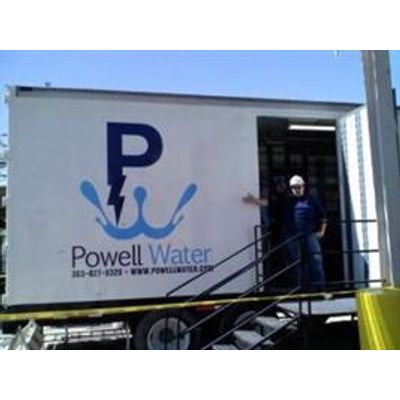
Powell Wate - Electrocoagulation Units
Electrocoagulation is the process of destabilizing suspended, emulsified or dissolved contaminants in an aqueous medium by introducing an electrical current into the medium. The electrical current provides the electromotive force to drive the chemical reactions. When reactions are driven or forced, the elements or compounds will approach the most stable state. Generally, this state of stability produces a solid that is either less colloidal and less emulsified (or soluble) than the compound at equilibrium values. As this occurs, the contaminants form hydrophobic entities that precipitate and can easily be removed by a number of secondary separation techniques.
Electrocoagulation] utilizes direct current to cause sacrificial electrode ions. to remove undesirable contaminants either by chemical reaction and precipitation or by causing colloidal materials to coalesce and then be removed by electrolytic flotation. The electrochemical system has proven to be able to cope with a variety of wastewaters. These waters are paper pulp mill waste, metal plating, tanneries, canning factories, steel mill effluent, slaughter houses, chromate, lead and mercury laden effluents, as well as domestic sewage. These wastewaters will be reduced to clear, clean, odorless and reusable water. In most cases, more especially domestic sewage, the treated water effluent will be better than the raw water from which it had originated.”4
In the Electrocoagulation process, the electrical current is introduced into water via parallel plates constructed of various metals that are selected to optimize the removal process. The two most common plate materials are iron and aluminum. In accordance with Faraday’s Law, metal ions will be split off or sacrificed into the liquid medium. ‘these metal ions tend to form metal oxides that electromechanically attract to the contaminants that have been destabilized.
(4) Eckenfelder, W.W. and Cecil, L.K.. “Applications of New Concepts of Physical-Chemical Wastewater Treatment.” Vanderbilt University; Nashville, TN: Pergamon Press, Inc.
Because Electrocoagulation (EC) utilizes methods that precipitate out large quantities of contaminants in one operation, the technology is the distinct economical and environmental choice for industrial, commercial and municipal waste treatment. The capital and operating costs are usually significantly less than chemical coagulation. It is not unusual to recover capital costs in less than one year.
For example a 5 GPM system contrasts the advantages of Electrocoagulation with a typical chemical coagulation system. This system was designed with the following requirements:
- Reduce Ni from 8.74 to < 3 mg / I
- Reduce Zn from 28.8 to < 3 mg / I
- Reduce TSS from 657 to < 250 mg / I
- Reduce Oil and Grease from 27 to < 15 mg / I
- Reduce phosphorus from 158.75 to < 10 mg / I
- Process flow rate of 5 GPM (1,500,000 GPY)
The estimated yearly operating cost saving using Electrocoagulation in place of chemical coagulation is $43,500.00 per year. This does not include labor, sludge transportation or disposal costs.
A second example is a system with requirements to:
- Reduce Ni from 25 to < 2.38 mg / I
- Reduce Cr from 210 to < 1.71 mg / I
- Flow rate of 100 GPM (30,000,000 GPY)
Operating cost:
per 1,000 gal per year
Chemical Coagulation
$14.18
$425,400.00
Electrocoagulation
$1.69
$50,700.00
The estimated yearly operating cost saving using Electrocoagulation in place of chemical coagulation is $374,700.00 per year. This does not include labor, sludge transportation, or disposal costs.
Chemical precipitation in wastewater treatment involves the addition of chemicals to alter the physical state of dissolved and suspended solids and to facilitate their removal by sedimentation. The chemicals used in wastewater treatment include Alum, Ferric chloride, Ferric sulfate, Ferrous sulfate, and Lime. The inherent disadvantages associated with most chemical unit processes (activated carbon adsorption is an exception) is that they are additive processes. (Metcalf & Eddy, Wastewater Engineering Treatment Disposal Reuse, Third Edition, page 301-303). This problem is eliminated in the Electrocoagulation process. These chemicals are not only expensive, but, more importantly, the net increase in the dissolved constituents in the wastewater render it impractical or impossible to reuse.
Electrocoagulation uses electricity to precipitate the dissolved and suspended solids. The total dissolved solids in the liquid usually decrease by 27 to 60 percent. This enables the water to be reused in many applications, such as water reuse in steam cleaning operations. Reuse of the water provides a major advantage because this eliminates all EPA and POTW discharge concerns, to say nothing of the replacement costs of the water itself.
Electrocoagulation produces a cleaner water than either chemical precipitation or sedimentation ( Wastewater Engineering, page 488 ). As discharge requirements become more stringent EC will become more essential.
The handling and disposal of the sludge resulting from chemical precipitation is one of the greatest difficulties associated with chemical treatment. Sludge is produced in great volume from most chemical precipitation operations, often reaching 0.5 percent of the volume of wastewater treated when lime is used. Waste water Engineering, Third Edition, page 489 – 491), estimated the maximal removal of TSS without chemical is up to 60 percent. With the addition of chemicals, ferrous sulfate and lime, TSS removal rates may climb up to 85 percent.
Assume that the following data apply to this situation:
1. Wastewater flow rate = 1.0 Mgal / d
2. Wastewater suspended solids = 220 mg / l
3. Ferrous sulfate (FeSO4 * 7(H2O)) added = 70 lb / Mgal
4. Lime added = 600 lb / Mgal
5. Calcium carbonate solubility = 15 mg / l
A. 99 percent removal of the TSS with EC will produce: 60 percent of the TSS (with out chemicals) will produce 1,100 lb/ sludge on a dry matter basis (DMB) (Volume, 285 cubic feet / day)
B. 85 percent removal of the TSS, (with the chemicals) will produce 3,042 lb/ sludge (Volume, 619 cubic feet / day)
1,560 lb / d of sludge from the TSS
27 lb / d of sludge from the Ferric Hydroxide
1,455 lb / d of sludge from the Calcium carbonate
042 Total lbs of sludge on a dry basis.
C. 99 percent removal of the TSS with EC will produce:
1) 1,817 lb / d of sludge from the TSS
2) 8 lb / d of sludge from the aluminum chambers
1,825 Total lbs of sludge on a dry basis (Volume, 285 cubic feet / day)
The total sludge generated by EC contains less than 0.5 percent added coagulant. Total sludge generated by Chemical precipitation contains 49 percent added coagulant. The added sludge generated by chemical precipitation effectively doubles the sludge disposal volume. The hazardous waste issue may increase the cost 20 to 30 fold.
“When compared with alum treatment, Electrocoagulation provided approximately 83% less sludge volume and a 76% improvement in filtration rate.”
Sludge disposal costs are significant. A Class II landfill in Northern California only disposes or treats non hazardous waste. The landfill charges $18.00+ /- yard tipping fees for Class II land fill, non-leachable solids in the 20% moisture range. Non hazardous waste recyclers in Northern California charge processing fees from $0.45 – $3.00 per gallon depending on solids and / or hydrocarbon content. Hazardous waste tipping fees for F listed sludge in Northeastern Colorado range from $400 to $600 per yard.
Hauling charges are significant and may be more than the tipping fee. Hauling charges range from $55 to $70 per hour for short runs and $2.20 to $2.50 per loaded mile for runs over 100 miles for a 3,500 to 7,000 gallon (10 to 20 Yard) truck. In addition there is a $200 truck washing fee. The hauling savings generated from EC as compared to chemical precipitation is usually more than the cost to operate and maintain the Electrocoagulation system marketed by Raintech.
In example B, above, 85 percent of the TSS was removed with chemicals, producing 3,042 lbs of sludge on a Dry Matter Base (DMB). The volume of this sludge was 619 cubic feet /day, of which 49%, (1,490 lbs DMB totaling 303 cubic feet / 11 cubic yards) came from the added chemicals required to achieve the removal of the TSS. Assuming a two-hour run for a 10-yard truck at $55 per hour with a $200 truck washing fee, the extra hauling cost for chemical added sludge is $310.
The Electrocoagulation cost was $0.24 / 1,000 gallons for electricity and chamber repair. The Electrocoagulation operating cost is $240.00 per 1.0 MGPD. That is a $70 per day savings ($310-$240) with Electrocoagulation on hauling alone after deducting the Electrocoagulation operating cost.
Electrocoagulation can produce an environmentally friendly sludge in the 6 to 7 pH range. The metals in the sludge at this pH range are stabilized in a non hazardous form as Oxides, that will pass the U.S. Environmental Protection Agency (EPA) Toxic Classification Leaching Procedure (TCLP), and California Title 22 STLC & TTLC leach tests.
Chemical precipitation on the other hand, usually creates a sludge in the caustic pH range above 10. The metals precipitate as hydroxides, a hazardous form because the metals will become soluble again at the natural pH range around 7.
For example chemical precipitation of phosphorus is brought about by the addition of the salts of multivalent metal ions that form precipitates of sparingly soluble phosphates. The multivalent metal ions used most commonly are calcium (Ca++), Aluminum (Al+++), and Iron (Fe+++).
Chemical coagulation necessitates the addition of calcium, usually introduced in the form of lime. As the pH of the wastewater increases beyond 10, excess calcium ions will then react with the phosphate. The quantity of lime required to precipitate the phosphorus in wastewater is typically about 1.4 to 1.5 times the total alkalinity expressed as CaCO3. Because a high pH value is required to precipitate phosphate, the pH usually requires adjustment before the subsequent treatment or disposal.
In the case of alum and iron, 1 mole will precipitate 1 mole of phosphate. These chemical precipitation reactions must be considered in light of the many competing reactions, their associated equilibrium constants, the effects of alkalinity, pH, trace elements, and ligands found in wastewater. Therefore, dosages are generally established on the basis of bench scale tests and occasionally by full-scale tests (Wastewater Engineering, page 308).
When chemical precipitation is used, anaerobic digestion for sludge stabilization may not be possible because of the toxicity of the precipitated heavy metals. (Wastewater Engineering, page 756). For land application of sludge, concentrations of heavy metals often limit the sludge application rate and the useful life of the application site to which it is applied (Wastewater Engineering, page 772).
Land application of sludge has been practiced successfully for decades. Sludge may be applied to (1) Agricultural land, (2) Forest land, (3) Disturbed land, and (4) Dedicated land disposal sites. Sludge acts as a soil conditioner to facilitate nutrient transport, increase water retention, and improve soil tilth. Sludge also serves as a partial replacement for expensive chemical fertilizers. Characteristics of sludge that affect its suitability for land application or affect the design of land application systems include organic content (usually measured as volatile solids), nutrients, pathogens, metals, and toxic organics. (Wastewater Engineering, page 903). EC can eliminate the concerns regarding pathogens, and metals.
Powell Water Systems, Inc. uses a unique patented electrocoagulation chamber that directly converts incoming AC line voltage to DC Voltage. The voltage is set between the blades in the Powell Electrocoagulation chamber at 3 volts saving 96% of the electrical costs as compared to other systems. The vertical flow, direct line voltage, and chamber design will accommodate 20 times larger flow rates as compared to outer systems. The blades in the Powell Electrocoagulation chamber accounts for half the dry weight of the system whereas transformers account for most of the weight in other systems.
If you want an energy efficient Powell Electrocoagulation system with sufficient amperage and reaction chamber size to treat you water please let one of our representative demonstrate the unit on your water. If you want a less expensive and efficient unit simple purchase one of our systems, use the chamber dividers provided, and put in a bigger pump. We feel the energy savings more than offset the capital cost, but we provide the option for those unique times when you need a little extra power.
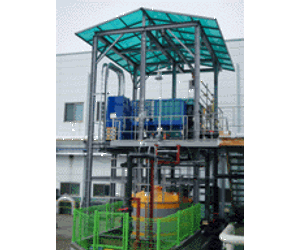
Which electrocoagulation system should you to purchase?
Electrocoagulation has evolved considerably since Dietrich’s patent in 1906. Electrocoagulation is the process of passing electric current through a liquid. The method and chamber configuration greatly affects the energy efficiency and longevity of the system. Please consider the following when deciding to purchase a system.
Water Flow
Electrocoagulation creates hydrogen and gas bubbles. The bubbles float vertically. In chambers that have a water flow other than vertically the bubble collect next to the horizontal surface or corners causing the pressure to build up in the chamber, and creating an insulating factor which stops the current from passing through the water. Powell Water Systems, Inc. engineers the system so the bubbles float in the same direction as the water flow.
Surface Area
Electrocoagulation is a surface reaction. When considering which electrocoagulation chamber to purchase, determine the surface area within the chamber per gpm. Powell Water Systems, Inc. engineers for 3,480 square inches per gpm.
Residence Time
Electrocoagulation moves the electrons through the water between positive and negative plates. This causes a surface charge on the plates. Positive and negative partials attach to the plate surface magnetically. When the polarity is reversed the magnetically attached particles are repelled into the water flow. The electron flow stops and reversed direction when the polarity is reversed. The chamber must have sufficient residence time or volume to allow the water to be treated even though the power is off for 1/30 of a second during polarity reversing. Powell Water Systems, Inc. designs the system for a one-minute resonance time in the chamber.
Amperage
Electrocoagulation systems require amperage to treat the water. The amount of amperage draw is dependent upon the conductivity of the water. If the water is not conductive then no amperage will be used. The system should be designed with adequate wiring and electrical capacity to deliver adequate amperage if needed by a particular water stream. Powell Water Systems, Inc. engineers for 0.375 amps per square inch or 130 amps per gpm.
Voltage
Electrocoagulation depends upon the amount of amperage passing through the water. Electricity is purchase as power, which is volts times’ amp.The amount of voltage required to make the metal leave the metal blade is about 1.5 volts DC. The voltage above 1.5 Volts simply creates heat in the liquid, consumes more energy, and dissolves the metal blades faster. For example if a liquid requires 1 amp per gallon to complete the reaction please consider the following energy difference. If the system operates at 3 volts per gap and 1 amp the energy consumed is 3 watts of electricity per gallon treated. If the system operates at 30 volts per gap and 1 amp the energy consumed is 30 watts of electricity per gallon. If the system operates at 80 volts per gap and 1 amp the energy consumed is 80 watts per gallon. In other words the lower the voltage per gap the less energy is consumed per gallon of water treated. Powell Water Systems, Inc. engineers the system to operate at 3 DC volts per gap.
Authorization
The electrocoagulation industry is full imposters, fraud, and deception. One-way to be sure that you’re purchasing a legal or authorized system is to check patents. A patent is a grant from the government to make, use, or sell. It is illegal to make, use, or sell an item covered by current patents with out the owner’s permission. Powell Water Systems, Inc. utilized patents and patents pending in the United States Patent 6,488,835 issued December 3, 2002 and # 6,139,710 issued October 31, 2000 and many nations around the world. To verify patents go to http://pctgazette.wipo.int/ and search under the international application number PCT/US99/04312, filling date 26 February 1999 (26.02.99), international publication number WO 99/43617, international publication date 2 September 1999 (02.09.99), inventor Powell, Scott, Wade.
An Overview
Electrocoagulation (EC), the passing of electrical current through water, has proven very effective in the removal of contaminants from water. Electrocoagulation systems have been in existence for many years (Dietrich, patented 1906), using a variety of anode and cathode geometries, including plates, balls, fluidized bed spheres, wire mesh, rods, and tubes. Powell Water Systems Inc. has taken a quantum leap in refining the EC process to increase removal rates and to lower capital and operating costs.
“The Electrocoagulation process is based on valid scientific principles involving responses of water contaminants to strong electric fields and electrically induced oxidation and reduction reactions. This process is able to take out over 99 percent of some heavy metal cations and also appears to be able to electrocute microorganisms in the water. It is also able to precipitate charged colloids and remove significant amounts of other ions, colloids, and emulsions. When the system is in place, the operating costs including electric power, replacement of electrodes, pump maintenance, and labor can be less than $1 per thousand gallons for some applications.
Potential applications to agriculture and quality of rural life include removal of pathogens and heavy metals from drinking water and decontamination of food processing wash waters.”1
Coagulation is one of the most important physiochemical operations used in water treatment. This is a process used to cause the destabilization and aggregation of smaller particles into larger particles. Water contaminants such as ions (heavy metals) and colloids (organics and inorganics) are primarily held in solution by electrical charges. Schulze, in 1882, showed that colloidal systems could be destabilized by the addition of ions having a charge opposite to that of the colloid (Benefield et al., 1982). The destabilized colloids can be aggregated and subsequently removed by sedimentation and/or filtration.
Coagulation can be achieved by chemical or electrical means. Chemical coagulation is becoming less acceptable today because of the higher costs associated with chemical treatments (e. g. the large volumes of sludge generated, and the hazardous waste categorization of metal hydroxides, to say nothing of the costs of the chemicals required to effect coagulation).
“Chemical coagulation has been used for decades to destabilize suspensions and to effect precipitation of soluble metal species, as well as other inorganic species from aqueous streams, thereby permitting their removal through sedimentation or filtration. Alum, lime, and/or polymers have been the chemical coagulants used These processes, however, tend to generate large volumes of sludge with high bound water content that can be slow to filter and difficult to dewater. These treatment processes also tend to increase the total dissolved solids content of the effluent, making it unacceptable for reuse within industrial applications.”2
Electrocoagulation can often neutralize ion and particle charges, thereby allowing contaminants to precipitate, reducing the concentration below that possible with chemical precipitation, and can replace and / or reduce the use of expensive chemical agents (metal salts, polymer).
“Although the electrocoagulation mechanism resembles chemical coagulation in that the cationic species are responsible for the neutralization of surface charges, the characteristics of the Electrocoagulated flock differ dramatically from those generated by chemical coagulation. An Electrocoagulated flock tends to contain less bound water, is more shear resistant, and is more readily filterable. “3
Electrocoagulation has reduced contaminated water volume by 98%; and lowered the treatment cost by 90% for bilge water containing heavy metals and oil emulsions. Although Electrocoagulated water may vary because of the individual chemistry of process waters, a few examples of water treated by electrocoagulation include:
- The reduction of bacteria from 110,000,000 (standard plate unit) in sewage waste water to 2,700 bacteria per milliliter;
- The contaminants in oily waste from steam cleaning operations, refineries, rendering plants, and food processors are generally reduced 95 to 99%;
- Dissolved silica, clays, carbon black, and other suspended materials in water are generally reduced by 98%
- Heavy metals in water such as arsenic, cadmium, chromium, lead, nickel, and zinc are generally reduced by 95 to 99%
Electrocoagulation through the Powell Water Systems reaction chamber produces several distinct electrochemical results independently. These observed reactions may be explained as:
A. Seeding resulting from the anode reduction of metal ions that become new centers for larger, stable, insoluble complexes, that precipitate as complex metal oxides;
B. Emulsion breaking resulting from the oxygen and hydrogen ions that bond into the water receptor sites of oil molecules creating a water in soluble complex separating water from oil, driller’s mud, dyes, inks, etc.;
C. Halogen complexing as the metal ions bind themselves to chlorines in a chlorinated hydrocarbon molecule resulting in a large insoluble complex separating water from pesticides, herbicides, chlorinated PCB’s, etc.;
D. Bleaching by the oxygen ions produced in the reaction chamber oxidizes dyes, cyanides, bacteria, viruses, biohazards, etc.;
E. Electron flooding of the water eliminates the polar effect of the water complex, allowing colloidal materials to precipitate, and the increase of electrons creates an osmotic pressure that ruptures bacteria, cysts, and viruses;
F. Oxidation – Reduction reactions are forced to their natural end point within the EC chamber which speeds up the natural process of nature that occurs in wet chemistry;
G. EC induced pH swings toward neutral.
The process is optimized by controlling reaction chamber materials (iron, aluminum, titanium, graphite, etc.), amperage, voltage, flow rate, and the pH of the water. The technology handles mixed waste streams (oil, metals, and bacteria), very effectively. Variables such as temperature and pressure have little effect on the process. The best way to understand what will happen with a specific water is to test that water in the EC reaction chamber.
The electrocoagulation process has been successfully used to:
- Harvest protein, fat, and fiber from food processor waste streams.
- Recycle water, allowing closed loop systems.
- Remove metals, and oil from wastewater.
- Recondition antifreeze by removing oil, dirt, and metals.
- Recondition brine chiller water by removing bacteria, fat, etc.
- Pretreatment before membrane technologies like reverse osmosis.
- Precondition boiler makeup water by removing silica, hardness, TSS, etc.
- Recondition boiler blow down by removing dissolved solids eliminating the need for boiler chemical treatment.
- Remove BOD, TSS, TDS, FOG, etc., from wastewater before disposal to POTW, thus reducing or eliminating discharge surcharges.
- De-water sewage sludge and stabilize heavy metals in sewage, lowering freight and allowing sludge to be land applied
- Condition and polish drinking water
- Remove chlorine and bacteria before water discharge or reuse
The operating costs of electrocoagulation vary dependent on specific water treated. For example, municipal sewage water was treated for $0.24/1,000 gallons, and steam cleaner water containing crude oil, dirt and heavy metals was treated for $0.05/gallon.
References:
Dieterich, A. E., Electric Water Purifier, United States of America Patent No. 823,671 June 19, 1906.
Benefield, L. D., Judkins J. F. and Weand, B. L. 1982. Process Chemistry for Water and Wastewater Treatment. Prentice – Hall Inc., p. 212.
Woytowich D. L.; Dalrymple C. W.; Britton M. G.; 1993. Electrocoagulation (CURE) Treatment of Ship Bilgewater for the U. S. Coast Guard in Alaska. Marine Technology Society Journal, Vol. 27, No. 1 p. 62, Spring 1993.
Renk, R. R. 1989. Treatment of hazardous wastewaters by electrocoagulation. In: 3rd Annual Conference Proceedings (1989). Colorado Hazardous Waste Management Society.
Duffey, J. G. 1983. Electrochemical Removal of Heavy Metals from Waste water, Product Finishing, p. 72, August 1983
6. Franco, N. B. 1974. Electrochemical Removal of Heavy Metals from Acid Mine Drainage. Environmental Protection Agency Report EPA-670 12-74-023. May 1974
- United States Department of Agriculture (USDA), Agricultural Research Service: 12/18/95
- EPA, a SITE Superfund Innovative Technology Evaluation: EPA/640/S-937504. EPA, a SITE Superfund