


- Home
- Companies
- Westinghouse Electric Company LLC
- Products
- Westinghouse - Model AP1000 PWR - ...
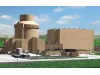
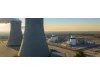
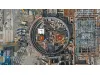
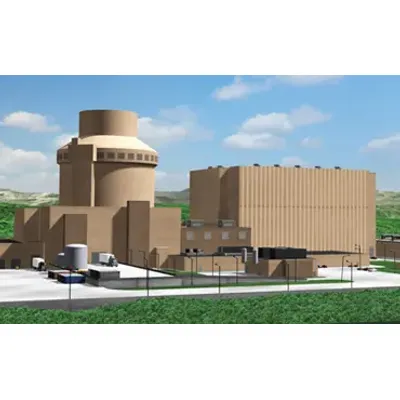
Westinghouse - Model AP1000 PWR -Pressurized Water Reactor Plant
Shaping Tomorrow’s Energy with the AP1000 PWR. Superior safety. Simplified design.
The established design of the AP1000® reactor offers three distinct advantages over other designs: Unequaled safety, Economic competitiveness, Improved and more efficient operations.
Our Gen III+ AP1000 reactor has set the new industry standard for PWR thanks to our simplified, innovative, and effective approach to safety. This revolutionary technology is the result of over 60 years of successful operating nuclear power plant experience, leveraging enhanced versions of equipment found in currently operating Westinghouse-designed PWRs.
Several of the key AP1000 reactor advantages over other technology including:
- Compacted footprint
- Reduction in component and construction materials
- Reduction in work hours to build
- Modular construction
With six units setting records in full commercial operation, the AP1000 reactor represents the most advanced technology available today, able to supply over 1 GW of electricity to centralized power grids.
Simplification was a major design objective for the AP1000 reactor. The simplified plant design includes overall safety systems, normal operating systems, the control room, construction techniques, and instrumentation and control systems. The innovative AP1000 reactor design features: fewer safety-related valves, less safety-related piping, less control cable, fewer pumps, less seismic building volume.
Simplified Reactor Arrangement
The AP1000 reactor has a smaller footprint than an existing nuclear power plant with the same generating capacity. The reactor arrangement provides separation between safety-related and non-safety-related systems to preclude adverse interaction between safety-related and non-safety-related equipment. Separation between redundant, safety-related equipment trains and systems provides confidence that the safety design functions of the AP1000 PWR can be performed. In general, this separation is achieved by partitioning an area with concrete walls.
The AP1000 reactor is arranged with the following principal building structures, each on its own basemat:
- Nuclear Island (the only Seismic Category 1 structure); Includes:
- Containment/Shield Building
- Auxiliary Building
- Turbine Building
- Annex Building
- Diesel Generator Building
- Radwaste Building
- Shortened construction schedule
- Reduced field manpower
- Increased factory-based manufacturing and assembly of modules
- Improved quality - pre-testing and inspection of modules prior to shipment
- Reduced site congestion
Modular by Design
The AP1000 plant has been designed to make use of modern, modular-construction techniques. The design incorporates vendor-designed skids and equipment packages, as well as large, multi-ton structural modules and special-equipment modules. Modularization allows construction tasks that were traditionally performed in sequence to be completed in parallel.
Parallel Work Processes in Controlled Environments
AP1000 plant modularization allows many more construction activities to proceed in parallel. This reduces the calendar time for plant construction, thereby reducing the cost of money and the exposure risks associated with plant financing. Furthermore, the reduced amount of work on site means the amount of skilled field-craft labor, which is more costly than shop labor, is greatly reduced. In addition to the labor cost savings, more of the welding and fabrication performed in a factory environment increases the quality of the work, improves the flexibility in scheduling, and reduces the amount of specialized tools on site.
To achieve proper interfaces with the rest of the plant systems and structures, interconnected piping between modules is represented in the 3D design model. This eliminates the interference concerns of typical field-run commodities (e.g., piping, duct, raceway) and “stick-built” construction techniques.
Two of the drivers of plant construction costs are the cost of financing during the construction phase and the substantial amount of skilled-craft-labor hours needed on site during construction.
The AP1000 pressurized water reactor’s extensive use of modularization of plant construction mitigates both of these drivers.
Overnight Construction Cost
From the outset, the AP1000 PWR was designed to reduce capital costs and to be economically competitive with contemporary fossil-fueled plants.
The AP1000 plant reduces the amount of safety-grade equipment required by using passive safety systems. Consequently, less Seismic Category I building volume is required to house the safety equipment (approximately 45 percent less than a typical reactor). The AP1000 plant’s modular construction design further reduces the construction schedule and the construction risks, with work shifted to factories with their better quality and cost control as well as labor costs that are less than those at the construction site.
This also allows more work to be done in parallel. The use of heavy lift cranes enables an “open top” construction approach, which is effective in reducing construction time.
Simplified Plant Arrangement
The AP1000 plant has a smaller footprint than an existing nuclear power plant with the same generating capacity. The plant arrangement provides separation between safety-related and non safety-related systems to preclude adverse interaction between safety-related and non safety-related equipment. Separation between redundant, safety-related equipment trains and systems provides confidence that the safety design functions of the AP1000 reactor can be performed. In general, this separation is achieved by partitioning an area with concrete walls.
The AP1000 plant is arranged with the following principal building structures, each on its own basemat:
- Nuclear Island (the only Seismic Category 1 structure); Includes:
- Containment/Shield Building
- Auxiliary Building
- Turbine Building
- Annex Building
- Diesel Generator Building
- Radwaste Building
- 18-month fuel cycle for improved availability and reduced overall fuel cost
- Significantly reduced maintenance, testing and inspection requirements and staffing
- Reduced radiation exposure, less plant waste
- 93 percent availability
- Sixty-year design lifetime
An important aspect of the AP1000 PWR design philosophy focuses on plant operability and maintainability. The passive safety features use a much smaller number of valves than do the multiple trains of active pump-driven systems, and there are no safety pumps at all; so, there is less in-service testing to perform. In particular, simplified safety systems reduce surveillance requirements, significantly simplifying technical specifications and reducing the likelihood of forced shutdowns. Lower operating and maintenance requirements lead to smaller maintenance staffs.
The variable-speed canned-motor reactor coolant pumps (RCPs) simplify plant startup and shutdown operations because they are capable, for example, of reducing RCP speed during plant cooldown and providing the capability to vary RCP speed to better control shutdown operating-mode transitions. The RCPs operate at constant speed during power operations, simplifying control actions during load shifts.
The digital I&C design significantly reduces required I&C surveillance testing and simplifies trouble-shooting, repair and post-maintenance testing. The plant includes automation of some cooldown operations and improved steam-dump, low-pressure performance. The advanced control room design significantly improves the operator interfaces and plant operations capabilities.
Overall, the selection of proven components has been emphasized to ensure a high degree of reliability and reduced maintenance requirements. Component standardization reduces spare-parts inventories, maintenance, training requirements, and allows shorter maintenance times. Built-in testing capability is provided for critical components.
Plant layout ensures adequate access for inspection and maintenance. Laydown space provides for staging of equipment and personnel, equipment removal paths, and space to accommodate remotely operated service equipment and mobile units. Access platforms and lifting devices are provided at key locations, as are service provisions such as electrical power, demineralized water, breathing and service air, ventilation and lighting, and computer-data-highway connections.
The AP1000 plant also incorporates radiation exposure reduction principles to keep worker dose as low as reasonably achievable (ALARA). Exposure length, distance, shielding, and source reduction are fundamental criteria that are incorporated into the design with the result of:
- Minimized operational releases
- Worker radiation exposure greatly reduced
- Total radwaste volumes minimized through features such as no boron load follow, ion exchange rather than evaporation, segregation of wastes at the source, minimization of active components, and packaging in high-integrity containers
- Other (non-radioactive) hazardous wastes minimized through such features as a simplified plant (e.g., elimination of many oil lubricated pumps), careful selection of processes (e.g., laboratory and turbine-side chemistry), and segregation of wastes
The AP1000 plant is designated for rated performance with up to 10 percent of the steam-generator tubes plugged and with a maximum hot-leg temperature of 321.1°C (610°F). The plant is designed to accept a step-load increase or decrease of 10 percent between 25 and 100 percent power without reactor trip or steam-dump system actuation, provided that the rated power level is not exceeded. Further, the AP1000 plant is designed to accept a 100 percent load rejection from full power to house loads without a reactor trip or operation of the pressurizer or steam generator safety valves.
AP1000 PWR - Operating and Maintenance (O&M) CostsOperating nuclear plants in the U.S. are already competitive producers of electricity compared to coal-fired plants. That virtue is enhanced by fuel cost comprising only about 25 percent of the production costs of a nuclear plant. The remaining 75 percent of production cost is the fixed cost of operation and maintenance.
That means that nuclear power production is less sensitive to changes in fuel costs than coal-fired plants where fuel costs can be more than 75 percent of the production cost. The AP1000 plant’s modern design will engender even less expensive production by requiring less manpower for O&M than current plants for many reasons, including:
- Less equipment and less safety-grade equipment to maintain and test
- Improved equipment, such as the primary system canned motor pumps that are maintenance-free and do not need the complex seal-injection systems of typical shaft-seal coolant pumps
- Features for faster head removal for refueling
- Less waste produced
- Improved protection from and fewer opportunities for radiation exposure (ALARA design)
- Online-diagnosing electronics
- A main control room featuring the latest human-interface design, needing only an operator and supervisor for normal operation
An independent study by the Institute of Nuclear Power Operations (INPO) determined that a passive “single, mature Advanced Light Water Reactor” would require about one-third less O&M staff than a currently operating nuclear plant.
The Westinghouse AP1000 pressurized water reactor yields considerable capital savings and lower maintenance costs delivering safe, efficient, more economical nuclear power solutions across the world.
The AP1000® reactor is a two-loop pressurized water reactor (PWR) that uses a simplified, innovative, and effective approach to safety. With a gross power rating of 3,415 megawatts thermal (MWt) and a nominal net electrical output of 1,110-megawatt electric (MWe), the AP1000 reactor, with a 157-fuel-assembly core, is ideal for new baseload generation.
Simplified Reactor Design
Simplification was a major design objective of the AP1000 reactor. Simplifications in overall safety systems, normal operating systems, the control room, construction techniques, and instrumentation and control systems provide a technology that is easier and less expensive to build, operate, and maintain. These simplifications yield fewer components, cable, and seismic building volume, all of which contribute to considerable savings in capital investment, and lower operation and maintenance costs. At the same time, the safety margins for the AP1000® reactor have been increased dramatically over currently operating reactors.
The AP1000 PWR is comprised of components that incorporate many design improvements distilled from 50 years of successful operating nuclear power plant experience. The reactor vessel and internals, steam generator, fuel and pressurizer designs are improved versions of those found in currently operating Westinghouse-designed PWRs. The reactor coolant pumps are canned-motor pumps, the type used in many other industrial applications where reliability and long life are paramount requirements.
Innovative AP1000 Reactor Design, Services, and Equipment- The most advanced, proven Generation III+ technology available
- Only available reactor with fully passive safety systems and 72+ hour coping after station blackout
- Dramatically reduced start-up test programs from 10 months to 5 months or less (including 1 month at full power)
- Industry and national performance records set for first and second operating cycles
- Industry and national performance records set for first-cycle refueling outages (28 days)
- Industry and national performance records set for second-cycle refueling outages (19 days)
- Advanced chemical-free load-following capability
- Reactors used in both baseload and load-follow modes with ramp rates of +/- 5% per minute down to 15% of full power
Two of the drivers of plant construction costs are the cost of financing during the construction phase and the substantial amount of skilled-craft-labor hours needed on site during construction.
The AP1000® pressurized water reactor’s (PWR) extensive use of modularization of plant construction mitigates both of these drivers.
Considered the most advanced commercially available plant, the Westinghouse AP1000 pressurized water reactor yields considerable capital savings and lower maintenance costs delivering safe, efficient, more economical nuclear power solutions across the world.
Overnight Construction Cost
The AP1000 reactor reduces the amount of safety-grade equipment required by using passive safety systems. Consequently, less Seismic Category I building volume is required to house the safety equipment (approximately 45 percent less than a typical reactor). The AP1000 reactor’s modular construction design further reduces the construction schedule and the construction risks, with work shifted to factories with their better quality and cost control as well as labor costs that are less than those at the construction site.
This also allows more work to be done in parallel. The use of heavy lift cranes enables an “open top” construction approach, which is effective in reducing construction time.
The AP1000® pressurized water reactor (PWR) has several design features that improve worker safety and production, as well as availability and capacity factors.
Plant load management performance includes faster response time, less waste, a large margin between operating range and safety system actuation, and passive accommodation for load swings.
Improved Reactor Performance
- 18-month fuel cycle for improved availability and reduced overall fuel cost
- Significantly reduced maintenance, testing and inspection requirements and staffing
- Reduced radiation exposure, less plant waste
- 93 percent availability
- Sixty-year design lifetime
Operations & Maintenance
An important aspect of the AP1000® PWR design philosophy focuses on reactor operability and maintainability. The passive safety features use a much smaller number of valves than do the multiple trains of active pump-driven systems, and there are no safety pumps at all; so, there is less in-service testing to perform. In particular, simplified safety systems reduce surveillance requirements, significantly simplifying technical specifications and reducing the likelihood of forced shutdowns. Lower operating and maintenance requirements lead to smaller maintenance staffs.
The variable-speed canned-motor reactor coolant pumps (RCPs) simplify reactor startup and shutdown operations because they are capable, for example, of reducing RCP speed during reactor cooldown and providing the capability to vary RCP speed to better control shutdown operating-mode transitions. The RCPs operate at constant speed during power operations, simplifying control actions during load shifts.
The digital I&C design significantly reduces required I&C surveillance testing and simplifies trouble-shooting, repair and post-maintenance testing. The reactor includes automation of some cooldown operations and improved steam-dump, low-pressure performance. The advanced control room design significantly improves the operator interfaces and reactor operations capabilities.
Overall, the selection of proven components has been emphasized to ensure a high degree of reliability and reduced maintenance requirements. Component standardization reduces spare-parts inventories, maintenance, training requirements, and allows shorter maintenance times. Built-in testing capability is provided for critical components.
Reactor layout ensures adequate access for inspection and maintenance. Laydown space provides for staging of equipment and personnel, equipment removal paths, and space to accommodate remotely operated service equipment and mobile units. Access platforms and lifting devices are provided at key locations, as are service provisions such as electrical power, demineralized water, breathing and service air, ventilation and lighting, and computer-data-highway connections.
The AP1000 reactor also incorporates radiation exposure reduction principles to keep worker dose as low as reasonably achievable (ALARA). Exposure length, distance, shielding, and source reduction are fundamental criteria that are incorporated into the design with the result of:
- Minimized operational releases
- Worker radiation exposure greatly reduced
- Total radwaste volumes minimized through features such as no boron load follow, ion exchange rather than evaporation, segregation of wastes at the source, minimization of active components, and packaging in high-integrity containers
- Other (non-radioactive) hazardous wastes minimized through such features as a simplified reactor (e.g., elimination of many oil-lubricated pumps), careful selection of processes (e.g., laboratory and turbine-side chemistry), and segregation of wastes
The AP1000 reactor is designated for rated performance with up to 10 percent of the steam-generator tubes plugged and with a maximum hot-leg temperature of 321.1°C (610°F). The reactor is designed to accept a step-load increase or decrease of 10 percent between 25 and 100 percent power without reactor trip or steam-dump system actuation, provided that the rated power level is not exceeded. Further, the AP1000 reactor is designed to accept a 100 percent load rejection from full power to house loads without a reactor trip or operation of the pressurizer or steam generator safety valves.
The AP1000 reactor’s outstanding early performance has an 85.6% average Operation Availability Factor. This includes the SM2 unit with the early RCP issue. The remaining 3 AP1000 units` Operation Availability Factor is 93% - the industry`s best.
With four units setting records in full commercial operation, the AP1000 reactor represents the most advanced technology available today, able to supply over 1 GW of electricity to centralized power grids.
The AP1000 - Operating and Maintenance (O&M) Costs
Operating nuclear plants in the U.S. are already competitive producers of electricity compared to coal-fired plants. That virtue is enhanced by fuel cost comprising only about 25 percent of the production costs of a nuclear plant. The remaining 75 percent of production cost is the fixed cost of operation and maintenance.
That means that nuclear power production is less sensitive to changes in fuel costs than coal-fired plants where fuel costs can be more than 75 percent of the production cost. The AP1000 reactor’s modern design will engender even less expensive production by requiring less manpower for O&M than current plants for many reasons, including:
- Less equipment and less safety-grade equipment to maintain and test
- Improved equipment, such as the primary system canned motor pumps that are maintenance-free and do not need the complex seal-injection systems of typical shaft-seal coolant pumps
- Features for faster head removal for refueling
- Less waste produced
- Improved protection from and fewer opportunities for radiation exposure (ALARA design)
- Online-diagnosing electronics
- A main control room featuring the latest human-interface design, needing only an operator and supervisor for normal operation
An independent study by the Institute of Nuclear Power Operations (INPO) determined that a passive “single, mature Advanced Light Water Reactor” would require about one-third less O&M staff than a currently operating nuclear plant.