


- Home
- Companies
- Brand-Gaus, LLC
- Products
- Brand-Gaus - Model 9705 - Process Gas / ...
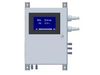
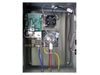
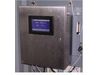
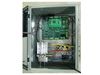
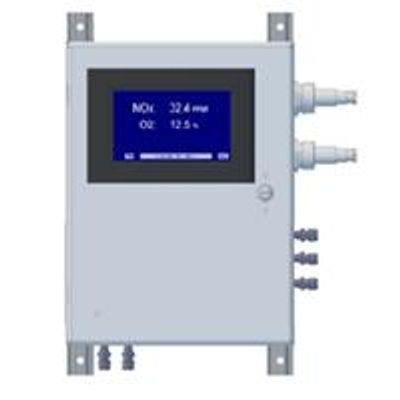
Brand-Gaus - Model 9705 -Process Gas / NOx Monitor
The Brand-Gaus Model 9705 is an extraordinarily compact rugged process analyzer providing fast, reliable, precise, and continuous emissions measurements of nearly any type of combustion source. Combining the high-performance and ruggedness of solid-state chemiluminescence, UV fluorescence, and NDIR detection with our innovative patented* moderate dilution (meso-dilution) eliminates the need for climate control and most sample handling equipment found in conventional monitors. The Brand-Gaus Process Gas Analyzer is ideally suited for monitoring NOx or SO2 levels from feedback or feed-forward controlled processes, where very fast, real-time continuous detection is highly beneficial. The Brand-Gaus Model 9705 Process Gas Monitor features dramatically simpler operation, lower capital and operating cost, and much higher reliability than conventional CEMS or other technologies.
Applications include:
- NOx monitoring of selective catalytic reduction systems (SCR) and non-catalytic reduction systems (SNCR)
- SO2 monitoring for SO2/SOx scrubbers
- Compliance assurance monitoring of small sources
- Emissions monitoring of combustion sources:
- Coal-fired boilers (low and high sulfur coal)
- Natural-gas fired boilers and internal combustion engines
- Diesel engines
- Gas turbines
- Nitric acid plants
- Cement kilns
The Brand-Gaus Process NOx Analyzer achieves excellent agreement with conventional dilution-extractive CEMS on SCR outlets of coal-fired boilers, where high particulate loading and as much as 1500 PPM SO2 are present.
Simple Operation, Low Cost, High Reliability- Patented meso-dilution fully integrates probe and analyzer flow control, greatly simplifying pneumatics and reducing parts count.
- Close-coupled measurement -- no heated sample-lines or environmental shelters required.
- Separate analyzer modules for each gas allows removal of each gas detector for ease of maintenance and repair.
- All solid-state detection: no photomultipliers, no electrochemical cells, no regeneration or switching systems, and no delicate paramagnetic components.
- Simplified pneumatics and electronics for high reliability and ease of maintenance.
- Any two gases can be measured in a single instrument
Brand-Gaus`s patented* meso-dilution provides fast response, robust flow control, and reliable sample extraction with far-fewer components than traditional dilution-extractive systems.
- Filtering, heating, NO2 conversion and moderate (meso) dilution of sample all occur within the process
- Eliminates any chance for condensation or precipitation while sample is extracted from the process
- Greatly simplifies pneumatics over traditional systems, integrating sample flow, ozone flow, and dilution rate control right at the probe
- Eliminates dilution eductors and fast-loop extraction components
- Sensitivity, noise, and stability greatly improved over traditional dilution systems given gas constituents are much closer to native process concentrations
Gas detector modules, ruggedized for high temperature, heavy-industrial environments, located directly at the probe
- High temperature operation allows for dilution rates as low as 5 to 1, providing superior detection performance especially at low-concentrations
- Eliminates lag time due to sample transport, achieving very fast response, ranging from 10 to 30 seconds
- Eliminates gas component losses in long sample lines
- Allows interface installation any distance from probe
- Large touch screen display provides a highly intuitive interface, with fewer menus and easily adjusted operating parameters
- Simple interface for control of cal-gas and instrument air flows
- Integrated cal-check timing with choice of manual or fully automated calibration
- Sample-and-hold during cal-check
- In-cal, in-maintenance, and instrument-fault relays
- Built-in O2/CO2 correction and conversion to lbs/MMBTU
- On-screen trend chart