- Home
- Companies
- Aquaculture Solutions, a division of ...
- Products
- Kalwall - Model PS - Protein Skimmers
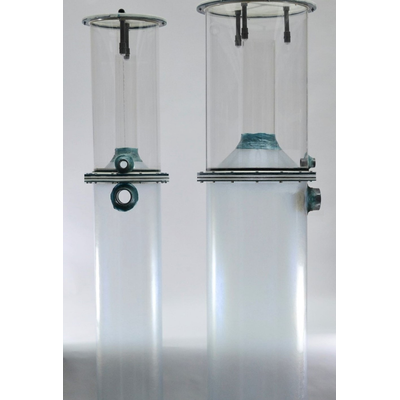
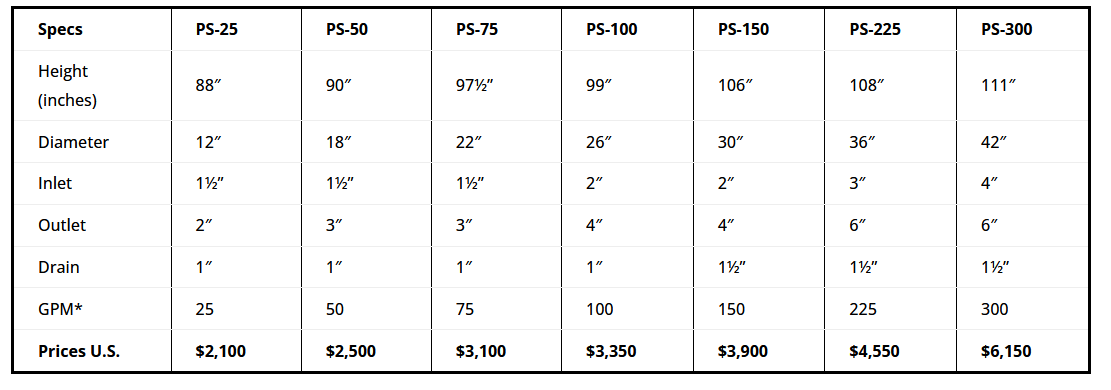
Kalwall - Model PS -Protein Skimmers
Protein skimming is the term most commonly used by aquarium and aquaculture professionals to describe the removal of suspended and dissolved waste from fish tanks by means of air floatation. It relies on the physical and chemical properties of coagulation. To be effective, the protein skimming process requires a contact column in which air and water containing surfactants can interact.
The air and water interfaces are provided by supplying a constant injection of small bubbles to a proportional volume of water in the column and allowing them to mix and then migrate to the surface. At the upper levels of the column, most of the water drains away, leaving a concentrated residue of foam?composed primarily of organic material. The skimming of this foam waste removes it from the life support system. It is, therefore, no longer susceptible to undesirable microbiological degradation, which will contribute to increased oxygen demand in an aquatic system.
Why is it important?
Protein skimming is essentially a perpetual backwashing filter. Skimming enhances the oxygenation of a system both biologically and physically. Biological oxygen demand is reduced by the direct removal of biodegradable organic carbon (protein), as well as bacteria in the water column. Physically, the increased surface area provided by the injection of large volumes of air into a column of water creates a condition for gas exchange. The addition of a small dose of ozone to the process, with its coagulative and disinfectant properties, makes skimming possibly the best component one could add to a modern life support system.